
NYK Establishes World’s First Pipe-Visualisation Deballast Training Facility

Armed Pirates Kidnap 9 Seafarers From LPG Tanker Off Equatorial Guinea
December 4, 2025
Cayman Islands Becomes First Nation With Fully Mapped EEZ By An Autonomous Vessel
December 4, 2025
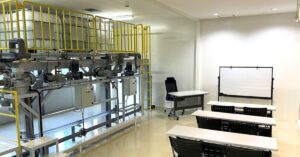
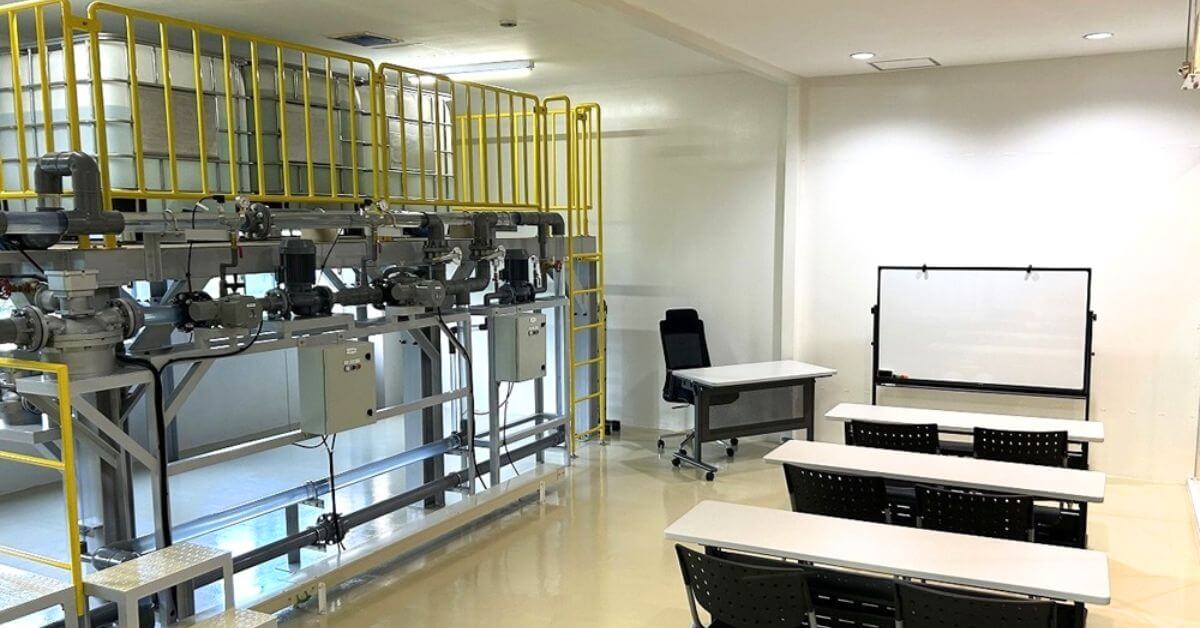
NYK has established a cutting-edge facility that employs transparent pipes to enhance trainees’ proficiency in deballasting operations — the process of discharging water to maintain a ship’s balance during cargo loading.
The facility was unveiled at the NYK-TDG Maritime Academy’s 25th anniversary ceremony on November 26 in the Philippines. It is located at the adjacent seafarer training facility NYK-Fil Maritime E-Training Inc. (“NETI”). According to our research, this skeleton-type deballasting training facility is the world’s first of its kind.
By allowing trainees to observe water flow within the piping and tanks, the facility enhances understanding of internal structures and improves operational proficiency. This innovative approach aims to reduce errors and improve transport quality.
Deballasting operations involve discharging ballast water held in tanks to maintain the ship’s balance during cargo loading. During cargo operations, efficiently executing deballasting is crucial for maximizing cargo capacity and preventing cargo handling delays.
While ballast operations demand advanced knowledge and skill, the lack of replicable training facilities meant crew proficiency relied heavily on on-the-job training (OJT) at sea, making effective shore-based training challenging.
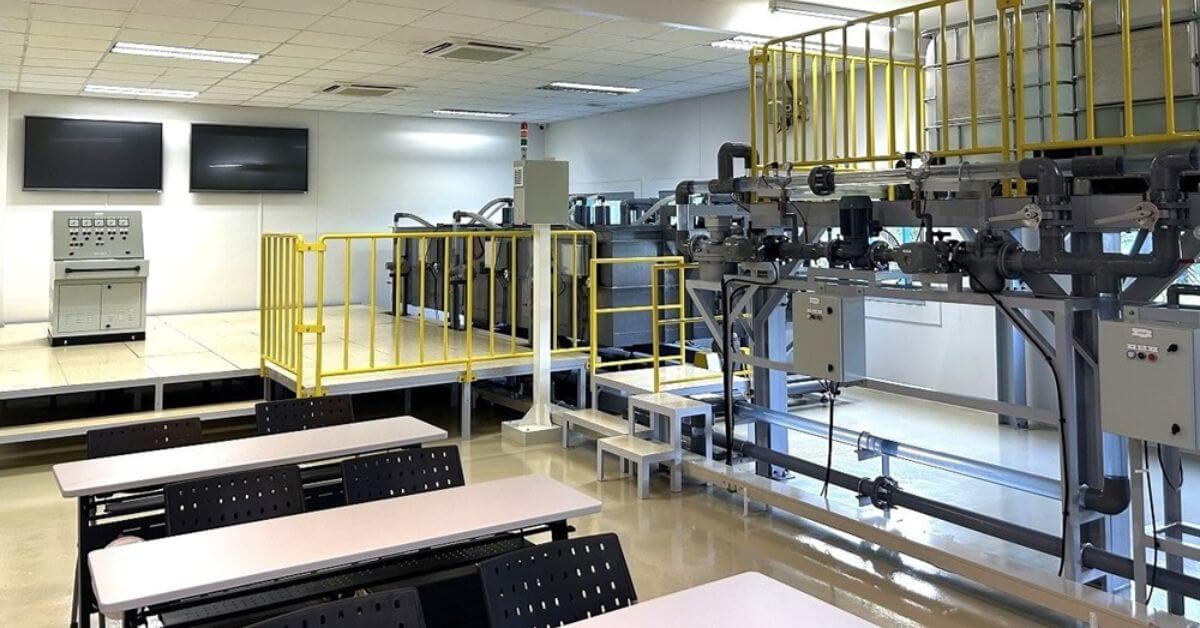
This new facility employs transparent pipes to visualize fluid movement, thereby enabling trainees to intuitively grasp the impact of their actions.
Furthermore, mechanisms for tilting the tank, along with the placement of valves, piping, pressure gauges, ammeters, and other components, have been carefully designed to replicate conditions close to those on an actual ship.
This realistic training environment, far surpassing the limitations of computer simulations, aims to prevent issues during deballasting operations.
Furthermore, NETI instructors will supplement hands-on training with fundamental lectures on the purpose and mechanisms of deballasting operations. They will also provide troubleshooting sessions for common issues like air entrapment.**
Press Release
Source: Maritime Shipping News