
Russia Ratifies RELOS Agreement, Giving India Arctic Access & Gaining Access To The IOR

U.S. Carries Out Another Strike On Suspected Drug-Smuggling Vessel In Eastern Pacific, Killing 4
December 5, 2025
Dutch Authorities Arrest 2 At Damen Shipyards For Alleged Sanctions Violations Against Russia
December 6, 2025
India is set to enter a new phase of maritime cooperation with Russia after Moscow’s lower house, the Duma, ratified the Reciprocal Exchange of Logistics Support (RELOS) agreement just a day before President Vladimir Putin landed in New Delhi on 4 December.
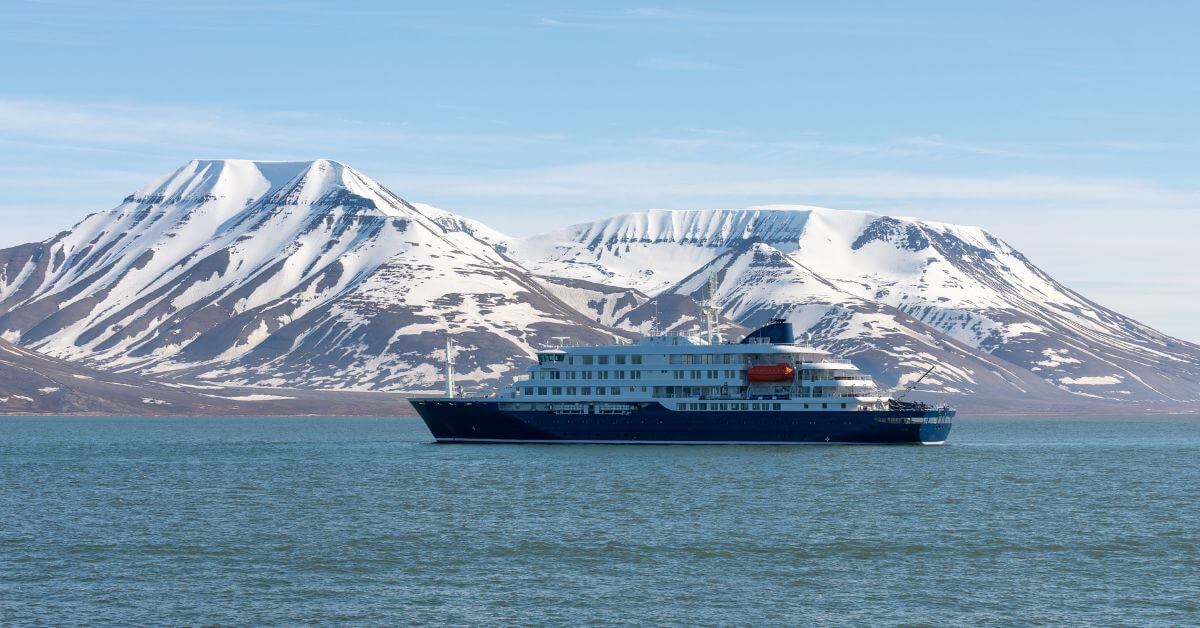
The agreement is expected to finally give India access to the Arctic, a fast-changing region that could transform global shipping routes in the coming years.
For more than ten years, Indian and Russian officials have been discussing ways to work together in the Arctic as melting ice caps open new maritime possibilities.
Russia has been promoting the Northern Sea Route (NSR) as an alternative commercial highway that bypasses traditional choke points such as the Suez Canal. Moscow has made it clear that it wants India as a partner on this route.
Recent geopolitical conflicts have disrupted global shipping, raising insurance costs and exposing vulnerabilities in India’s supply chains.
The Suez Canal remains congested and sensitive to regional tensions. Analysts noted that the Arctic route could cut the distance between Northern Europe and the Indo-Pacific by up to 40%, offering a faster and potentially safer transit corridor.
Studies cited by shipping companies estimated that the Arctic passage could reduce overall transit costs by 17% to 33%, largely because fuel consumption drops by around 40% due to the shorter distance.
Fewer piracy risks and lower exposure to conflict zones could also reduce insurance premiums. Shorter voyages mean vessels can complete more rotations each year.
India, which moves 95% of its merchandise trade by sea and handles nearly 1,400 million tonnes of cargo through its major ports annually, could see billions of dollars in savings through even marginal improvements in shipping efficiency.
Unlike regular sea routes, Arctic transit requires specialised infrastructure. Russia operates the world’s largest fleet of nuclear icebreakers, which carve passages through ice-covered waters.
Indian experts acknowledge that India has neither the icebreaking capability nor the Arctic navigation experience to operate in this region independently. Cooperation with Russia therefore becomes essential.
RELOS helps formalise this cooperation by granting Indian naval and commercial vessels access to Russian Arctic ports for refuelling and repairs. It also allows Indian merchant ships to request Russian icebreaker escorts through icy passages.
Russian officials said that the pact may eventually give India access to more than 40 Russian naval and air bases, stretching from Arctic waters to the Pacific.
India and Russia aim to integrate the Northern Sea Route with the International North-South Transport Corridor (INSTC), a 7,200-kilometre network that connects India to Russia via Iran and Central Asia.
Together, they form a multi-modal trade architecture that can speed up the movement of goods to Europe and Asia-Pacific markets.
India has also strengthened connectivity with the Russian Far East through the Chennai–Vladivostok Eastern Maritime Corridor, operational since 2024.
The route cuts travel time from over 40 days via Suez to around 24 days and is being considered for expansion to other Indian ports and Southeast Asian countries.
India has begun focusing heavily on shipbuilding, backed by an $8-billion incentive package approved in 2025. The Arctic opens a specialised market where Indian shipyards can develop new capabilities. Both countries have discussed joint construction of four Arctic-class vessels valued at about $750 million.
A working group on Arctic shipping, formed after the Prime Minister’s 2024 visit to Moscow, has already begun designing training programmes to equip Indian seafarers with polar navigation skills. This could create long-term employment opportunities and expand India’s human capital in high-demand maritime sectors.
India has been an observer at the Arctic Council since 2013, limiting its influence over regional decision-making. Russian officials suggested that New Delhi could play a more active role as the two countries deepen cooperation. Moscow believes greater Indian participation could help balance China’s rising involvement in the Arctic.
Meanwhile, Russia’s war in Ukraine limits its global trade integration and increases its dependence on China. India faces a growing bilateral trade imbalance as Russian energy exports surge while India’s exports to Russia remain around $5 billion. Payment mechanisms and sanctions continue to challenge commercial flows.
References: bharatshakti, The Print
Source: Maritime Shipping News