
U.S. Defence Secretary Backs Caribbean Strike That Killed Survivors Clinging To Wreckage

CATL Unveils World’s 1st Ship-Shore-Cloud System To Advance Zero-Carbon Shipping
December 8, 2025
Chinese Bulker Breaks Apart After Grounding In Xinghua Bay
December 8, 2025
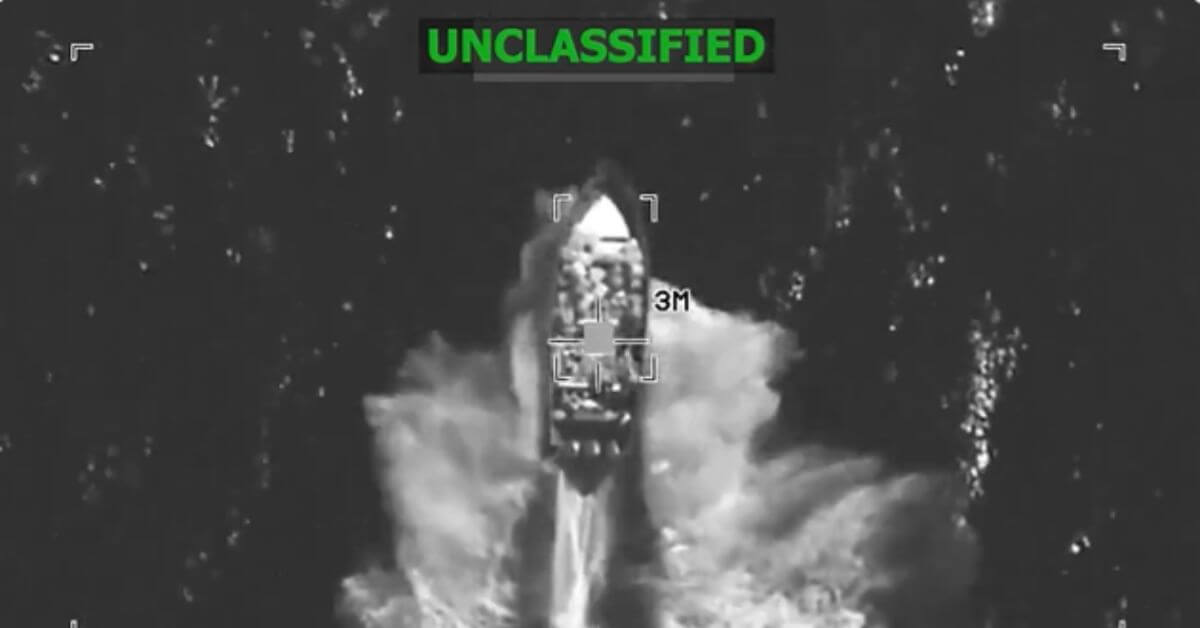
US Defence Secretary Pete Hegseth has firmly supported the American air strike that killed two survivors off the Venezuelan coast, saying he would have made the same decision as the admiral who ordered the follow-on attack.
The confirmation has added pressure to an already growing debate in Washington over whether the strikes were lawful.
The US conducted almost two dozen strikes on suspected drug-smuggling boats in the Caribbean and eastern Pacific. But public concern increased after reports revealed that a September operation involved a second strike aimed specifically at two survivors clinging to wreckage in the water, raising accusations of possible war crimes.
Speaking at the Reagan Defence Forum in Simi Valley, California, on 6 December, Hegseth said he supported Admiral Frank Bradley’s decision to order the second strike. He added that based on what he knew then and now, he would have made the same call.
These comments were stronger than his remarks earlier in the week at the White House, where he had seemed to shift responsibility onto Adm Bradley.
Hegseth defended the administration’s policy of sinking boats and killing suspected drug traffickers. The Trump administration treats these individuals as enemy combatants, not criminals.
This approach has led to legal debate in Congress, especially over whether the policy follows international law and whether the targeted boats were actually heading towards the United States.
On Dec. 4, at the direction of @SecWar Pete Hegseth, Joint Task Force Southern Spear conducted a lethal kinetic strike on a vessel in international waters operated by a Designated Terrorist Organization. Intelligence confirmed that the vessel was carrying illicit narcotics and… pic.twitter.com/pqksvxM3HP
— U.S. Southern Command (@Southcom) December 4, 2025
Hegseth compared the groups to major terrorist organisations. Democratic lawmakers who saw video of the strike said the footage was disturbing and demanded the full video.
President Donald Trump has said he would allow the video to be released publicly after Congress views it. The Pentagon is currently reviewing the footage, and Hegseth did not say whether it will eventually be made public.
Adm Bradley, a Navy SEAL, told lawmakers on 4 December that he never received a “kill all” instruction from Hegseth, contradicting a report by The Washington Post. Hegseth has said he was not present when Bradley ordered the follow-on strike but fully supports the decision and would have ordered the same action.
Republican Senator Thom Tillis, whose vote earlier this year helped narrowly confirm Hegseth as Defence Secretary, said the second strike violated ethical, moral and legal standards. Tillis is retiring from Congress.
Hegseth highlighted the administration’s military actions since Donald Trump returned to office, including air strikes in Yemen, an attack on Iran’s nuclear programme, and the maritime strikes that have killed more than 80 people in the Caribbean and eastern Pacific Ocean.
He also said previous administrations were wrong to assume that the Monroe Doctrine was no longer relevant, adding that the policy was now stronger under what he called the Trump corollary.
Hegseth also faced criticism this week after a Pentagon watchdog report concluded that he endangered US troops when he sent detailed attack plans through an unsecured Signal group chat earlier in 2025.
Although Hegseth called the watchdog’s findings a “total exoneration,” the report said he had violated Pentagon rules by using his personal phone to share sensitive information. On 6 December, Hegseth said he had no regrets about the incident.
References: businessmirror, straitstimes
Source: Maritime Shipping News