
Canada Completes First Phase Of Landmark LNG Export Project In Kitimat

Jan De Nul Launches Most Advanced Simulator For Wind Farm Installation At Sea
December 9, 2025
15 Crew Members Evacuated From Listing Cargo Ship After Serious Leak In Malaysian Waters
December 9, 2025
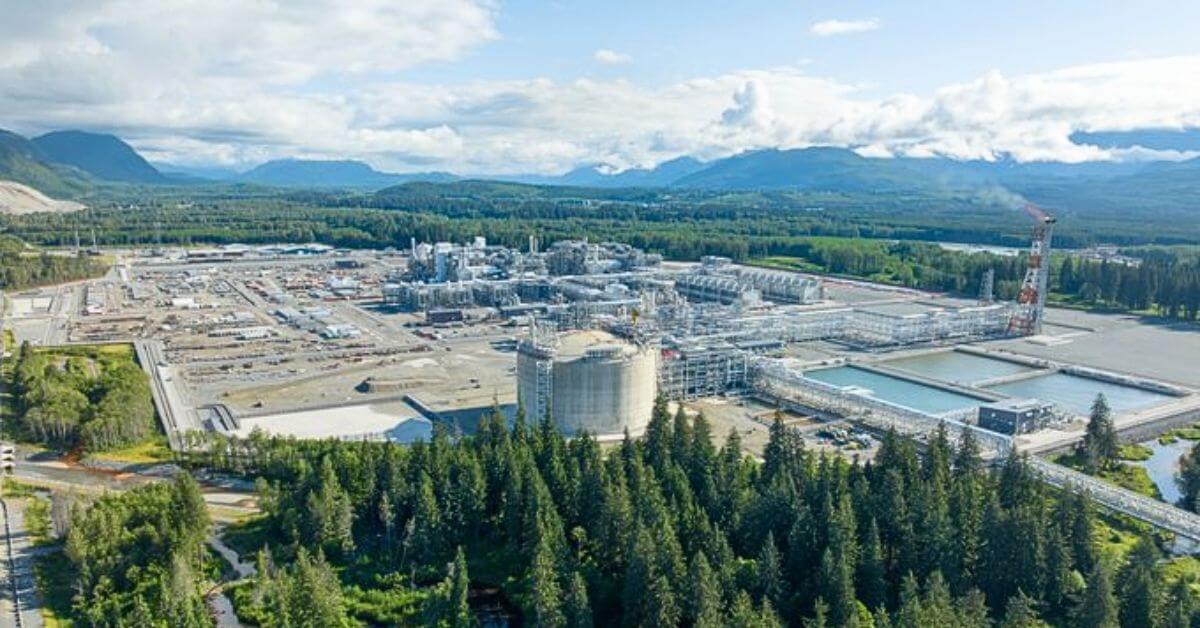
Canada has completed the first phase of its landmark LNG Canada project in Kitimat, British Columbia, after Fluor Corporation and its joint-venture partner JGC Corporation handed over the second production train.
The completion of Train 2 finalises Phase 1 of the development, which consists of two liquefaction units capable of producing up to 14 million tonnes of LNG per year.
The facility also includes LNG storage tanks, a marine terminal able to accommodate one carrier, processing units, loading lines, a tugboat dock, a rail yard, a water treatment facility and flare stacks. The plant started exports in June 2025 and had dispatched its 25th shipment by November.
Fluor’s Energy Solutions business group president, Pierre Bechelany, was reported as saying that the safe handover demonstrated strong teamwork and consistent focus on safety, quality and timely delivery by the thousands of workers involved in the project.
The project director, James Ticer, also said in indirect remarks that safety and environmental protection remained priorities throughout construction while the team continued to support local communities and First Nations.
The project’s economic impact has been significant. More than C$3.3 billion was spent on goods and services sourced from Indigenous businesses and joint ventures, while local companies in the surrounding area received over C$550 million in contracts. Over 50,000 Canadians directly contributed to building Phase 1, and more than 300 permanent jobs have been created for operations.
Located within the traditional territory of the Haisla Nation on Canada’s west coast, the Kitimat site benefits from abundant natural gas supply in western Canada and from its naturally ice-free harbour, which allows year-round shipping access.
The facility is designed to supply global markets with Canadian natural gas while integrating environmental performance measures and extensive Indigenous engagement.
LNG Canada is owned by a joint venture comprising Shell plc (40%), PETRONAS (25%), PetroChina Company Limited (15%), Mitsubishi Corporation (15%) and Korea Gas Corporation (5%).
The project is operated by LNG Canada Development Inc. The partners are studying options for a potential Phase 2 expansion, which could add two further trains and double capacity to 28 million tonnes per year.
Reference: Fluor Corporation
Source: Maritime Shipping News