

China’s Annual Trade Surplus Exceeds $1 Trillion For The First Time, Shipping Volumes Surge

Remains Of Filipino Seafarer Killed In Houthi Attack On Eternity C Repatriated To Manila
December 8, 2025
Jan De Nul Launches Most Advanced Simulator For Wind Farm Installation At Sea
December 9, 2025
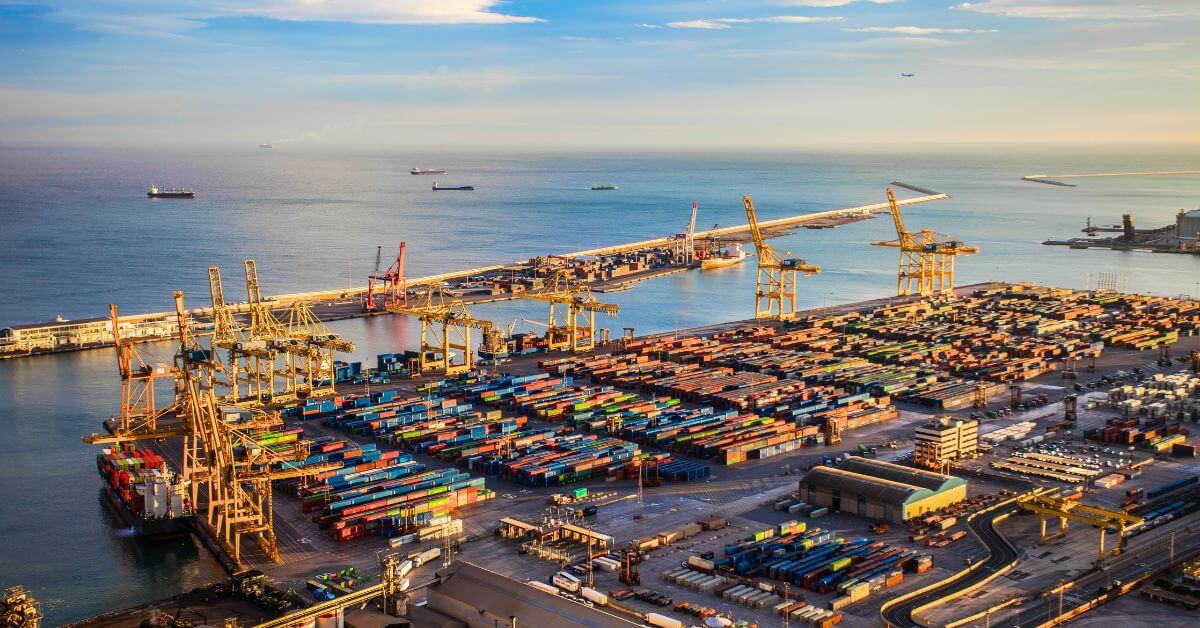
China’s annual trade surplus has crossed $1 trillion for the first time, mainly because exporters have shifted their focus to Europe, Australia and Southeast Asia as shipments to the United States continued to fall due to high tariffs.
Customs data showed that China posted a $111.68 billion surplus in November, up from $90.07 billion in October and above expectations.
China’s exports grew 5.9% in November compared with the same month last year, reversing October’s 1.1% decline. Imports rose 1.9%, slightly higher than October’s 1.0% increase but below the predicted 3% rise.
Shipments to the United States fell 29% in November. This marked the eighth straight month of double-digit declines, despite an agreement on 30 October between President Donald Trump and President Xi Jinping to lower some tariffs.
The average US tariff on Chinese goods remains at 47.5%, which analysts say is well above the level that cuts into exporters’ profit margins.
Economists estimate that China’s limited access to the US market since Trump returned to office has reduced China’s export growth by about 2 percentage points, equal to around 0.3% of GDP.
Chinese exporters quickly shifted to other markets to limit the impact of US tariffs.
– Exports to the European Union rose 14.8% in November.
– Shipments to Australia increased 35.8%.
– Exports to Southeast Asia grew 8.2%.
– Shipments to Africa jumped nearly 28%.
According to an economist at Capital Economics, the tariff relief agreed between the US and China did not help lift US-bound exports in November, but other markets continued to support China’s overall export performance.
The economist also said China was expected to remain strong in global markets next year because exporters were rerouting goods and gaining price advantages.
Much of the export rise came from electronics and machinery. An analyst at Eurasia Group stated that shortages of low-grade chips and electronics had pushed prices up, helping Chinese export values.
The analyst also said that Chinese companies expanding abroad were importing more machinery and inputs from China itself.
Exports of rare earths increased 26.5% month-on-month in November, marking the first full month after Xi and Trump agreed to speed up rare-earth shipments.
With $1.1 trillion in surplus recorded in the first 11 months of the year, China has already surpassed last year’s full-year record. The rising surplus has raised concern from Western economies.
French President Emmanuel Macron, speaking to Les Echos after his visit to China, warned that the EU could consider tariffs if the imbalance is not reduced.
In Germany, Foreign Minister Johann Wadephul arrived in China for talks this week and said beforehand that he planned to raise issues related to rare earths, trade restrictions and industrial overcapacity.
Despite strong exports, China’s domestic economy remains weak.
– Factory activity has fallen for the eighth month in a row.
– Imports of unwrought copper have decreased, showing slower construction and manufacturing activity.
– Retail spending is still low, and investment has dropped to record levels.
– Auto imports have fallen nearly 39% this year.
Economists at ING said China needs stronger domestic demand and that this change will take time.
The Politburo announced that it plans to take steps to boost domestic demand, which analysts say is important for reducing China’s reliance on exports. More details are expected at the upcoming Central Economic Work Conference.
Even though China’s economy has slowed in recent months, its strong performance earlier this year means it is still on track to meet the growth target of around 5%. However, analysts warn that rising trade tensions, especially with the US and EU, could affect next year’s outlook.
References: Reuters, Al Jazeera
Source: Maritime Shipping News