
Two Ghost Tankers Load Crude At Venezuela’s Largest Export Terminal Despite U.S. Pressure

UK Develops AI-Powered Naval Technology To Counter Rising Russian Submarine Activity
December 15, 2025
NYK & MOL Agree To Pay $72.3 Million To Settle Long-Running Car Carrier Cartel Case
December 15, 2025
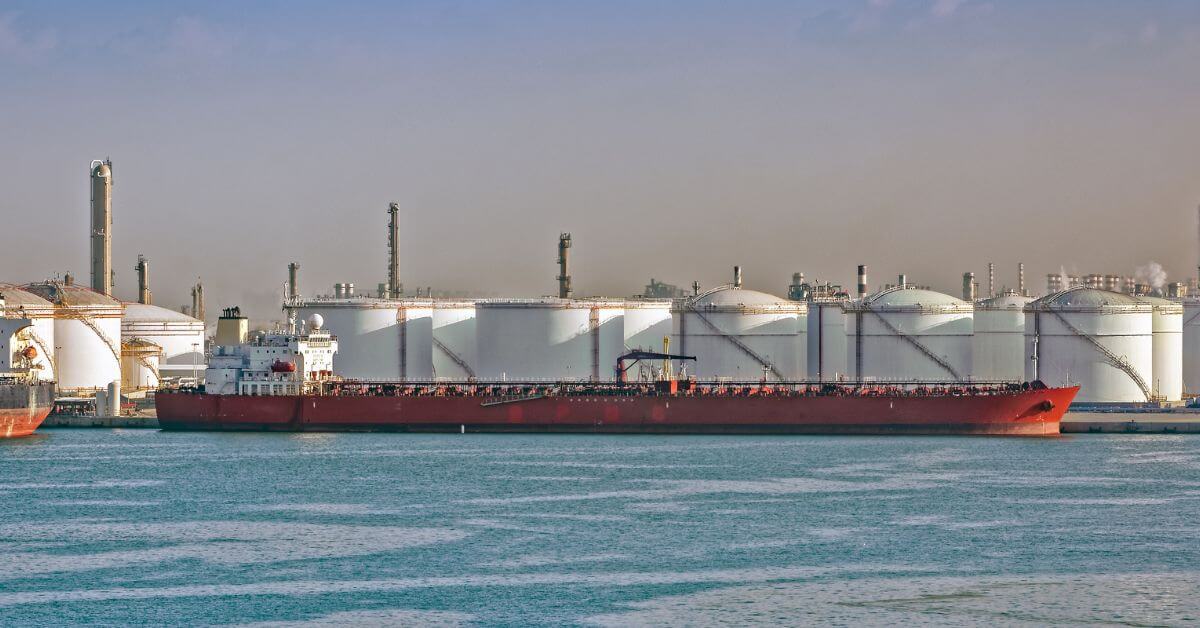
Two ghost oil tankers are currently loading crude oil off Venezuela’s coast, showing how difficult it remains for the United States to stop oil exports that are vital to the country’s economy.
Shipping data reviewed by Bloomberg show that the two supertankers are taking on crude at the government-run port of Jose, Venezuela’s largest export terminal.
Preliminary vessel-tracking information indicates that Venezuela has loaded almost 880,000 barrels of crude per day so far this month, a sharp increase from an average of around 586,000 barrels per day in November.
The surge in activity follows the recent seizure by US authorities of a tanker carrying Venezuelan oil. The seizure is part of Washington’s effort to cut off oil revenues to President Nicolás Maduro and increase pressure on his government. Despite this, oil shipments from Venezuela have continued.
The two vessels, operating under the false names Crag and Galaxy 3, are expected to load nearly four million barrels of Merey 16 crude, according to shipping reports.
Both tankers are reportedly bound for Asia. Such vessels are commonly referred to as ghost tankers because they attempt to disguise the origin of their cargo in order to avoid international sanctions.
In Venezuelan ports, ship identities are often concealed by covering vessel names, making it unclear whether the tankers currently loading are already subject to US sanctions.
Satellite imagery has confirmed that all three berths at the Jose offshore terminal are occupied by the two supertankers and a third vessel, the Aframax tanker Nave Neutrino.
The Nave Neutrino is chartered by Chevron Corp, which remains the only company authorised by the US Treasury Department to lift Venezuelan crude under a special licence.
Sources familiar with the matter said the US recently renewed Chevron’s licence, allowing it to continue pumping oil in partnership with Venezuela’s state oil company PDVSA. Under the terms of the licence, Chevron can transport oil but is not permitted to pay PDVSA in cash.
Chevron has said that its operations in Venezuela continue in full compliance with applicable US laws, regulations and sanctions frameworks.
Energy consultancy Rapidan Energy Group has estimated that around 30% of Venezuela’s oil exports, or roughly 300,000 barrels per day, could be affected by stricter US enforcement.
Any major disruption to supplies from the country with the world’s largest proven oil reserves could potentially affect global markets.
However, the impact has so far been limited, as rising production in countries such as the United States and Guyana has added to global supply. The International Energy Agency estimates that the market is currently oversupplied by a record 3.8 million barrels per day.
Venezuela’s state oil company PDVSA has fewer options to sell its crude and often sends cargoes to China at heavy discounts. Storage capacity within Venezuela is limited, making it necessary to keep exporting oil. This has increased reliance on ghost tankers to move crude and generate revenue.
In recent months, the Trump administration has intensified pressure on Caracas by ordering strikes on boats in the Caribbean allegedly linked to drug trafficking and warning of possible military action on Venezuelan territory.
The campaign intensified with the seizure of the supertanker Skipper, which US authorities said was involved in illicit oil shipments connected to foreign terrorist groups.
President Maduro has described the seizure as an act of piracy and said Venezuela will defend its natural resources. For now, the continued loading of ghost tankers at Jose shows that, despite rising pressure, Venezuelan oil is still finding its way to international markets.
References: Firstpost, Bloomberg
Source: Maritime Shipping News