

UK Develops AI-Powered Naval Technology To Counter Rising Russian Submarine Activity

Mega Container Ship Loses 45 Containers In Severe Weather Off Canary Islands
December 15, 2025
Two Ghost Tankers Load Crude At Venezuela’s Largest Export Terminal Despite U.S. Pressure
December 15, 2025
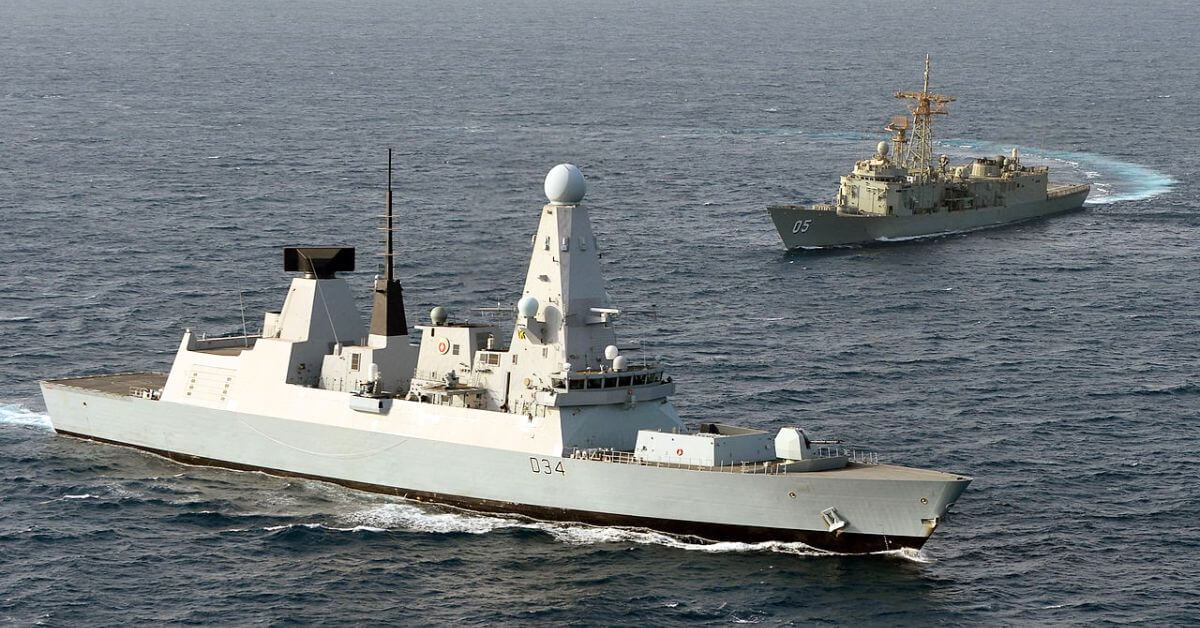
The UK Ministry of Defence (MoD) has unveiled plans to develop artificial intelligence-powered autonomous naval technology to counter rising Russian submarine and underwater activity and to protect Britain’s critical undersea cables and pipelines.
The initiative, known as Atlantic Bastion, will see autonomous surface and underwater vessels operating alongside warships, submarines and aircraft.
These platforms will be connected through AI-enabled acoustic detection systems and linked into a digital targeting network designed to speed up detection and operational decision-making across the maritime domain.
According to the government, the programme is a direct response to increased Russian submarine operations in British waters.
UK intelligence assessments have warned that Russia is modernising its naval fleet with the capability to threaten undersea infrastructure that supports communications and energy supplies.
Heightened concern followed an incident last month involving the Russian spy ship Yantar, which reportedly directed lasers at UK forces monitoring its movements after entering British waters. This marked the first such incident since the vessel’s arrival.
The same ship had also been observed operating in UK waters in January. Defence Secretary John Healey has said that the vessel is designed for intelligence gathering and mapping undersea cables.
The MoD said Atlantic Bastion will create a hybrid naval force capable of detecting, tracking and, if required, responding to underwater threats.
The programme aims to combine autonomous platforms with existing naval assets to improve surveillance and deterrence across key maritime areas. A total of £14 million has been jointly invested by the Ministry of Defence and industry partners.
Officials confirmed that 26 UK and European companies have submitted proposals to develop advanced anti-submarine sensor technologies. Deployment of the new capabilities is expected to begin from 2026.
Healey has warned that threats beneath the sea are increasing and that adversaries are targeting infrastructure that is critical to daily life in the UK and allied countries.
He has described Atlantic Bastion as a future blueprint for the Royal Navy, combining autonomous systems and AI with warships and aircraft to create a more advanced and effective naval force.
Meanwhile, Britain’s Chief of the Naval Staff, Admiral Gwyn Jenkins, was expected to address the International Sea Power Conference on Monday, where he was set to emphasise the Royal Navy’s ability to adapt as threats evolve.
He was also expected to highlight the development of a new underwater network stretching from the Mid-Atlantic Ridge to the Norwegian Sea, designed to be more autonomous, resilient and built in the UK.
References: Firstpost, Politico
Source: Maritime Shipping News