
Hapag-Lloyd & NCL To Operate Container Ships Using Hydrogen-Derived E-Fuels From 2027

Crew Member Arrested After Remote-Control Malware Found On Passenger Ferry In France
December 18, 2025
Watch: bound4blue & Amasus Complete Installation Of Largest Suction Sail On Cargo Vessel
December 18, 2025
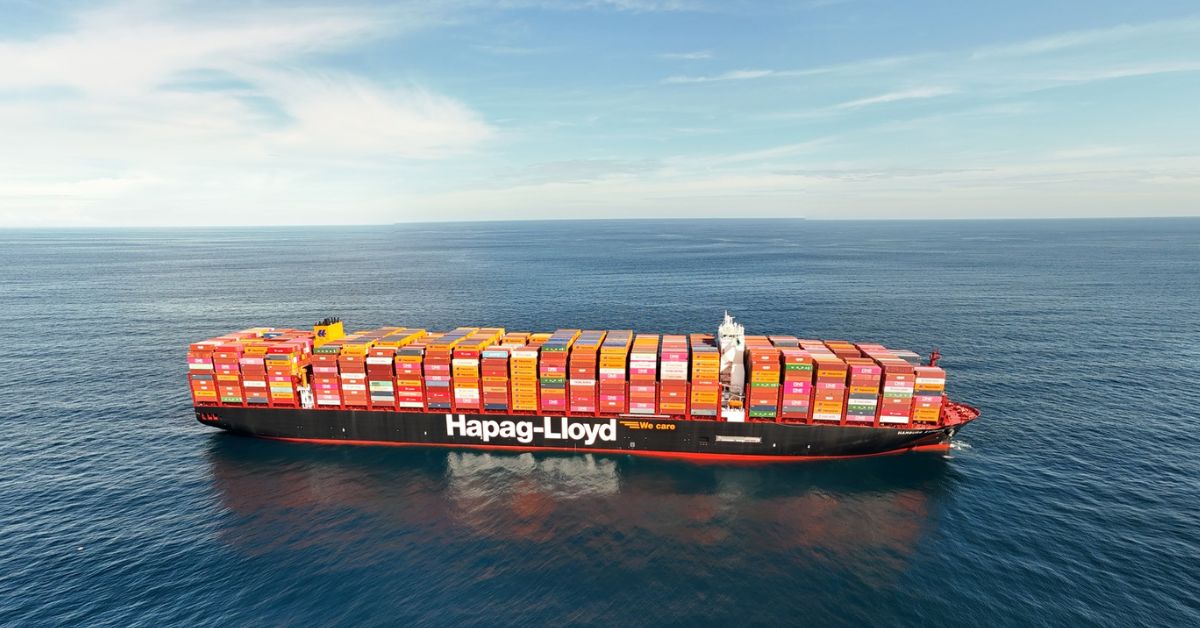
Hapag-Lloyd and North Sea Container Line (NCL) have been selected under the second tender organised by the Zero Emission Maritime Buyers Alliance (ZEMBA) to operate container ships using hydrogen-derived e-fuels from 2027.
Under the agreement, Hapag-Lloyd will use around 70,000 metric tonnes of e-methanol to power five large methanol dual-fuel container ships on a trans-oceanic trade lane.
NCL, meanwhile, will deploy approximately 25,000 tonnes of e-ammonia on a small container ship serving a northern European trade route.
The NCL vessel is expected to become the world’s first container ship powered by e-ammonia. Both projects will run for at least three years from 2027.
The volumes involved are considered notable, given that the use of hydrogen-derived e-fuels in commercial shipping remains negligible at present.
ZEMBA, a voluntary non-profit buyers’ group, brings together cargo owners willing to pay a premium for lower-emission shipping with vessel operators capable of using alternative fuels.
The alliance currently includes more than 45 members, among them major international brands such as Amazon, IKEA, Nike, Patagonia and Tchibo.
Through this tender, ZEMBA members have committed to collectively abating at least 120,000 metric tonnes of CO₂-equivalent emissions over a minimum period of three years.
According to the alliance, the agreement will enable participating companies to deploy e-fuels across roughly 20 billion tonne-nautical miles of ocean transport during that period, with some members extending their commitments to five years.
ZEMBA has indicated that its first large-scale market engagement showed that e-fuels are available at costs that make commercial sense, and that supply could increase if demand from the shipping industry grows.
The initiative comes at a time of regulatory uncertainty. In October, the International Maritime Organisation decided to delay the introduction of a global carbon pricing system for shipping by one year, following pressure from the United States. This has increased the role of voluntary, industry-led efforts to cut emissions.
Reducing emissions remains challenging for the shipping sector, as it often requires expensive upgrades to existing vessels or investment in new ships capable of running on alternative fuels such as e-methanol and e-ammonia.
Fuel for the projects is expected to be supplied by China’s Goldwind, which is likely to provide the e-methanol, and Yara Clean Ammonia, which is expected to supply the e-ammonia. Both fuels will be produced using low-carbon hydrogen generated from renewable energy.
Hapag-Lloyd’s management has indicated that winning the ZEMBA tender is an important step towards the company’s goal of reaching net-zero fleet operations by 2045, with e-methanol seen as a key part of its decarbonisation strategy.
Both e-methanol and e-ammonia used under the agreement are expected to reduce lifecycle carbon emissions by at least 90% compared with conventional marine fuels.
Reference: Reuters
Source: Maritime Shipping News