
U.S. Navy’s Oldest Aircraft Carrier Concludes Final Deployment After 9-Months At Sea

Venezuela Deploys Warships To Escort Oil Tankers After US Threatens Of Possible Blockade
December 18, 2025
Cargo Vessel Sustains Serious Damage After Striking Wall In Germany
December 18, 2025
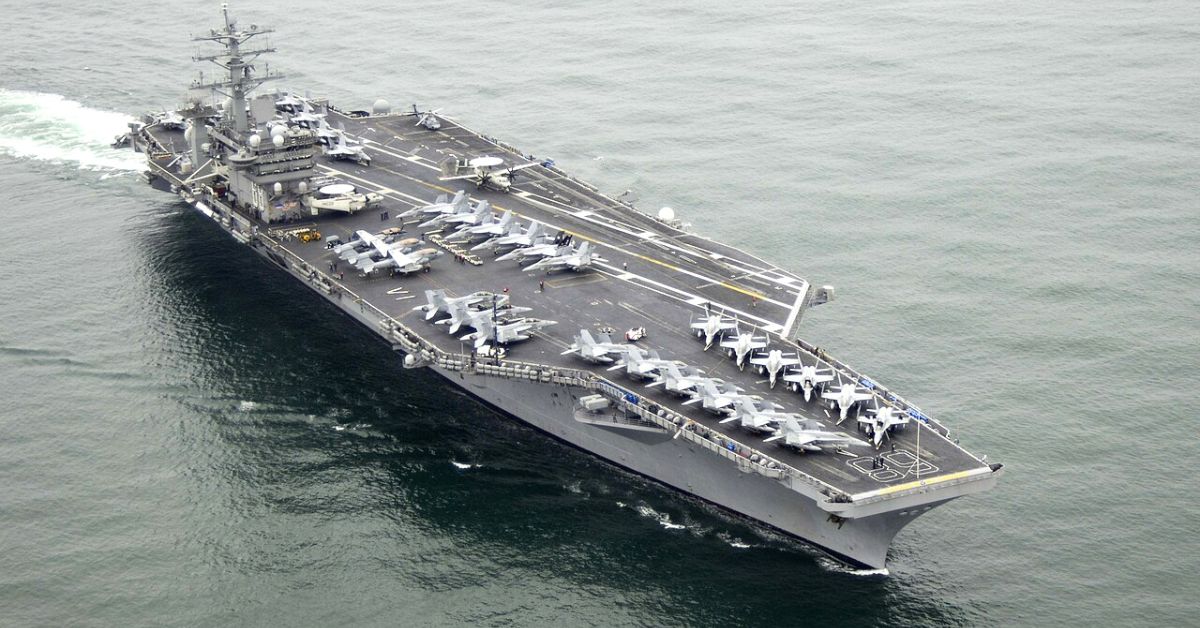
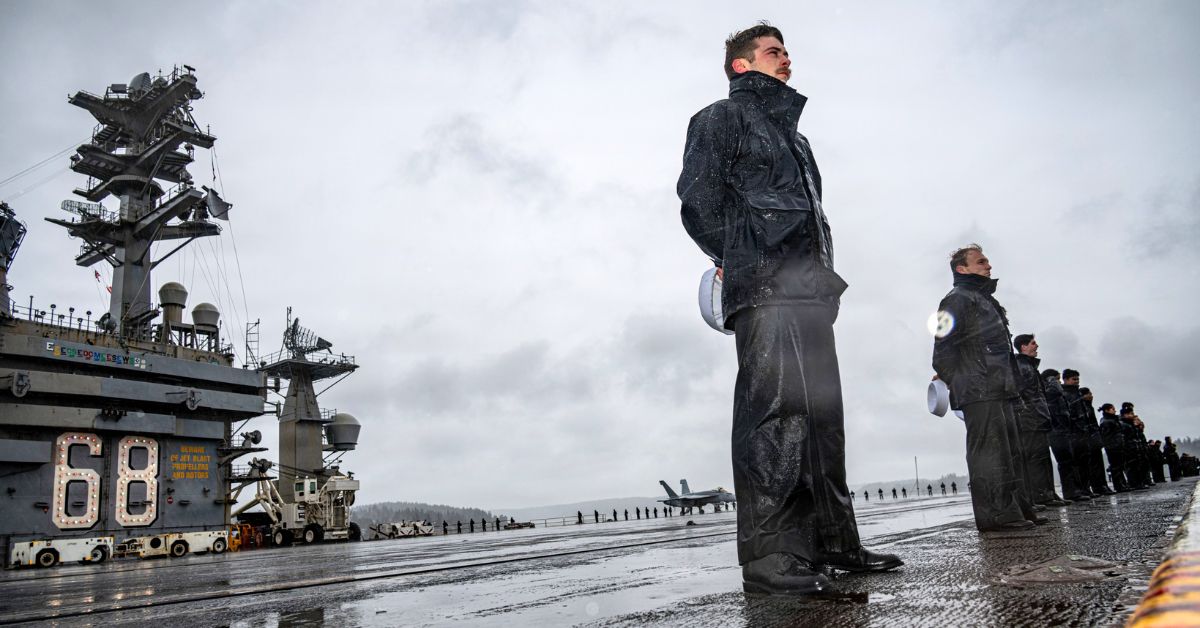
The US Navy’s oldest aircraft carrier, USS Nimitz (CVN-68), has returned to its homeport of Bremerton, Washington, concluding its final operational deployment after nearly nine months at sea.
The carrier arrived on 16 December after operating across the US 3rd, 5th and 7th Fleet areas.
USS Nimitz, commissioned in 1975, deployed earlier this year as the flagship of the Nimitz Carrier Strike Group (NIMCSG). The deployment began in March, with the strike group sailing from San Diego Bay.
After briefly returning to San Diego earlier this month to offload parts of the strike group and Carrier Air Wing 17, the carrier then sailed to Bremerton, in what is expected to be its final return to the port.
During the deployment, the strike group spent about three months in the Indo-Pacific and nearly four months under US Central Command, covering more than 82,000 nautical miles.
According to the US Navy, the mission aimed to maintain deterrence, work closely with allied and partner forces, and support stability in key maritime regions.
While operating in the US 5th Fleet area, USS Nimitz supported freedom of navigation in the Arabian Sea and completed four transits of the Strait of Hormuz.
The strike group also provided operational support to US Central Command, helping set conditions for regional stability and enabling the Iran–Israel ceasefire. The group supported US Africa Command by conducting strikes against ISIS targets in Somalia.
While operating in the Middle East, USS Nimitz made port visits to Bahrain, Oman and the UAE. These visits marked the first time in more than five years that a US aircraft carrier had called at both Bahrain and the UAE.
During this period, the strike group held leadership exchanges and joint activities with naval forces from Bahrain, the UAE, France, India, Malaysia, Oman, Pakistan, Saudi Arabia and Qatar.
In the 7th Fleet area, USS Nimitz supported operations to maintain a free and open Indo-Pacific, reassuring regional partners of continued US involvement in the region.
The carrier also took part in the Langkawi International Maritime and Aerospace Exhibition (LIMA 2025) and visited ports in Malaysia and Guam. During these visits, sailors participated in leadership meetings, community outreach, sporting events and cultural exchanges.
The deployment showed the strike group’s ability to sustain long operations across multiple regions, as well as the crew’s professionalism and readiness.
The deployment was operationally demanding. Sailors aboard USS Nimitz completed more than 8,500 sorties and logged 17,000 flight hours. The carrier also completed 50 replenishments at sea.
The final deployment was not without challenges. During the carrier’s first port call in Guam, a sailor assigned to the strike group went missing. Search efforts were conducted for five days before being called off by the US Navy.
Later in the deployment, while operating in the South China Sea, an F/A-18F Super Hornet and an MH-60R Seahawk helicopter, both assigned to the strike group, crashed into the water within approximately 30 minutes of each other on 26 October. The crews were rescued, and the aircraft were recovered in early December.
Earlier in the deployment, USS Nimitz conducted operations with a Japan Maritime Self-Defence Force destroyer in the Philippine Sea, operated near the Malacca Strait, and made a port call in Malaysia before transiting the South China Sea. In June, the strike group moved to the Middle East, where it operated alongside the Carl Vinson Carrier Strike Group.
The Nimitz group arrived in the region on the same day the US carried out strikes on three Iranian nuclear sites as part of Operation Midnight Hammer. The Carl Vinson strike group departed the region in July, while Nimitz remained for several more weeks.
Following its Middle East deployment, the strike group transited the Singapore Strait and returned to the Indo-Pacific, where it remained for the remainder of the mission. On its journey home, USS Nimitz made a port call at Pearl Harbor, Hawaii, before proceeding to Bremerton.
The Nimitz Carrier Strike Group comprised USS Nimitz, the embarked staff of Carrier Strike Group 11, Destroyer Squadron 9, Carrier Air Wing 17, and the Arleigh Burke-class guided-missile destroyers USS Curtis Wilbur (DDG 54), USS Wayne E. Meyer (DDG 108), USS Lenah Sutcliffe Higbee (DDG 123) and USS Gridley (DDG 101).
With its return to Bremerton, USS Nimitz is expected to eventually sail to the US East Coast for decommissioning.
Reference: US Navy
Source: Maritime Shipping News