
US Navy Fire Safety At Risk Despite Improvements Since 2020 USS Bonhomme Richard Fire, GAO Finds

Venezuela Authorises Two Oil Supertankers To Depart For China Amid Rising US Tensions
December 19, 2025
Nearly 600 Russian Shadow Fleet Ships Now Sanctioned As EU Targets 41 More
December 19, 2025
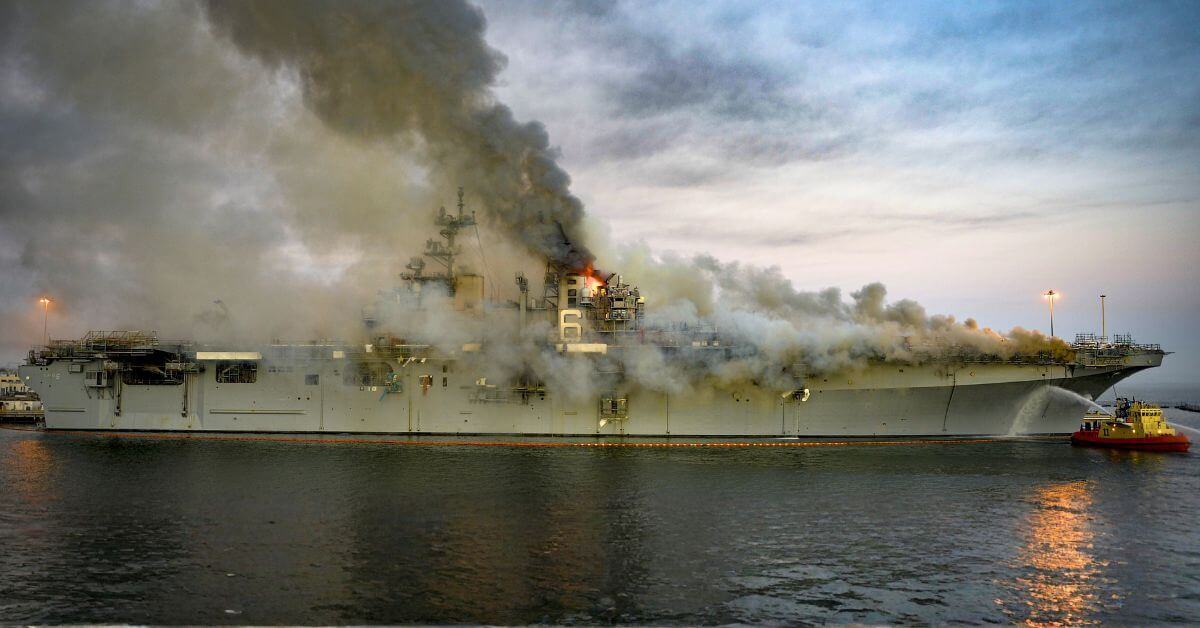
Five years after a devastating fire destroyed the USS Bonhomme Richard at a cost exceeding $3 billion, the U.S. Navy continues to face significant challenges in fire safety during ship maintenance, according to a new report by the Government Accountability Office (GAO).
The report says the Navy has made improvements since the 2020 fire, with no major incidents since. However, weaknesses remain in monitoring contractors performing welding and other “hot work” on ships.
Investigations into the Bonhomme Richard fire revealed that the ship’s lower vehicle stowage area contained improperly stored contractor items, including forklifts with fuel tanks, cardboard containers of supplies, batteries, and other flammable materials, which made the fire worse.
Staff shortages in key Navy fire safety organisations are also a concern. The GAO found that the Navy is increasingly relying on sailors who already have other duties, limiting oversight.
The report also found that the Navy’s principal tools for ensuring contractor compliance with fire safety standards are limited in effectiveness. Corrective Action Requests, used to bring contractors into compliance, do not incorporate monetary penalties for persistent safety issues.
Other oversight mechanisms were found lacking. Quality Assurance Surveillance Plans, intended to assess penalties, currently do not penalise contractors for failing to meet contractual safety standards.
Progress payment retention rates remain at reduced levels introduced during the COVID-19 pandemic, weakening their role as a compliance incentive.
Furthermore, the Navy has not adjusted its limitation on ship repair contractor liability since 2003, meaning inflation and the rising complexity and cost of ship maintenance have reduced the financial risk faced by contractors in the event of a major loss.
Following the Bonhomme Richard fire, the Navy established a Learning to Action Board in October 2021 to implement recommendations and monitor their effectiveness. However, the GAO found that the board does not always consider contractor compliance when planning responses to future incidents.
The GAO has issued six recommendations to the Secretary of the Navy, including developing mechanisms to optimise resources across fire safety oversight organisations, ensuring Quality Assurance Surveillance Plans include fire safety standards, improving the Corrective Action Request process to ensure contractor accountability, updating the limitation of liability clause for ship repair contractors and reassessing progress payment retention rates. The Navy has concurred with all six recommendations.
Reference: GAO
Source: Maritime Shipping News