
U.S. Coast Guard Awaits Additional Assets To Board Venezuela-Linked Oil Tanker

Nigerian Navy Rescues 20 Crew Members From Burning Vessel In Calabar Waterways
December 24, 2025
Indian Navy’s Stitched Sailing Vessel INSV Kaundinya Set To Sail On Maiden Overseas Voyage
December 24, 2025
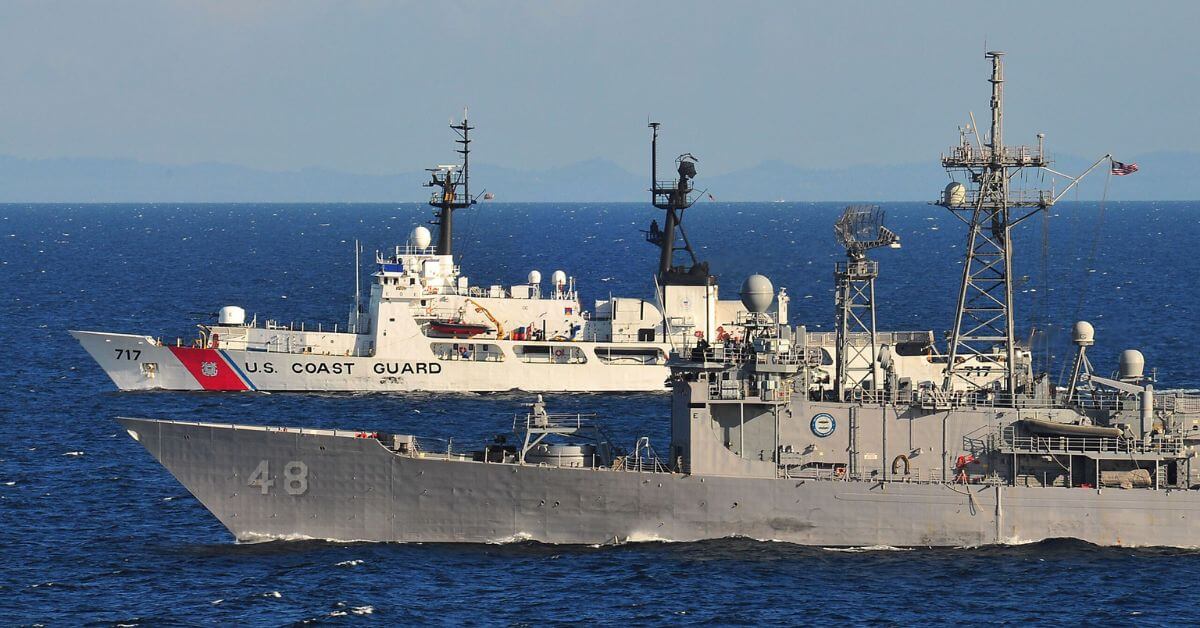
The U.S. Coast Guard is waiting for additional specialised forces to arrive before attempting to board and seize a Venezuela-linked oil tanker that it has been pursuing since Sunday, according to a U.S. official and a source familiar with the situation.
The tanker, identified by maritime tracking groups as Bella 1, has refused boarding by Coast Guard personnel. Due to the vessel’s non-compliance, the operation would likely require the involvement of one of the Coast Guard’s Maritime Security Response Teams (MSRTs), elite units trained to conduct high-risk boardings, including helicopter-based insertions.
Unlike the U.S. Navy, the Coast Guard has the legal authority to conduct law enforcement actions at sea, including boarding and seizing vessels subject to U.S. sanctions.
Earlier this month, U.S. President Donald Trump ordered a “blockade” of sanctioned oil tankers entering and leaving Venezuela, as part of Washington’s efforts to increase pressure on Venezuelan President Nicolás Maduro.
In recent weeks, the Coast Guard has seized two oil tankers in waters near Venezuela. Following the first seizure on 10 December, U.S. Attorney General Pam Bondi shared a short video showing helicopters approaching a vessel and armed personnel descending onto its deck.
Another social media post by the Department of Homeland Security (DHS) showed Coast Guard officers preparing to seize a second tanker, Centuries, from the aircraft carrier USS Gerald Ford.
However, a U.S. official said the Coast Guard personnel aboard the carrier were members of an MSRT and were positioned too far from Bella 1 at the time to carry out a boarding operation. The official noted that only a small number of teams are trained and authorised to conduct such boardings.
Maritime security specialists have also pointed to the limited availability of these units. Corey Ranslem, chief executive of maritime security firm Dryad Global and a former Coast Guard officer, said there are only a handful of teams qualified to carry out this type of operation.
The Department of Homeland Security did not respond to requests for comment, and it remains unclear whether operational, legal, or strategic considerations have delayed the seizure. Officials have indicated that the administration could ultimately decide not to board the vessel.
The White House, however, said the United States remains in active pursuit of a sanctioned “dark fleet” vessel involved in Venezuela’s sanctions evasion.
The United States has deployed a substantial military presence in the Caribbean, including an aircraft carrier, fighter jets, warships and additional aircraft. According to a separate source, Osprey aircraft and MC-130J Commando II planes have arrived in Aguadilla, Puerto Rico in recent days.
Meanwhile, the Coast Guard operates with limited resources while carrying out a wide range of missions. The service has repeatedly said it does not have enough capacity to meet growing demands, including search and rescue, counter-narcotics patrols and sanctions enforcement.
In November, the Coast Guard reported seizing approximately 49,000 pounds of illegal drugs, valued at more than $362 million, in the eastern Pacific.
Earlier this year, Coast Guard Commandant Admiral Kevin Lunday told U.S. lawmakers that the service is facing a severe readiness crisis that has developed over decades. He said the Coast Guard is currently less prepared than at any point since the end of the Second World War and warned that the ongoing decline is unsustainable.
For the fiscal year ending September 2026, the Coast Guard has requested $14.6 billion in funding. It is also set to receive an additional $25 billion through a broad spending and tax package known as the “One Big Beautiful Bill Act.”
Reference: Reuters
Source: Maritime Shipping News