

World’s Largest Medieval Cog Discovered Off Copenhagen

US Navy Rescues Three Filipino Fishermen Adrift For Days In South China Sea
January 3, 2026
Chinese Fishing Vessel Hijacked, Crew Abducted By Somali Pirates On New Year’s Day
January 3, 2026
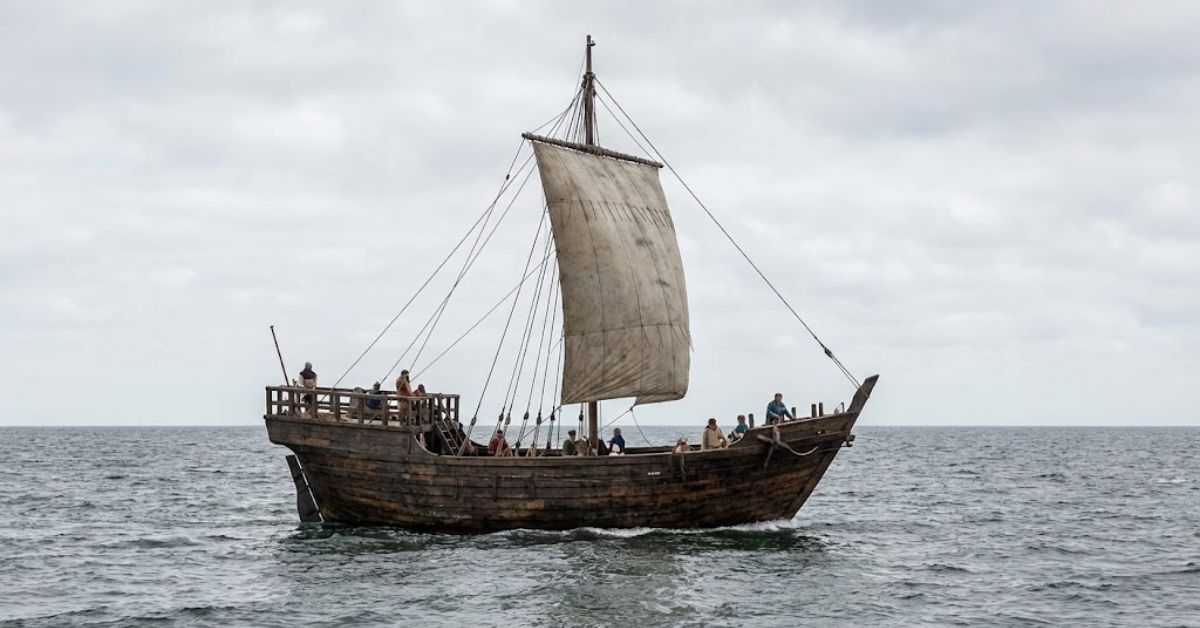
Archaeologists from Denmark’s Viking Ship Museum have discovered the world’s largest medieval cog in the waters between Denmark and Sweden.
The cargo ship, constructed around 1410, measures approximately 28 m in length, 9 m in width, and 6 m in height, with a cargo capacity of 300 tons.
Found at a depth of 13 metres, the cargo ship is extraordinarily well-preserved.
Sand protected its starboard side from keel to gunwale, giving archaeologists access to the upper structures and fittings that hardly survive the ravages of time. Even parts of its rigging are still intact.
The wreck offers a chance to examine the shipbuilding techniques and life onboard trading ships of the time.
The wreck has been named Svælget 2, after the channel where it was found during investigations linked to Copenhagen’s Lynetteholm development project.
Cogs were the most important trading ships of the Middle Ages.
They were handled by a small crew, which helped merchants transport massive volumes of goods between perilous routes around Skagen, sailing from the Netherlands via the Sound and on to the trading towns in the Baltic.
According to researchers, the ship was built with timber sourced from Pomerania, which is now Poland and the Netherlands, suggesting complex material supply and specialised shipbuilding capacities.
It was likely built in the Netherlands, where historians have found evidence regarding the construction of massive cogs.
Another surprising find is the brick-built galley, which is being called the earliest example of its kind from Danish waters.
Archaeologists reported finding 200 bricks and 15 tiles along with bronze cooking pots, ceramic bowls and food remains.
A large quantity of personal and domestic items have been found, such as wooden dishes, shoes, combs, rosary beads and cooking utensils.
Despite the size, researchers have not found any trace of cargo. They state that cargo was kept in an uncovered hold, like barrels of salt, timber or cloth and might have floated away when it sank.
The absence of ballast indicated it might be heavily loaded when it went down.
The finds from this ship are being preserved at the Brede Works of the National Museum of Denmark.
Source: Maritime Shipping News