
South Korea Plans Container Shipping Voyage Through Arctic Waters In September

VINSSEN Unveils Korea’s First Hydrogen Fuel Cell Powered Ship ‘HYDRO ZENITH’
January 7, 2026
Capital Clean Energy Takes Delivery Of World’s First 22,000 cbm Liquid CO₂ Carrier
January 7, 2026
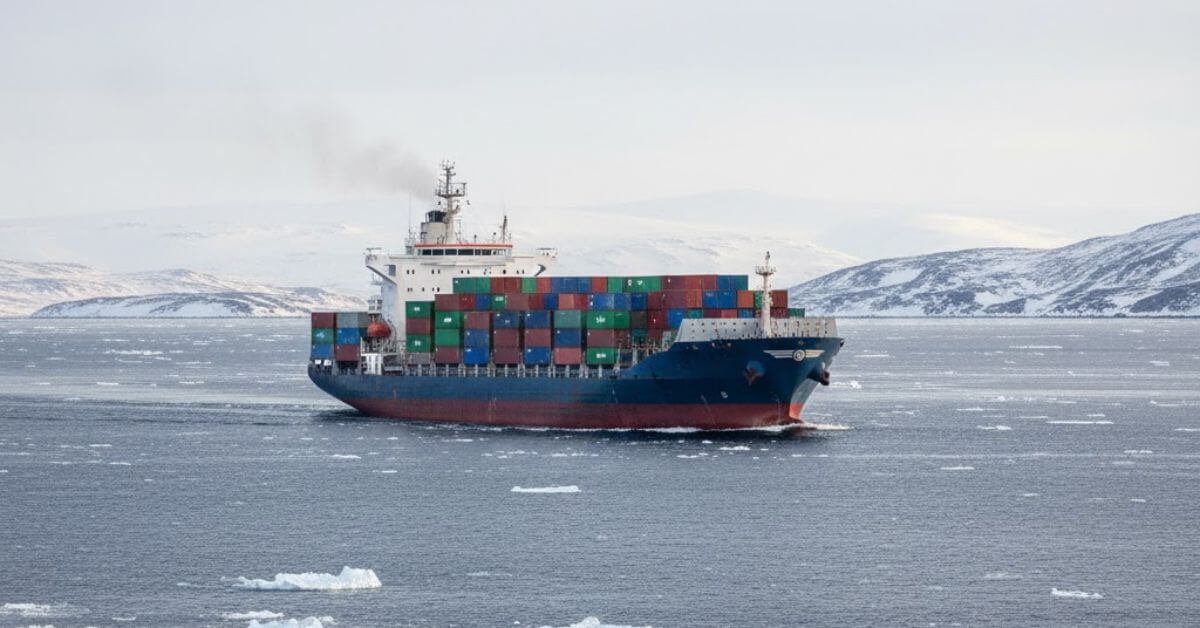
South Korea is planning to carry out a trial container shipping voyage through Arctic waters in September, as part of efforts to create a shorter sea route between Asia and Europe.
The Ministry of Oceans and Fisheries said the pilot voyage will involve a 3,000-TEU container ship sailing from Busan to Rotterdam via Arctic shipping routes.
The government is currently working to secure a vessel and begin consultations with Russian authorities in the first half of the year, as Russia issues permits for ships passing through much of the Arctic corridor.
Once a ship and shipping company are selected, the government plans to start recruiting shippers and cargo for the trial run.
The Arctic trial is part of a strategy to expand northern shipping routes and turn Busan and the surrounding southeastern region into a major maritime centre.
The ministry has described 2026 as the beginning of a new phase focused on Busan, with plans to relocate the oceans ministry to the city by the end of the year.
As part of the project, the government plans to support the construction of icebreakers and other polar-class vessels. It also aims to improve ice-strengthened container ship technology, train seafarers for polar operations, and consider incentive measures to encourage industry participation.
The ministry said working with Russia is challenging because of international sanctions. Officials said they are preparing a plan that will allow cooperation on Arctic navigation while still following Western sanctions, and that more details will be shared gradually.
Chinese shipping companies completed 14 container voyages between Asia and Europe via the Northern Sea Route in 2025, compared with 11 in 2024 and seven in 2023.
Cargo volumes on the route increased to around 400,000 tonnes last year, according to data from Russia’s nuclear icebreaker operator.
A key milestone was reached when a container ship completed a direct Arctic voyage between China and the United Kingdom in about 20 days, showing the time savings possible during the route’s short summer operating season.
Chinese carriers have since indicated plans to add more sailings and improve reliability in 2026.
Most Western container lines, however, continue to avoid regular Arctic services. Earlier trials have not led to permanent operations, largely due to environmental concerns, limited infrastructure, insurance difficulties and uncertain commercial returns.
Beyond Arctic shipping, the oceans ministry also outlined broader policy goals. These include developing Busan’s Jinhae New Port into the world’s largest smart container port by 2045, expanding eco-friendly and smart shipping, and investing about 600 billion won in research and development for fully autonomous ship technologies by 2032.
References: YNA, UPI
Source: Maritime Shipping News