

Video: U.S. Coast Guard Cutter Pursues Russian-Flagged Oil Tanker In North Atlantic

Trump Says Venezuela Will Hand Over Up To 50 Million Barrels Of Oil To The U.S.
January 7, 2026
HD Hyundai Heavy Industries Wins Second US Navy Ship Overhaul Contract
January 7, 2026
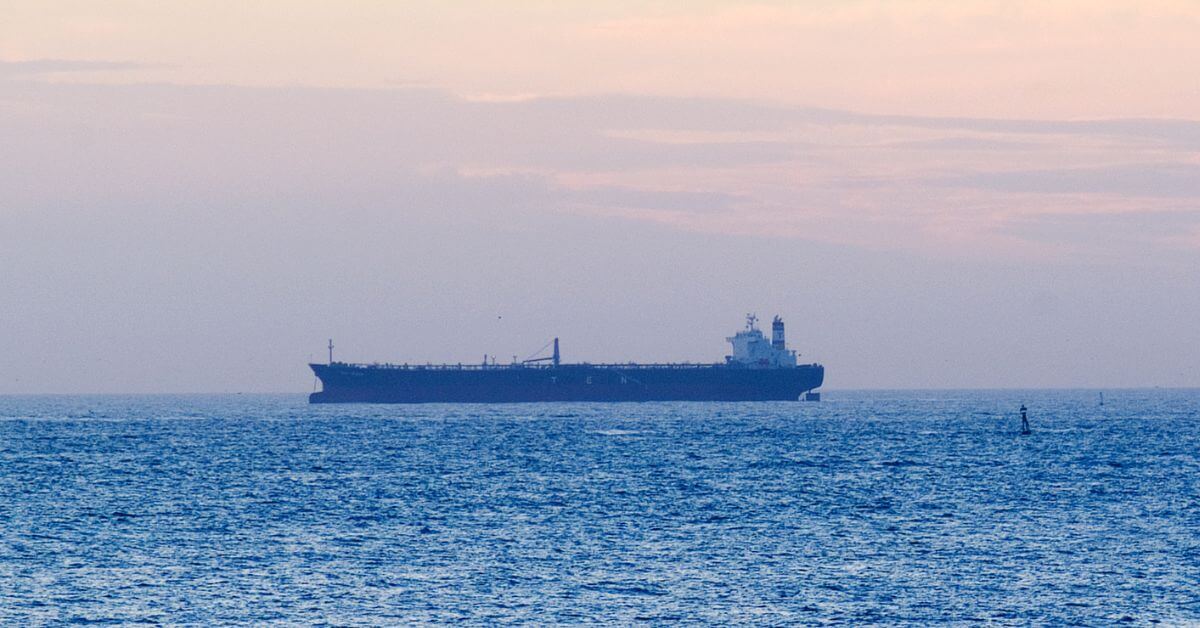
A U.S. Coast Guard cutter has been seen closely following a Russian-flagged oil tanker in the North Atlantic, after the vessel refused a U.S. boarding attempt and continued sailing in international waters.
The incident became public after Russia’s state-run media outlet RT released a video showing a U.S. Coast Guard Legend-class cutter sailing on a parallel course with the oil tanker Marinera.
The footage reportedly shows the vessels operating in rough seas between Iceland and Scotland. The video was released as tensions remain high between the United States and Russia.
The tanker, now named Marinera, was previously known as Bella 1. It reportedly failed to dock in Venezuela to load oil and is believed to be empty.
In December, U.S. authorities attempted to board the vessel, but the crew refused to allow access and continued sailing into the Atlantic. After that attempt, the crew reportedly painted a Russian flag on the ship’s side and re-registered it under Russian ownership.
U.S. officials have identified the vessel as part of a shadow fleet used to transport oil for sanctioned countries, including Russia, Iran and Venezuela.
According to U.S. authorities cited by American media, such vessels often operate with unclear ownership, lack Western insurance and use methods such as switching off tracking systems or transferring cargo in poorly monitored waters.
At the time of the attempted boarding, U.S. officials stated that the tanker was considered stateless and sailing under a false flag.
The vessel had been sanctioned by the United States for allegedly carrying black-market Iranian oil linked to groups designated by Washington as terrorist organisations, and it was reportedly subject to a judicial seizure order.
Video released by RT shows U.S. Coast Guard pursuing sanctioned tanker Marinera (Bella 1) to seize it in the North Atlantic.
Contributed by @AZ_Intel_. pic.twitter.com/jHxzXM106u
— Open Source Intel (@Osint613) January 6, 2026
However, maritime law experts have said that the tanker’s later registration under the Russian flag complicates the legal position.
A former senior legal official at the International Maritime Organisation reportedly explained that once a ship is legitimately registered, it falls under the legal protection of its flag state under international law.
The RT video does not clearly show which specific cutter is following the tanker. Legend-class cutters are 418 feet long and are commonly used for interdiction missions. They can carry MH-65 Dolphin or MH-60 Jayhawk helicopters and unmanned aerial vehicles.
A U.S. Coast Guard official previously stated that the service is replacing ScanEagle drones with Shield AI’s V-BAT drones. It remains unclear whether any aircraft were operating from the cutter during the pursuit.
The cutters are armed with a 57 mm deck gun, a 20 mm close-in weapon system, a decoy launching system and multiple .50-calibre machine guns.
Despite this, U.S. officials have indicated that a single cutter operating on the high seas may not be sufficient to safely board the Marinera.
Concerns about a boarding operation have increased following information suggesting that Venezuelan officials had discussed placing armed military personnel on oil tankers disguised as civilians, as well as deploying portable, Soviet-era air defence systems onboard.
In a separate operation in December, U.S. forces boarded another sanctioned tanker, the M/T Skipper, by fast-roping law enforcement and military personnel from a Navy helicopter operating from the aircraft carrier USS Gerald R. Ford near Venezuela.
Russia has reportedly sent a submarine to escort the Marinera, despite the tanker being empty and in poor condition. Analysts cited by U.S. media have suggested that Moscow is increasingly concerned about U.S. seizures of tankers involved in transporting illicit oil, which supports Russia’s economy under Western sanctions.
Russian officials have reportedly asked the United States to stop pursuing the tanker. In a separate report, RT claimed that the U.S. was attempting to intercept a civilian vessel bound for Murmansk. Russia has previously rejected claims that it operates a shadow fleet, describing Western sanctions as illegal.
Analysts estimate that more than 1,000 tankers now operate within the shadow fleet, many of them over 15 years old. Maritime experts have warned that the ageing condition of these vessels increases the risk of oil spills, collisions and other serious maritime safety incidents.
References: hindustantimes, twz
Source: Maritime Shipping News