

Japan Begins World’s First Deep-Sea Rare Earth Mining Trial To Reduce Chinese Supplies

Three Yachts Sink After Fire Breaks Out At Sydney’s Spit Bridge Marina
January 10, 2026
US Bases And Shipping Will Be Targeted If Washington Attacks, Warns Iran
January 12, 2026
Japan has begun a historic deep-sea trial to secure its own supply of rare earth minerals, as worries grow over China’s control of materials critical to modern industry and defence.
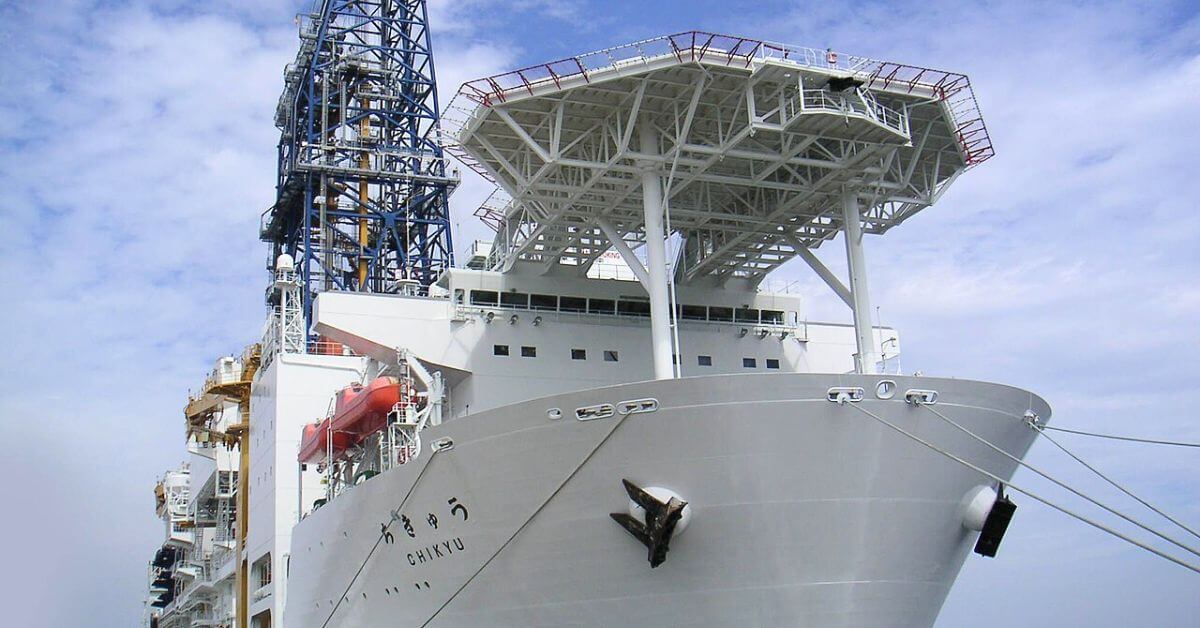
The scientific drilling vessel Chikyu left Shimizu Port in Shizuoka at around 9am on Monday for waters near Minami Torishima, a remote coral atoll about 1,900km southeast of Tokyo.
The month-long mission will attempt, for the first time anywhere in the world, to continuously bring rare earth-rich mud from the seabed at a depth of around 6,000 metres to the surface.
The trial marks Japan’s first attempt to produce rare earths domestically, as relations with China remain tense and Beijing has tightened export controls on items with both civilian and military uses.
China, the world’s largest supplier of rare earths, recently blocked exports of several dual-use items to Japan, increasing concerns in Tokyo about possible supply disruptions.
The project is being carried out with government support and led by the Japan Agency for Marine-Earth Science and Technology (JAMSTEC).
Officials involved in the programme have said the goal is to build a stable supply chain for minerals that are essential for industries such as car manufacturing, electronics, renewable energy and defence.
The waters around Minami Torishima lie within Japan’s exclusive economic zone and are believed to hold large quantities of rare earth elements.
Japanese media estimates suggest the area contains more than 16 million tonnes of rare earths, ranking it among the world’s largest known reserves.
The deposits are said to include heavy rare earths such as dysprosium and yttrium, which are used in high-strength magnets, electric and hybrid vehicle motors, lasers and other advanced technologies.
Japan remains heavily dependent on China for rare earths, especially heavy rare earth elements. Analysts have warned that this dependence poses a serious risk to key industries, particularly the automotive sector.
Although Japan has built stockpiles of rare earths since a supply disruption in 2010, officials have acknowledged that stockpiles alone cannot fully protect the country from long-term shortages.
Since 2010, Japan has reduced its reliance on China for rare earth imports from about 90% to around 60%. This has been done by investing in overseas projects, including partnerships with Australia’s Lynas Rare Earths, expanding recycling, and developing manufacturing methods that use fewer rare earth materials.
Economists have said that producing rare earths within Japan would be the most reliable long-term solution, but they have also warned that domestic production will be difficult, especially if China expands export controls to cover more materials.
The Minami Torishima project is a long-term effort. The Japanese government has invested around ¥40bn ($250m) in the project since 2018. ‘
Reserve estimates have not been disclosed and no production targets have been set. If the current trial is successful, a larger mining test is planned for February 2027.
Deep-sea mining of rare earth-rich mud was once considered too costly to be practical. However, analysts have said that continued supply pressure from China and higher prices could make the project viable in the future.
China is closely monitoring Japan’s activities. During survey work near Minami Torishima last year, Chinese naval vessels were seen operating nearby. Beijing has said its actions were in accordance with international law and has called on Japan not to exaggerate security concerns.
Rare earth supply security is also expected to be discussed by finance ministers from the Group of Seven industrialised nations at a meeting in Washington this week.
References: SCMP, france24
Source: Maritime Shipping News