
Mandatory Container Loss Reporting Comes Into Force Under New IMO Rules

US Bases And Shipping Will Be Targeted If Washington Attacks, Warns Iran
January 12, 2026
Piracy & Armed Robbery Surge In Straits Of Malacca And Singapore To 19-Year High
January 12, 2026
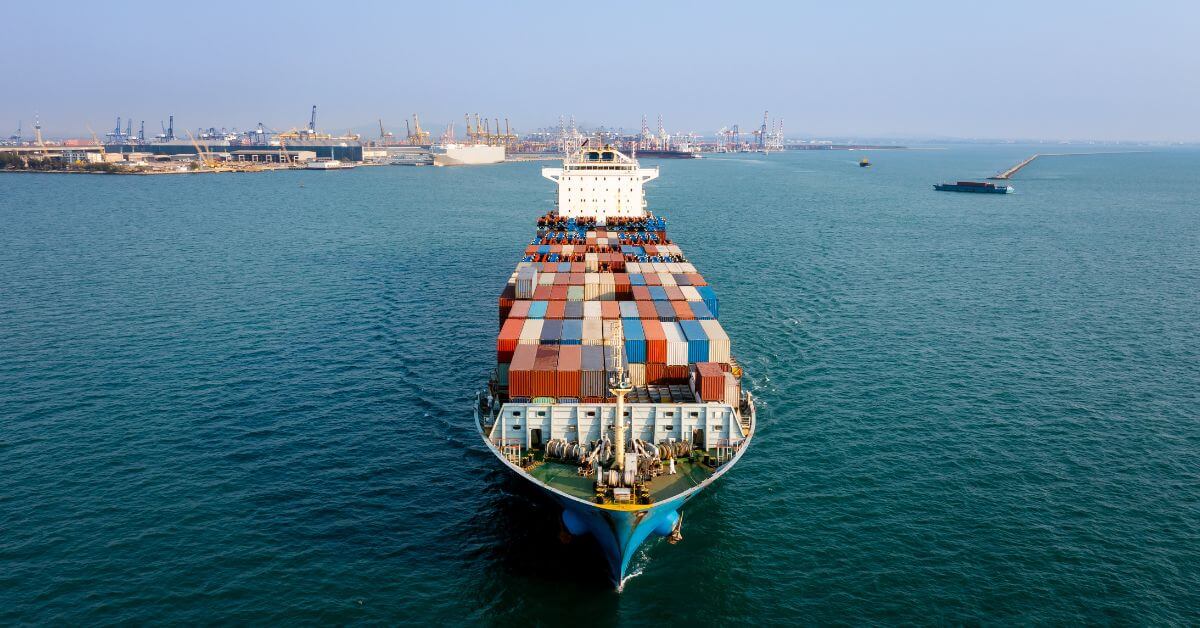
Mandatory reporting of containers lost at sea has come into force under new international regulations.
The rules form part of a set of safety and sustainability measures introduced from 1 January and are expected to increase compliance and operating costs for ship operators.
The reporting requirement follows amendments adopted by the International Maritime Organization (IMO) to the International Convention for the Safety of Life at Sea (SOLAS) and MARPOL.
From 1 January 2026, ships will be required to report all containers lost at sea. The requirement applies to any vessel carrying freight containers, as well as ships that observe containers drifting at sea.
According to the IMO, when containers are lost, the ship’s master must promptly share details of the incident with nearby vessels, the nearest coastal state and the ship’s flag state.
The flag state is then responsible for reporting the incident to the IMO. The changes are intended to improve navigation safety and reduce environmental risks, particularly when containers contain harmful substances.
The new rules follow several container loss incidents in recent years. In August, the container ship Ever Lunar lost 50 containers overboard.
In December, containers from the Baltic Clipper were found washed ashore along parts of the UK coastline.
Industry data shows that 576 containers were reported lost at sea in 2024, according to the World Shipping Council’s latest Containers Lost at Sea Report.
Although this figure was higher than the previous year, losses remained very low compared with the more than 250 million containers transported globally in 2024.
The increase in losses was linked mainly to vessels avoiding the Red Sea and rerouting around the Cape of Good Hope, where ships were exposed to more severe and unpredictable weather.
The South African Maritime Safety Authority reported that nearly 200 containers were lost in waters around southern Africa, accounting for around 35% of global container losses in 2024. Similar losses have not been reported in 2025, showing that the industry has adapted its operations.
The reporting requirements are detailed under SOLAS Chapter V (Safety of Navigation) through Resolution MSC.550(108). Shipmasters must report both container losses and sightings of drifting containers.
Reports must include the ship’s identity, the position, date and time of the incident, the number of containers lost or sighted, container size and type, and whether any dangerous goods are involved, including UN numbers where known.
The IMO has issued a circular providing a reporting template and interim forms for use by member states. It is recognised that not all information may be available at the time of the first report, meaning follow-up reports may be required once a full inspection can be carried out at the earliest safe opportunity.
If a ship is unable to report, or has been abandoned, the operating company is expected to take on the reporting responsibility as far as possible.
In addition to reporting requirements, new technical rules have also come into effect. Container ships and bulk carriers over 3,000 gross tonnes, built after 1 January, must now be fitted with electronic inclinometers.
Technology providers have begun supporting these safety efforts. In December, Eyesea and EVI Safety Technologies launched an artificial intelligence system designed to detect container stack collapses, allowing operators to identify container losses and estimate the number of containers lost overboard.
At the regional level, shipping companies are also facing higher costs due to changes under the European Union Emissions Trading System (EU ETS). Maritime transport was included in the EU ETS in 2024.
Shipping companies are required to surrender allowances for 40% of emissions in 2025. From 1 January, this increased to 70% of emissions, calculated on 100% of emissions between EU ports and 50% of emissions for voyages between EU and non-EU ports. From next year, the requirement will rise to 100%, with methane and nitrogen oxide emissions also included.
Other regulatory changes introduced from January include new requirements for the labelling and carriage of certain hazardous cargoes, adding further compliance responsibilities for ship operators.
The World Shipping Council has highlighted that every container lost at sea has environmental consequences. Marine insurer Gard has also pointed to its experience with costly shoreline clean-up operations and significant cargo-related claims linked to container losses.
Research is ongoing to better understand why containers are lost at sea. The International Group of P&I Clubs is involved in the TopTier project, led by the Maritime Research Institute of the Netherlands.
Launched in 2021, the project involved more than 40 stakeholders, including flag states, shipping companies, classification societies and equipment manufacturers.
The final report was submitted to the IMO in September and identified key risk areas such as operational limits, sea conditions, loading and stowage practices, securing equipment strength and inspection programmes.
Source: Maritime Shipping News