

Finland Lifts Seizure Of Cargo Ship Involved In Baltic Sea Cable Damage Probe

ITIC Warns P&I Correspondents After Fraudsters Divert US$200,000 Crew Settlement
January 13, 2026
Ukraine Carries Out Drone Strikes On Three Russian Oil Rigs In Caspian Sea
January 13, 2026
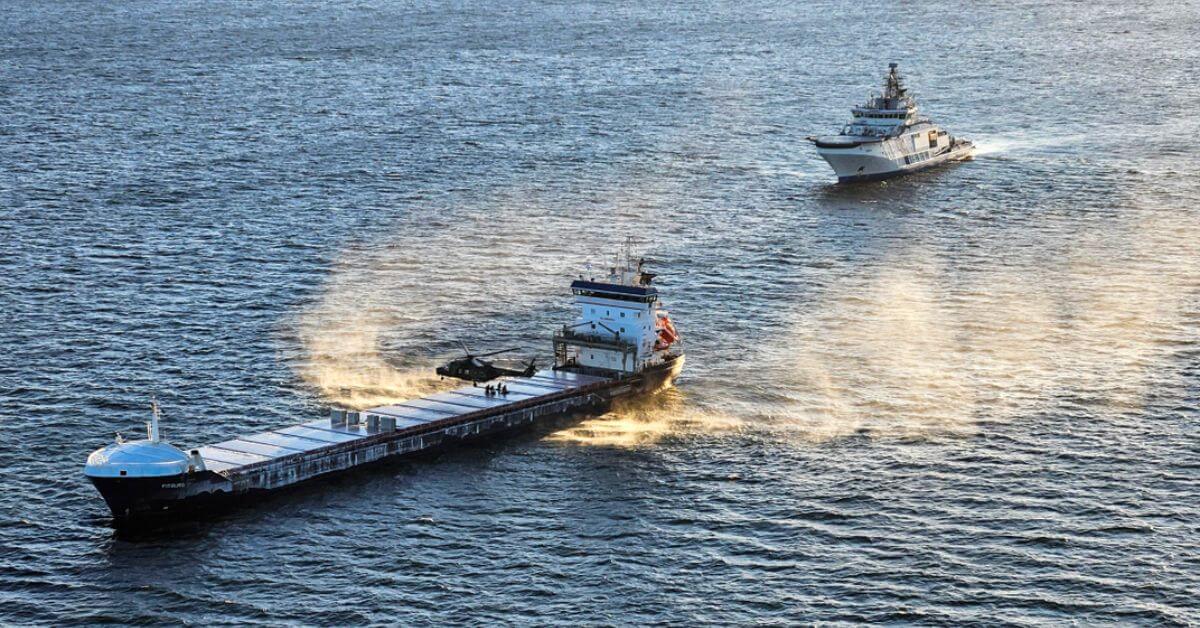
Finnish authorities have released a cargo ship that was held on suspicion of damaging an undersea telecommunications cable between Finland and Estonia, although the investigation into the incident is still continuing.
The Fitburg cargo vessel left Finland’s territorial waters on Monday at around 11:00 am, after being escorted by the Finnish Border Guard from Kantvik port in Kirkkonummi.
The ship had been seized on New Year’s Eve in the Gulf of Finland.
Finnish police said the seizure was lifted after Finnish and Estonian investigators completed their work on board the ship.
Authorities said there was no longer a reason to keep the vessel detained, but confirmed that the criminal investigation remains active.
The head of the investigation at Finland’s National Bureau of Investigation said that some members of the ship’s crew are still under a travel ban, even though the vessel itself has been released.
He also confirmed that one crew member has been remanded in custody following a new hearing at the Helsinki District Court on Sunday.
Finnish police had earlier requested the detention of the crew member, which the court approved. The court also raised the level of suspicion from reasonable suspicion to probable cause.
Additionally, three other crew members have been placed under travel restrictions.
The Fitburg was travelling from Russia to Israel when Finnish authorities took control of the vessel.
Investigators suspect the ship may have deliberately damaged the underwater cable by dragging its anchor along the seabed.
The ship has a crew of 14 people, including nationals of Georgia, Russia, Azerbaijan, and Kazakhstan, and sails under the flag of Saint Vincent and the Grenadines.
Finnish authorities are investigating the incident as suspected aggravated criminal damage, suspected attempted aggravated criminal damage, and suspected aggravated interference with telecommunications.
The incident comes at a time when the Baltic Sea region remains on high alert after several cases of damage to power cables, telecom links, and gas pipelines in recent years. Security concerns in the area have grown since Russia invaded Ukraine in 2022.
In response, NATO has strengthened its presence in the Baltic Sea, deploying frigates, aircraft, and naval drones to protect critical infrastructure.
Reference: Reuters
Source: Maritime Shipping News