
Shipping Giant Maersk Resumes Container Service Via Suez Canal As Red Sea Stability Improves

Watch: US Forces Seize Sixth Venezuela‑Linked Oil Tanker In Caribbean Sea
January 16, 2026
India’s Cochin Shipyard Delivers Advanced Multi-Purpose Vessel To German Shipping Firm
January 16, 2026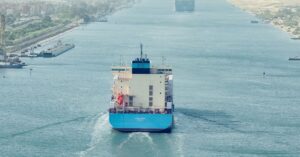
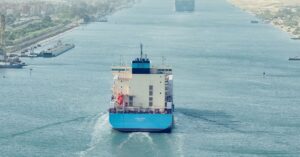
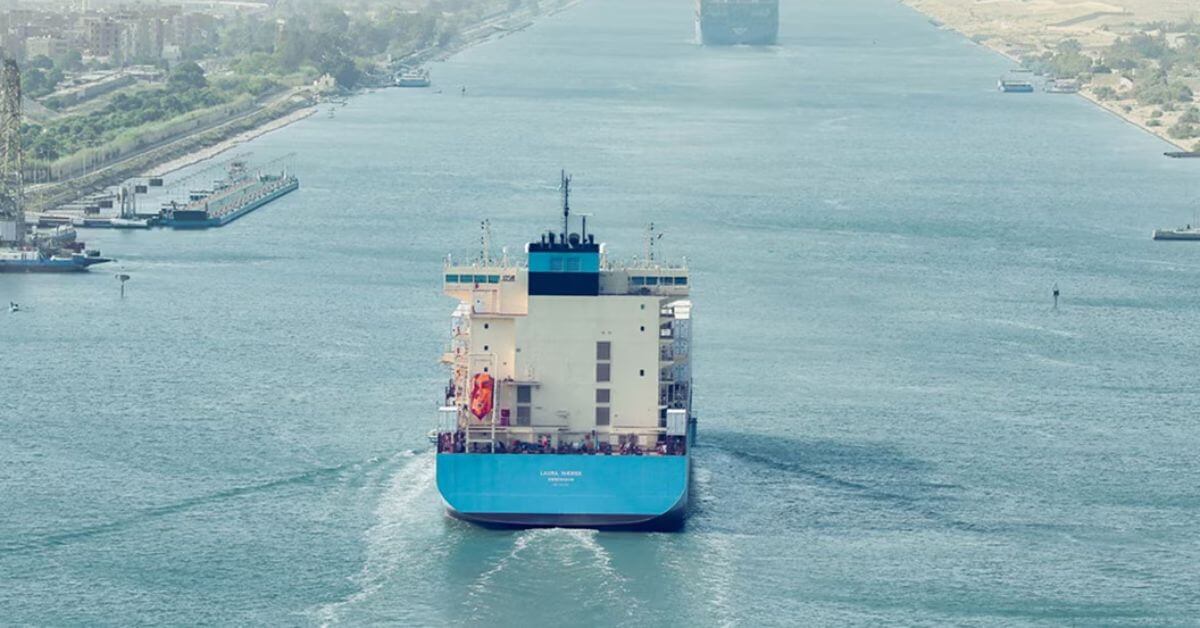
Maersk has announced the return of its MECL container service to the trans-Suez route, marking its first structural shift back to the Suez Canal after lengthy diversions around the Cape of Good Hope due to security concerns in the Red Sea.
The MECL service, which is operated solely by Maersk, links the Middle East and India with the US East Coast.
The company said the return to the Suez route allows the service to follow its original design and deliver more efficient transit times for customers, while keeping safety as the highest priority.
According to Maersk, the decision was taken after the Maersk Sebarok and Maersk Denver completed successful trans-Suez voyages.
Based on these sailings and a security assessment, the company proceeded with the first structural routing change back to Suez for the MECL service.
Maersk stated that the first westbound sailing under the revised routing will be Cornelia Maersk on voyage 603W, departing Jebel Ali on 15 January 2026.
The first eastbound sailing using the trans-Suez route will be Maersk Detroit on voyage 602E, departing North Charleston on 10 January 2026, with all subsequent MECL sailings planned to follow the same route.
In a separate market update, Maersk also indicated that the MECL service would begin its staggered return to the Red Sea and Suez Canal later in January, with a sailing departing the Omani port of Salalah on 26 January.
Maersk said it would continue to monitor the security situation in the Middle East closely.
Any further adjustments to the MECL service will depend on continued stability in the Red Sea and the absence of any escalation in regional conflicts.
The return to Suez follows nearly two years of disruption to global shipping caused by attacks on commercial vessels in the Red Sea by Yemen’s Houthi rebels, which forced many carriers to divert ships around southern Africa from late 2023.
Maersk has repeatedly stated that it views the Suez Canal as its preferred route when conditions allow, describing the corridor through the Suez Canal, Red Sea and Bab el-Mandeb Strait as the fastest and most efficient option for global trade.
The announcement had an immediate impact on financial markets, with Maersk’s shares falling by more than 5 per cent.
Industry analysts added that Maersk had been among the more cautious major carriers when it came to resuming Red Sea transits.
Logistics and freight forwarding executives said many cargo owners would welcome the return to faster transit times, despite ongoing security considerations.
Maersk has estimated that using the Suez route could cut up to a week from voyage durations compared with sailings around the Cape of Good Hope, potentially easing costs across supply chains.
Reference: Maersk
Source: Maritime Shipping News