Britain’s naval presence in the Gulf began in 1853, when maritime agreements were signed with local rulers of what later became the United Arab Emirates.


Royal Navy Set To End Permanent Naval Presence In Middle East As Last Ship Sails Home

Cargo Ship Takes Shelter In Port Of Vigo After Violent Storm Topples Containers
January 20, 2026
Takoradi Port To Make History With Arrival Of Largest Bulk Carrier Ever To Berth In West Africa
January 20, 2026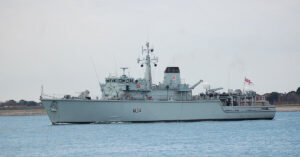

The Royal Navy is preparing to end its permanent naval fighting presence in the Middle East for the first time since 1980, as its final ship stationed in the region is expected to return to the UK later this year.
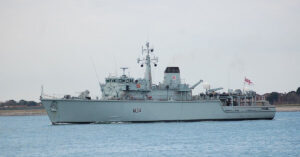
HMS Middleton, a Hunt-class minehunter based at HMS Juffair in Bahrain, is currently the only Royal Navy vessel operating permanently in the Gulf following the decommissioning of the Type 23 frigate HMS Lancaster late last year.
The minehunter, which is nearly 42 years old, is expected to withdraw in 2026, with some reports suggesting the departure could take place as early as March. No replacement vessel has been announced.
The withdrawal will leave the UK without a permanently deployed warship in the Gulf for the first time in more than four decades, ending a continuous naval presence that began with the Armilla Patrol during the Iran-Iraq War in 1980.
A former First Sea Lord has described the absence of a British warship in the Gulf as a serious strategic misstep, noting that the region continues to face persistent security challenges.
HMS Middleton has provided a specialised mine-countermeasures capability in the region, a role defence observers say is particularly relevant given the risk of maritime disruption during periods of instability.
Although the UK formally withdrew its bases from the region in 1971, regular naval deployments continued.
In 1980, the outbreak of the Iran-Iraq War led to the creation of the Armilla Patrol, ensuring a continuous Royal Navy presence that was later formalised under Operation Kipion.
Even during major conflicts such as the Falklands War, the Royal Navy maintained at least two warships in the Gulf.
During the 2003 invasion of Iraq, the UK was able to deploy 37 vessels to the Middle East over a year.
That figure declined to 22 ships in 2010, 17 in 2015, 15 in 2020 and just eight last year, most of which were linked to a carrier strike group passing through the region rather than remaining on station.
Fleet numbers have fallen significantly over the past decade. In 2014, the Royal Navy operated 65 ships, including 13 Type 23 frigates, six Type 45 destroyers and four amphibious assault vessels, alongside 11 submarines.
Today, the fleet stands at around 51 warships and 10 submarines, with several vessels spending extended periods alongside due to maintenance and manpower challenges.
The number of operational frigates has dropped to seven, while all former amphibious assault ships have been scrapped.
The First Sea Lord has warned in recent months that the Navy is struggling to meet growing operational demands, particularly in the North Atlantic, where Russian naval activity has increased. He has indicated that while the UK is not falling behind adversaries, available forces are stretched.
At the same time, the Royal Fleet Auxiliary, which provides essential logistical support to naval operations, is reported to be facing serious difficulties, further limiting sustained overseas deployments.
An Astute-class nuclear-powered attack submarine, HMS Anson, is currently deploying to HMAS Stirling in Western Australia under the UK–US–Australia partnership.
The submarine departed Faslane in January, transited via Gibraltar, and is expected to be deployed for an extended period.
Defence analysts believe the deployment leaves uncertainty over the availability of attack submarines for North Atlantic duties, although the Navy maintains it can meet its core commitments.
Long-term plans are in place to rebuild fleet strength, including the introduction of new Type 26 and Type 31 frigates, additional submarine classes and the development of uncrewed surface vessels under the Atlantic Bastion programme.
However, these platforms are not expected to enter service until later in the decade, with the first Type 31 frigate, HMS Venturer, due in 2027.
Reference: hellish2050
Source: Maritime Shipping News