

U.S Navy Fires One-Way Attack Drone From Warship At Sea For The First Time

U.S Navy’s Newest Combat Ship With One Of The Largest Flight Decks Commissioned
January 23, 2026
French Navy Intercepts Russian-Linked Oil Tanker In Mediterranean
January 23, 2026
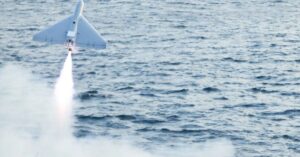
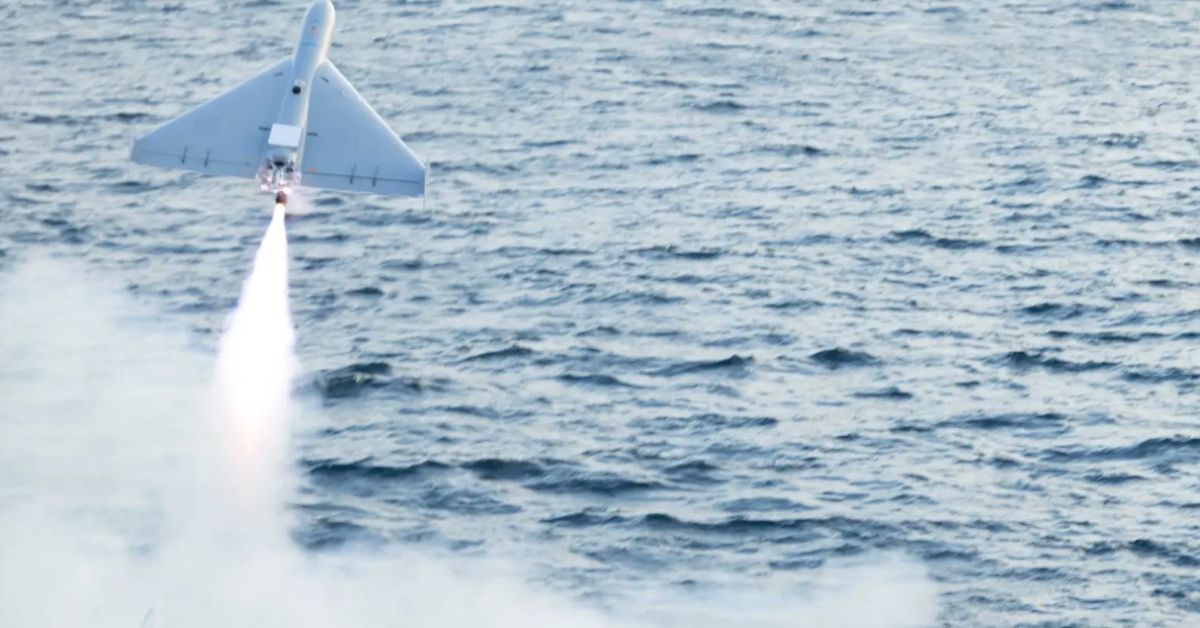
The U.S Navy successfully launched a one-way attack drone from a ship at sea for the first time on December 16, 2025, in the Arabian Gulf from the Independence-class littoral combat ship USS Santa Barbara.
Known as Low-cost Unmanned Combat Attack System, or LUCAS, the drone is part of Task Force Scorpion Strike, a squadron created to equip US forces with cost-effective unmanned systems.
Per the U.S Navy, LUCAS platforms in the Middle East are designed to be flexible.
The U.S is focusing on deploying autonomous, unmanned systems in the Middle East to support surveillance operations and reduce risk to the crew.
One way attack drones fly towards the target and destroy it on impact.
Additionally, they can be launched from ships or from ground level, from rocket-assisted takeoff systems or even vehicle-mounted launchers, allowing the U.S military to use them from any platform or location without the need for any specialised infrastructure.
The LUCAS drone is expected to strengthen the navy’s deterrence and maritime security capabilities.
Personnel assigned to the US Naval Forces Central Command and the US 5th Fleet played an important role in the launch.
Task Force 59 tests the uses of unmanned surface vessels, aerial drones, and artificial intelligence systems in strategic regions.
U.S. Naval Forces Central Command is the maritime component of US Central Command.
Its area of responsibility spans about 2.5 million square miles of water, including the Arabian Gulf, the Red Sea, the Gulf of Oman, and parts of the Indian Ocean.
It also includes three of the world’s most critical maritime chokepoints: the Strait of Hormuz, the Suez Canal, and the Bab al-Mandeb Strait.
These narrow waterways are vital since the majority of the world’s energy supplies pass through them, and so the U.S and its allies monitor these areas to maintain maritime security.
The Navy said the launch of the one-way attack drone from USS Santa Barbara shows how unmanned systems can be integrated into fleet operations without many changes to ship design.
Source: Maritime Shipping News