The UK government said that, following a request from the United States, the crew were allowed to disembark and would be dealt with according to immigration and legal procedures.


US Removes Captain And First Officer Of Venezuela-Linked Tanker From UK Waters

World’s First Marine Habitat Allows Scientists To Live Underwater For Days
January 28, 2026
Anemoi Completes Installation Of Four Folding Rotor Sails On Newcastlemax
January 28, 2026
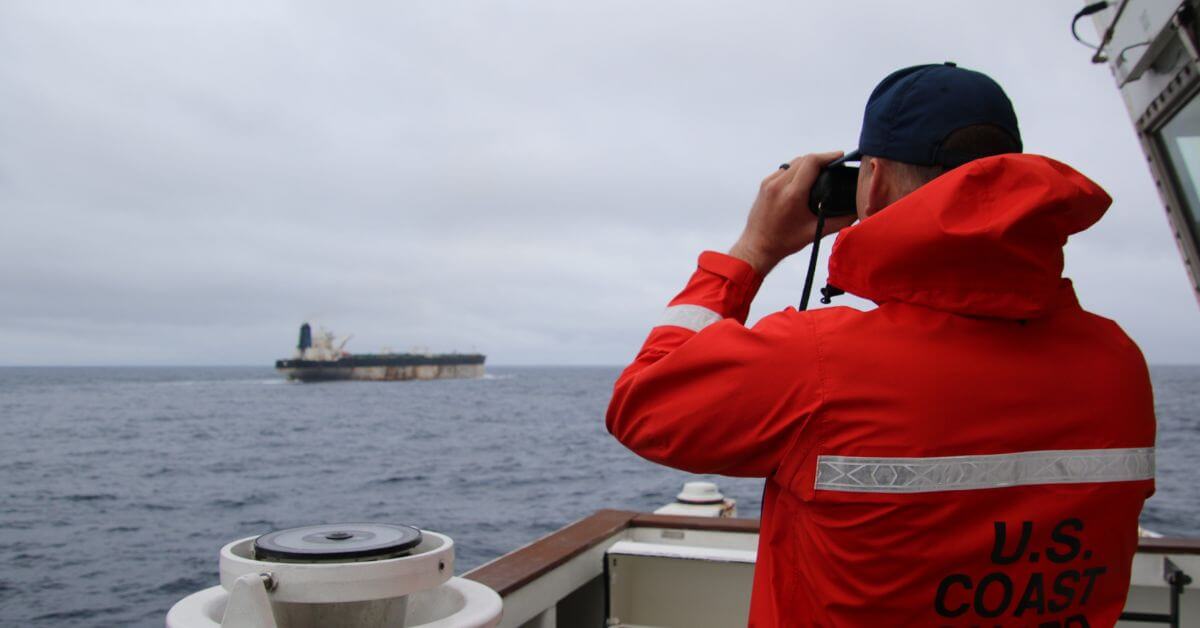
The captain and first officer of the Russian-flagged oil tanker Marinera, previously known as Bella 1, have been taken out of UK territorial waters and are now aboard a US Coast Guard vessel. This follows a brief legal attempt to prevent their removal from Scottish jurisdiction.
The Marinera, which has been linked to Venezuelan crude oil exports, was seized by the US Coast Guard and US military special forces on 7 January in the Atlantic near Iceland.
The vessel had been pursued for more than two weeks before being captured under a US judicial seizure warrant and later moved to the Moray Firth off the Scottish Highlands.
Lawyers acting for Natia Dzadzama, the wife of the ship’s captain Avtandil Kalandadze, lodged an emergency petition at the Court of Session in Edinburgh on Monday seeking to block the removal of the captain and crew.
Lord Young initially granted an interim interdict preventing Scottish authorities from allowing their removal from the court’s territorial jurisdiction.
However, the order was recalled on Tuesday after the court heard that Captain Kalandadze, a Georgian national, and the vessel’s first officer had already left UK waters.
Solicitor General Ruth Charteris KC, speaking on behalf of the Lord Advocate and Scottish ministers, told the court that both officers were now aboard the US Coast Guard cutter Munro and had left UK territorial waters.
She said confirmation of their departure was received in an email from the US Department of Justice early on Tuesday morning.
Aamer Anwar, the lawyer representing Dzadzama, said the removal took place despite ongoing legal proceedings and argued that the Scottish court’s review could no longer be enforced as the captain was no longer within British jurisdiction.
A government spokesperson added that tackling sanctioned oil movements and what it described as the Russian “shadow fleet” remained a priority.
The court also heard that the remaining 26 crew members were brought ashore and processed at a British Army reserve centre in Inverness before being accommodated in Moray.
According to submissions made to the court, none of the crew sought asylum. Five crew members opted to travel to the United States, while the others chose to return to their home countries.
Scottish ministers and the Lord Advocate maintained that they had not detained the captain, first officer or crew at any stage and said none had been arrested by Scottish authorities.
The court was told that a US request for mutual legal assistance had been received on 16 January and granted with specific conditions relating to crew welfare, including that all 28 individuals be brought ashore. That request was withdrawn on Sunday and formally confirmed in writing the following day.
Russia’s foreign minister said last week that Moscow had expected the United States to release the crew, noting that they included Russian, Ukrainian, Georgian and Indian nationals.
References: Reuters, Sky News
Source: Maritime Shipping News