
Royal Navy Sets Limit On Alcohol Consumption For Sailors While On Ships

Indian Crew Of Oil Tanker Seized By Iran Kept In Tiny Room Without Proper Food & Water
January 31, 2026
Turkey Lays Keel Of 1st Naval Support Vessel For Portuguese Navy
January 31, 2026

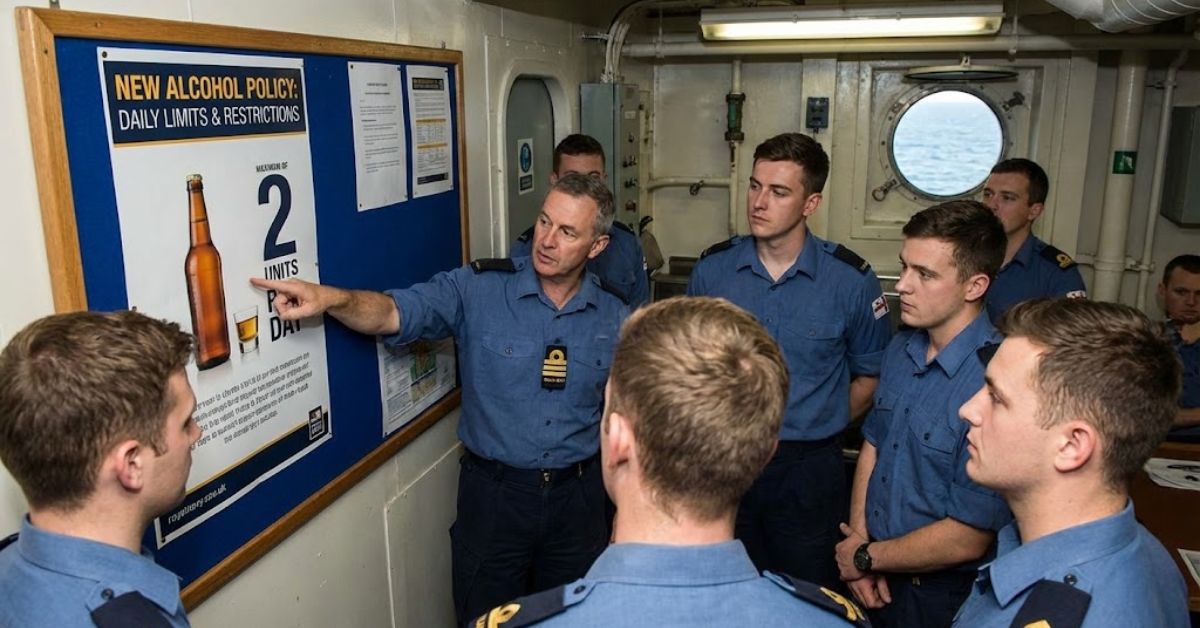
Royal Navy sailors can consume a maximum of 14 units of alcohol per week, according to the new regulations aiming to reduce alcohol consumption onboard ships.
Per new rules, Royal Navy personnel cannot consume over 3 units of alcohol a day, and ships must enforce 2 alcohol-free days a week.
Ships are instructed to sell only zero and low alcohol drinks to encourage responsible drinking habits.
The new policy is in tandem with the U.K Chief Medical Officer’s health advice and would ensure that sailors remain mentally fit for performing their duties.
The new restrictions are applicable to sailors only when they are onboard vessels, including when on on-shore bases.
Earlier guidelines enabled sailors to have 2 cans of beer a day, which is equivalent to over 3 units, depending on the strength.
A record of each sailor’s consumption was kept onboard and was paid for by the sailors themselves.
A Navy official told the BBC that new alcohol limits would be monitored in the same manner, with sailors paying for their own drinks.
The new regulations apply to all ranks, but senior ratings can use ‘their own discretion’ when applying the rules to themselves.
In case of an accident onboard, where anyone drank too much and was not able to perform their duties, the Navy source said that this would be dealt with in the same way that it is now, which is onboard the vessel.
The new guidelines are opposite to the Royal Navy tradition, where for hundreds of years, sailors would queue to receive their regulation lunchtime tot of rum.
However, this ended in 1970, on a day known in the Navy as Black Tot Day, though it was badly received and there were a lot of complaints and muttering among sailors at that time.
The present UK chief medical officer’s drinking guidelines, introduced in 2016, said that men and women who drink regularly should consume no more than 14 units a week, equal to 6 pints of beer or 7 glasses of wine.
When the present guidelines were announced, the UK’s chief medical officers said that research showed that alcohol could increase the risk of cancer.
Source: Maritime Shipping News