
85% Of Global Ship Tonnage Scrapped On Just 3 South Asian Beaches

US, Türkiye Discuss Naval Shipbuilding Cooperation Amid Growing Competition With China
February 5, 2026
US Navy’s Future USS John F. Kennedy Completes Builder’s Sea Trials
February 6, 2026
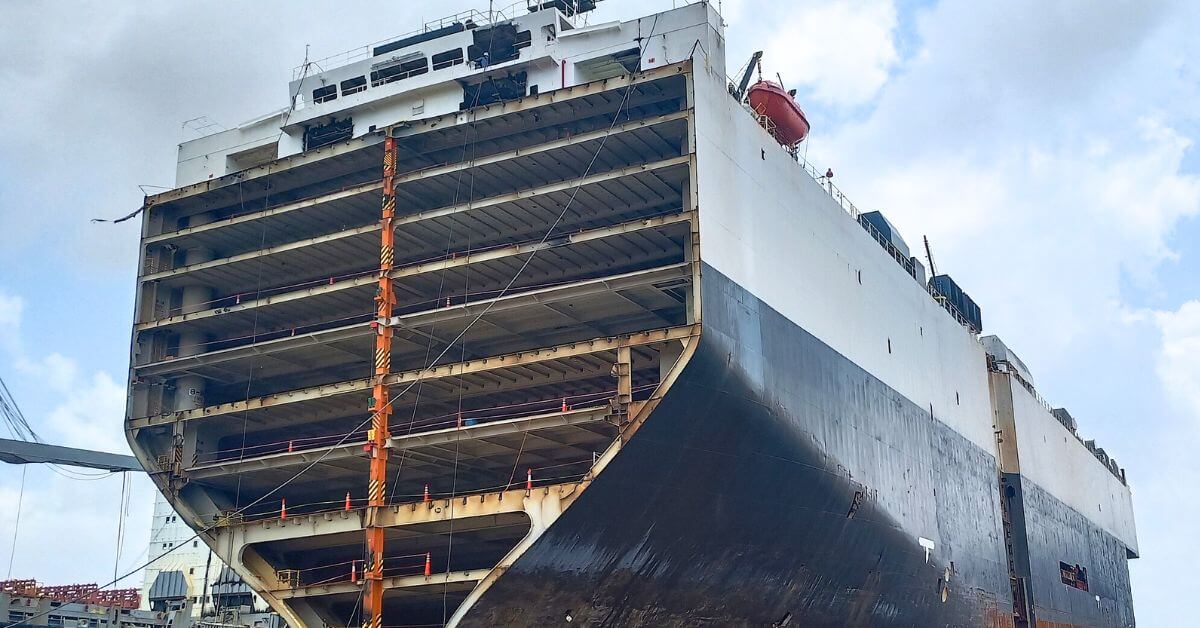
The NGO Shipbreaking Platform publishes its 2025 annual list of ships dismantled worldwide. The data reveals that 85% of the global tonnage scrapped last year was broken down on three beaches in Bangladesh, India, and Pakistan.
321 vessels were dismantled globally last year, of which 214 ended up in South Asia. Bangladesh and India remain the shipping industry’s first choices for scrapping, despite the documented grave consequences beaching ships has on workers, local communities and fragile coastal ecosystems. Eleven workers lost their lives in South Asia in 2025, with at least another sixty-two workers injured due to unsafe working practices.
One of the most serious incidents occurred at Ziri Subedar yard in Chattogram, Bangladesh, where an oil tank explosion injured eight workers during the dismantling operations of the BANGLAR JYOTI, a vessel owned by the Government of Bangladesh.
Bangladesh has already approved seventeen yards under the International Maritime Organisation’s Hong Kong Convention (HKC), which entered into force in June 2025. Yet, serious accidents continue to occur even at these yards, and incident reporting remains opaque or entirely absent. While in India no shipbreaking yards have so far been authorised under the HKC, more than 100 shipbreaking plots in Alang-Sosiya hold private Statements of Compliance with the Convention’s requirements.
“Clearly, the Hong Kong Convention does not set a standard that ensures safe and environmentally sound practices. Now under review at the IMO, it will be key to bolster its requirements, including ways to phase out the fatally flawed beaching method. At the same time, better enforcement of the Basel Convention’s restrictions on hazardous waste trade need to be ensured through measures that effectively hold the shipping industry accountable. This entails shifting responsibility to the states that actually have control over the owners of assets intended for disposal.” Ingvild Jenssen – Executive Director and Founder – NGO Shipbreaking Platform
The Platform also warns that the low number of ships that have been scrapped these past years due to favourable operating rates hides a growing backlog of aging tonnage that is expected to head for the breaking yards in the coming years. Included in the backlog are hundreds of tankers operating in the so-called dark fleet, some of which in 2025 were claimed to be illicitly traded to Indian beaching yards using cash, crypto and foreign currencies to avoid sanctions. These developments, combined with indications that the dark fleet may be far larger than widely assumed, risk fuelling a parallel and opaque shipbreaking economy where safety standards, environmental protections, and waste controls will remain easily bypassed.
“The many vessels that will be heading for scrap, including the dark fleet, must be recycled at safe, transparent, and fully regulated facilities — away from beaching practices. Existing facilities that already meet these standards, including ship recycling yards in the European Union, continue to operate at significant under-capacity, underscoring that safe alternatives do exist but remain systematically overlooked by the shipping sector.” Nicola Mulinaris – Senior Communication and Policy Advisor – NGO Shipbreaking Platform
China tops the 2025 Dumpers List, with 21 Chinese-owned vessels sold to South Asian shipbreakers, mainly in Bangladesh. This despite China’s domestic capacity to recycle ships in dry-dock facilities.
South Korea and the UAE are close runner-ups to Worst Dumpers, with 19 and 17 vessels beached, respectively. More than 60 vessels furthermore departed from these countries’ territorial waters for dismantling in South Asia. The UAE Ship Recycling Regulation, which entered into force in June 2025, however, explicitly prohibits vessels from leaving UAE territorial waters for scrapping at beaching- and landing yards, as these methods are not deemed safe and environmentally sound. International law is also clear: all transboundary movements of hazardous waste, including end-of-life ships, need to obtain Prior Informed Consent (PIC) in line with the Basel Convention and only be approved when safe and environmentally sound practices all the way to disposal are ensured. Exports of end-of-life ships from OECD to non-OECD countries are furthermore banned by international law, breaches of which are considered serious environmental crimes, as witnessed by cases brought to European courts.
Greek shipping magnate Vangelis Marinakis is the 2025 Worst Corporate Dumper. A Reporters United investigation into the illegal end-of-life sale of the tanker TRADER III — linked to companies controlled by Marinakis — shows how one of Europe’s most powerful shipping figures profits on selling toxic ships to Bangladesh, enabled by what a senior Greek official describes as a “policy of deliberate indifference”. The report traces the vessel’s final voyage from Turkey through Greek waters and onward to Chattogram, where it was beached at KR Ship Recycling Industries yard on 15 March 2025, completing several transactions designed to evade EU laws and externalise the costs of safely managing toxic waste to vulnerable communities and ecosystems in the Global South. Another Marinakis-linked tanker, the TRADER II, met the same fate on the same beach in September.
Other well-known owners — including Norwegian Green Reefers and Odfjell, South Korean H-Line, Hyundai LNG Shipping and SK Shipping, Cypriot cruise company Louis PLC, Greek Polys Haji-Ioannou Group, Japanese NYK Line and Mitsui OSK, and Swiss MSC — have contributed to the shipping industry’s toxic footprint, sending their end-of-life vessels for scrapping in the Global South. Lila Global, acting as the ship-owning arm of cash buyer GMS, also sent several vessels to yards in Bangladesh and India.
Recently, the International Association of Oil & Gas Producers (IOGP) adopted new decommissioning guidelines urging its members to avoid beaching and intermediaries such as cash buyers. While IOGP members Petrobras, SBM, and Shell already follow these guidelines, gas carriers and traders such as US-controlled Seapeak [1] and Thai Siamgas externalise their costs onto vulnerable communities and the environment in Bangladesh. According to local sources two workers lost their lives during beaching operations of the SEAPEAK ASIA, owned by Seapeak. The body of one shipbreaking worker and the severed body parts of another were recovered on the coast. A co-worker of the deceased and witness to the incident told media correspondents that they were struck by the SEAPEAK ASIA during night-time operations at KR Ship Recycling Yard, a plot authorised under the IMO’s Hong Kong Convention.
This fatal incident is not an isolated workplace tragedy, but part of a wider end-of-life shipping model in which regulatory loopholes and weak oversight converge at the point of dismantling. Vessels’ end-of-life phase is increasingly recognised as high-risk for environmental violations and financial crime. The widespread use of Flags of Convenience (FOCs), layered ownership structures, and offshore intermediaries enables shipowners to evade regulation and obscure accountability. Prior scrapping, vessels are commonly reflagged to a small group of low-oversight FOCs — such as Comoros, Palau, St. Kitts and Nevis — a practice known as flag-hopping and which allows easy circumvention of the EU Ship Recycling Regulation and Hong Kong Convention. In the case of the SEAPEAK ASIA, the vessel’s rapid flag changes — from Spain to the Bahamas in September, and again in December to St Kitts and Nevis — appear designed to evade the EU Ship Recycling Regulation, which requires EU-flagged ships to be scrapped only in EU-approved yards. No yards in South Asia are on the EU List as they do not comply with the Regulation’s requirements.
According to a recently published European Commission report, profits from scrap vessel sales — inflated by avoiding EU-compliant dismantling requirements — can be channelled through shell companies in low-tax jurisdictions using FOCs to disguise beneficial ownership, evade taxation, and launder proceeds linked to other illicit maritime activities such as illegal fishing or sanctions evasion.
Turkey is one of the few non-EU destinations that can receive EU-flagged end-of-life vessels — yet its ship recycling sector has come under mounting scrutiny. In Aliağa, civil society groups have challenged the sector’s EIA exemption and filed a criminal complaint alleging systemic regulatory failure. Public pressure led to calls for the EU to withdraw approvals for all yards, a call now also supported by 20 Turkish MPs.
In the last months, the sector in Aliağa saw three fatal accidents, including one at EU approved facility Temurtaşlar, and a major fire at Simsekler yard involving the FSO SLOUG, which still held an estimated 6,000 tons of petroleum. Meanwhile, Aliağa Municipality uncovered illegal dumpsites containing 15,000 tons of hazardous waste originating from the ship recycling sector.
At the EU level, broader economic and industrial transformations aimed at enhancing clean industries are taking place. Trade unions, the recycling and steel sectors, and civil society organisations are calling on the EU to curb the export of EU owned end-of-life vessels that may cause harm to third countries and recognise the role maritime secondary steel can play in decarbonising not only steel production, but also construction.
“Emerging regional strategies, such as those focused on strategic autonomy in raw materials, have renewed attention on scrap steel, bringing ship recycling into focus as a valuable source of high-quality materials. Companies like CMA CGM and Höegh Autoliners are already engaging with the steel sector and innovative start-ups such as Oppsirk, and by that stepping forward as market drivers for solutions that will enhance decarbonisation and circularity.” Benedetta Mantoan – Policy Officer – NGO Shipbreaking Platform
Press Release
Source: Maritime Shipping News