

US Navy’s Future USS John F. Kennedy Completes Builder’s Sea Trials

85% Of Global Ship Tonnage Scrapped On Just 3 South Asian Beaches
February 6, 2026
Fire Breaks Out On MSC Container Ship Following Explosion In Neva Bay
February 6, 2026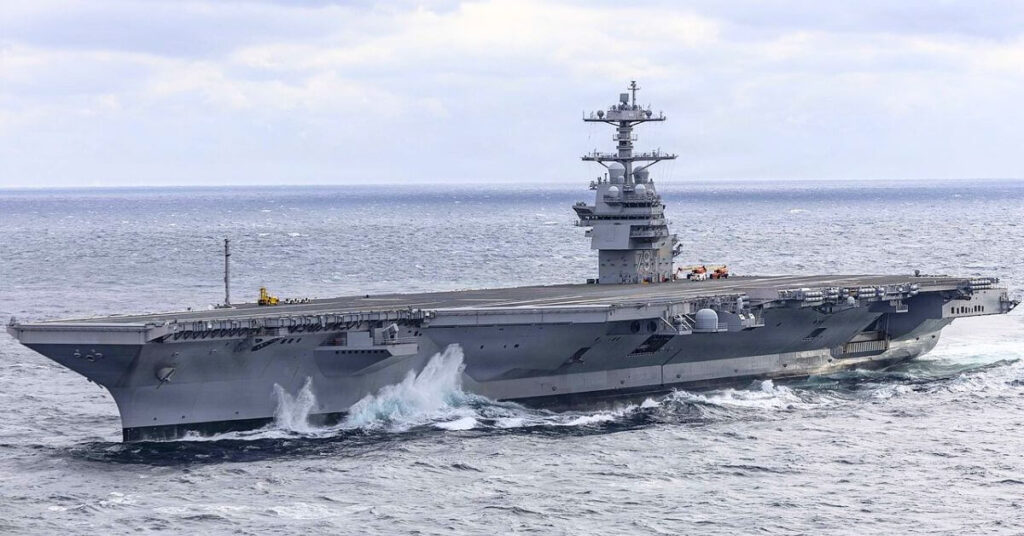
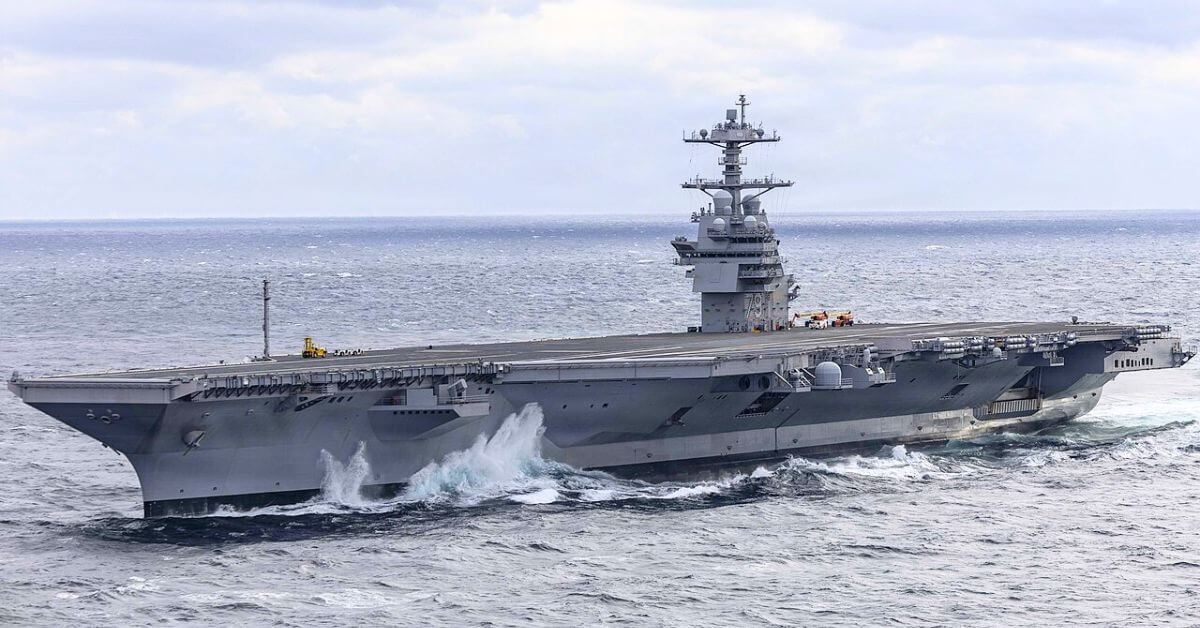
The future USS John F. Kennedy (CVN 79) has successfully completed Builder’s Sea Trials.
The trials were completed on 4 February at Newport News Shipbuilding in Virginia, according to the Navy’s Program Executive Office for Aircraft Carriers (PEO CVN).
This milestone marks the first time the second Gerald R. Ford-class aircraft carrier has operated at sea.
The trials involved sailors from the ship’s Pre-Commissioning Unit (PCU), shipbuilders from HII’s Newport News Shipbuilding division, and personnel from the Navy’s Supervisor of Shipbuilding, Naval Sea Systems Command (NAVSEA), and PEO CVN.
Together, the teams tested several key ship systems and technologies during the ship’s first sea voyage.
Before going to sea, John F. Kennedy carried out a five-day “Fast Cruise”, a pier-side training exercise used during new ship construction.
The exercise is designed to simulate operations at sea and helps the crew prepare for real-world conditions before the ship gets underway.
Navy officials involved in the programme said the first time a new aircraft carrier goes to sea is a major moment for both the shipbuilders and the crew.
Following the completion of Builder’s Sea Trials, the ship has returned to Newport News Shipbuilding, where construction work will continue.
Any issues identified during the trials will be addressed while remaining work on the ship progresses.
The next major milestone for CVN 79 will be Acceptance Trials, although the schedule for this phase is still being reviewed.
Programme leaders said progress is continuing towards delivering the carrier with all required capabilities. They added that close coordination with the shipbuilder is ongoing to ensure the vessel reaches combat readiness as quickly as possible.
HII confirmed that the trials involved testing important ship systems and components at sea for the first time.
The future USS John F. Kennedy is the second ship in the Gerald R. Ford-class of nuclear-powered aircraft carriers.
The class is designed to improve survivability, increase operational efficiency and reduce long-term ownership costs over an expected 50-year service life.
It features a new nuclear power plant, greater electrical power-generation capacity and design changes aimed at reducing crew requirements.
Once delivered, CVN 79 will strengthen the US Navy’s aircraft carrier fleet as part of its next generation of nuclear-powered carriers.
Reference: US Navy
Source: Maritime Shipping News