
Watch: US Navy Destroyer And Supply Ship Collide During Replenishment-at-Sea Near South America

Chemical Tanker Collides With Fishing Boat Off Kobe; One Injured
February 12, 2026
Japan Seizes Chinese Fishing Vessel, Arrests Captain In Exclusive Economic Zone
February 13, 2026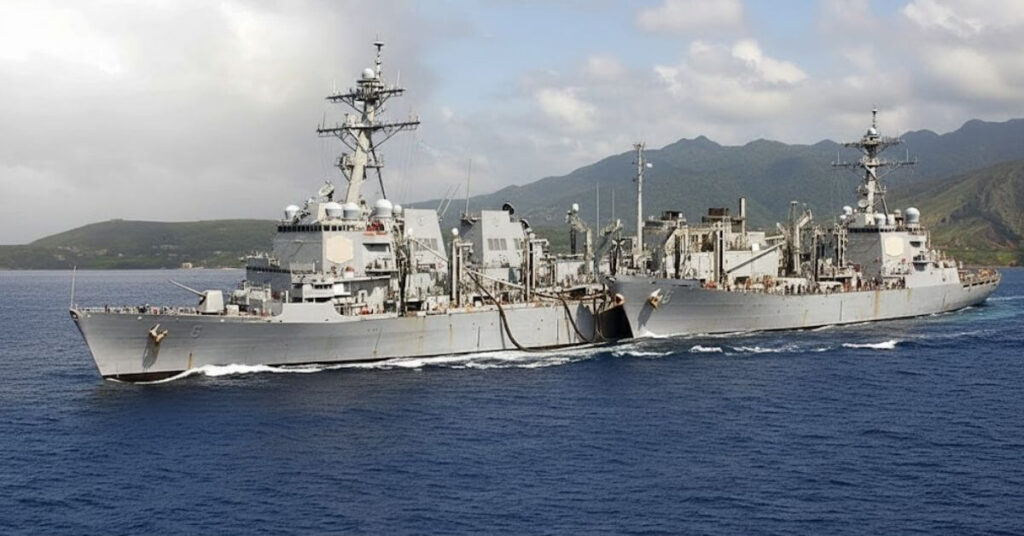
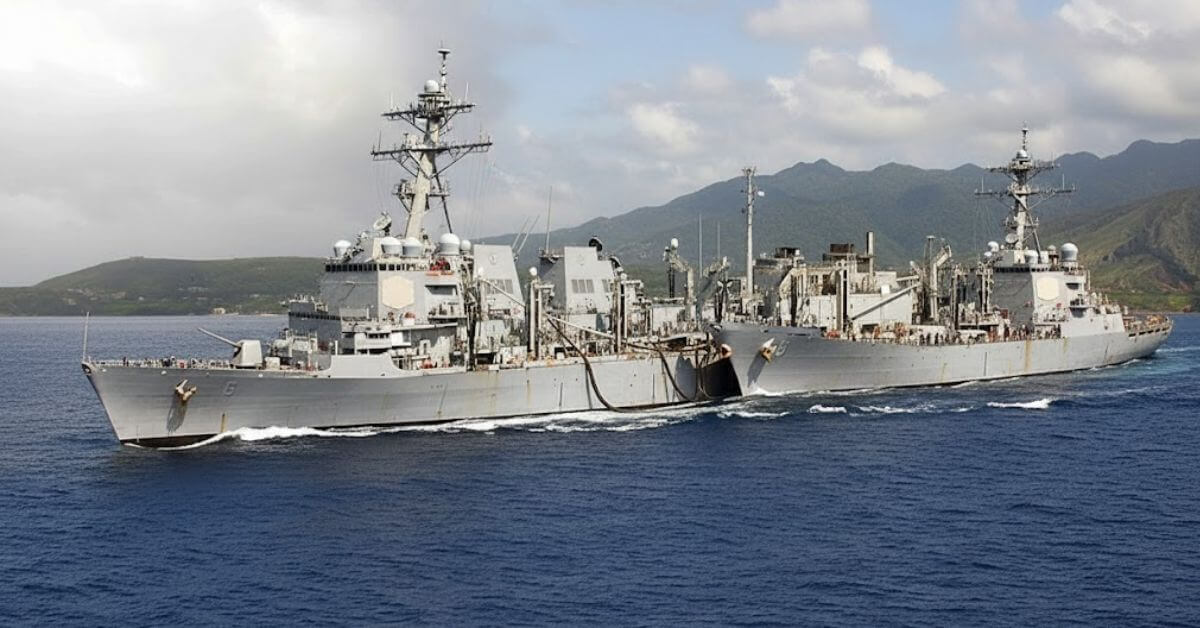
Two U.S. Navy vessels collided on Wednesday during a routine replenishment-at-sea operation near South America, resulting in minor injuries to two sailors.
Both ships were able to continue sailing under their own power, and the injured personnel were reported to be in stable condition.
The collision involved the Arleigh Burke-class guided missile destroyer USS Truxtun (DDG 103) and the Supply-class fast combat support ship USNS Supply (T-AOE-6).
The incident occurred while the ships were exchanging fuel and supplies at sea, a manoeuvre that requires precise coordination as both vessels sail side by side at matching speeds.
U.S. Southern Command confirmed the incident and reported that the cause of the collision remains under investigation.
The exact location has not been disclosed, but it occurred within the command’s area of responsibility, which covers parts of the Caribbean, South Atlantic, and regions off South America.
Video footage circulating online shows the USS Truxtun’s bow coming into contact with the side of USNS Supply before the vessels separated. The clip was first shared on social media and later referenced in defence reporting.
WATCH
USS Truxtun (DDG-103) collided with USNS Supply (T-AOE-6) during a refueling operation in the Caribbean. pic.twitter.com/qoQ6uYWfAR
— Open Source Intel (@Osint613) February 12, 2026

The USS Truxtun departed Naval Station Norfolk, Virginia, on 3 February for an autonomous deployment, just three months after its previous operation.
The ship’s current deployment forms part of a U.S. naval presence in the Caribbean and South Atlantic, which includes maritime security operations, counter-narcotics patrols, and enforcement of sanctions on Venezuelan oil shipments.
USNS Supply has been operating in the Caribbean, and the two ships were conducting replenishment operations in support of U.S. Southern Command.
The USS Truxtun joined a task group that includes approximately a dozen other vessels, including the aircraft carrier USS Gerald R. Ford.
Replenishment-at-sea allows naval vessels to receive fuel, provisions, ammunition, and other supplies without returning to port. The operation can take several hours and requires careful planning and coordination.
This is the first publicly reported collision involving the current Caribbean mission.
In recent months, U.S. naval operations in other regions have experienced multiple incidents, including collisions and aircraft losses amid intensive operational activity.
References: Reuters, Hindustan Times
Source: Maritime Shipping News