He also said he planned to take part in the current negotiations, at least indirectly, and indicated that Iran wanted to reach an agreement to avoid the consequences of not doing so.


Iran Temporarily Closes Worlds Most Critical Oil Shipping Lane “Strait of Hormuz” For Live Fire Drills

Family Of 23 Year Old Missing Merchant Navy Cadet Accuses Vessel Operator Of Refusing To Cooperate
February 18, 2026
US Coast Guard Cutter Returns After 60 Days At Sea, Escorts Two Sanctioned Oil Tankers
February 18, 2026
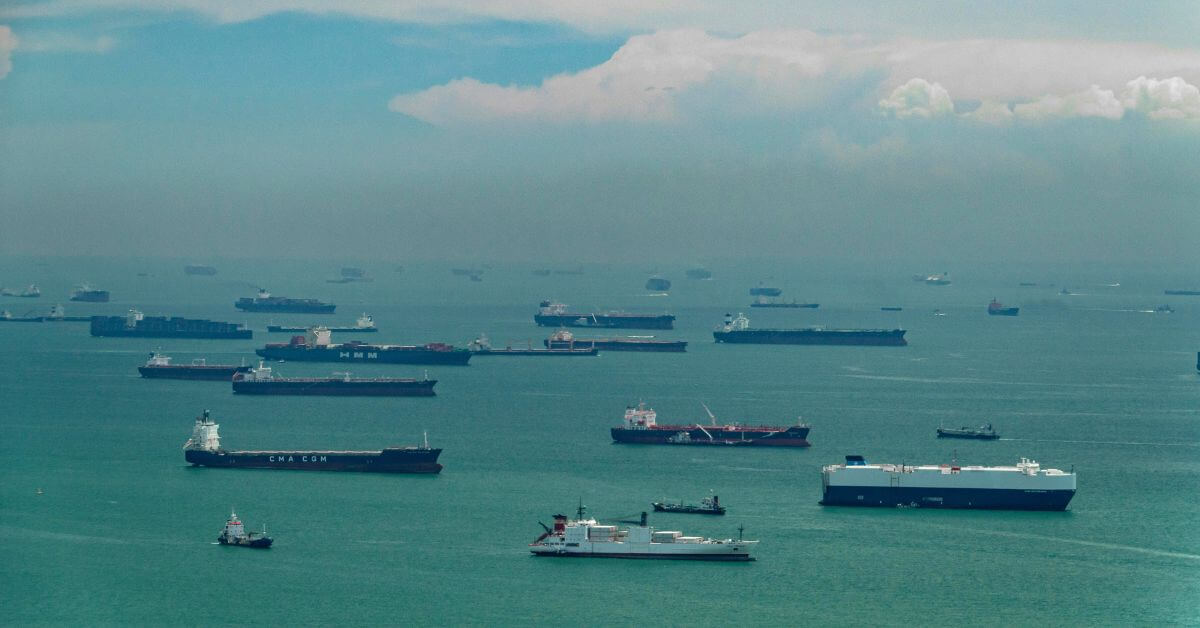
Iran has announced the temporary closure of the Strait of Hormuz for live-fire drills as it held another round of indirect talks with the United States over its nuclear programme.
State media reported that Iranian forces fired live missiles towards the strait and said the waterway would be closed for several hours for safety and maritime reasons.
It was not immediately clear whether the strait was fully shut. Around 20% of the world’s oil passes through the route, making it one of the most important global shipping lanes.
Iran said its Revolutionary Guard began military exercises early Monday in the Strait of Hormuz, the Persian Gulf and the Gulf of Oman. It marked the second live-fire drill in the strait in recent weeks.
While Iran regularly conducts military exercises in the area that can disrupt maritime traffic, the announced closure represented a further step.
The developments took place as Iranian and US delegations met in Geneva for indirect discussions on Iran’s disputed nuclear programme.
Iranian Foreign Minister Abbas Araghchi led the Iranian side, while US envoys Steve Witkoff and Jared Kushner headed the American delegation.
The discussions were held inside the residence of Oman’s envoy to Geneva. Oman has acted as a mediator and previously hosted a round of talks on 6 February.
Following the meeting, Araghchi said there was hope that negotiations could result in a sustainable and negotiated solution serving the interests of all parties and the region.
He also stated that Iran remained prepared to defend itself against any threat or act of aggression and that the consequences of any attack would not be limited to Iran’s borders.
A US official, speaking on condition of anonymity, said progress had been made, though many details remained unresolved.
Supreme Leader Ayatollah Ali Khamenei warned that even the strongest army could suffer a blow from which it could not recover and cautioned against attempts to predetermine the outcome of the talks. He also referred to the risks posed by warships and weapons capable of sinking them.
US President Donald Trump, who withdrew from a previous nuclear agreement during his first term, has repeatedly stated that force could be used if Iran does not agree to limit its nuclear programme.
The US recently increased its military presence in the Middle East. Trump said last week that the USS Gerald R. Ford was being deployed to the region, joining the USS Abraham Lincoln and accompanying guided-missile destroyers that have been there for more than two weeks.
US forces shot down an Iranian drone that approached the Lincoln on the same day Iran attempted to stop a US-flagged vessel in the Strait of Hormuz.
Iran’s Foreign Minister also confirmed he met Rafael Grossi, Director-General of the International Atomic Energy Agency, in Geneva on Monday to discuss the agency’s role in supporting a potential agreement.
US oil fell by 1.3% to $62.06 per barrel, while Brent crude declined by 2.3% to $67.03 per barrel.
Prices had previously risen after the United States strengthened its military presence in the region but remained subdued amid expectations that a potential agreement could ease market concerns.
References: pbs, newsonair
Source: Maritime Shipping News