
U.S Navy Deploys Largest Aircraft Carrier, USS Gerald R.Ford To Middle East As Conflict With Iran Intensifies

APM Terminals Acquires 37.5% Stake In DP World’s Jeddah Container Terminal
February 19, 2026
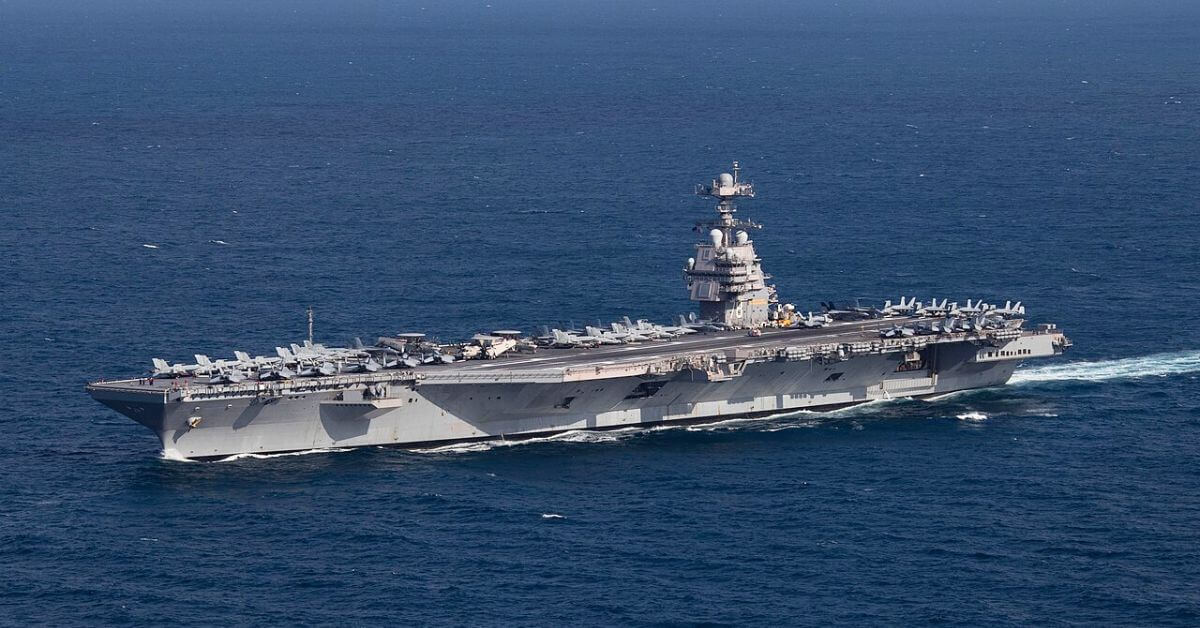
USS Gerald R. Ford (CVN-78) and its escort ships are operating in the Atlantic Ocean as they sail towards the Strait of Gibraltar, bound for the U.S. Central Command area of responsibility.
A Navy official confirmed the movement to USNI News on Tuesday, stating that the carrier strike group is crossing the Atlantic after departing the Caribbean Sea.
The carrier is heading to the Middle East to join the Abraham Lincoln Carrier Strike Group, which is currently operating in the Arabian Sea.
Ford has been operating in the Caribbean Sea since mid-November, when the United States increased naval presence in the region ahead of a January raid on former Venezuelan President Nicolás Maduro in downtown Caracas.
The carrier deployed from Naval Station Norfolk, Virginia, in June and its mission has since been extended to include operations in the Middle East.
If the ship stays deployed until mid-April, it would pass the 294-day record for post-Vietnam War carrier deployments set by USS Abraham Lincoln in 2020.
If it remains at sea until early May, it would match the 300-plus-day deployments seen during the Vietnam War in the Gulf of Tonkin.
According to USNI News carrier deployment data, the tracking system counts only operational deployments linked to national tasking and excludes training exercises, certification cruises and other qualification sailings.
The data measures operational tasking rather than total time spent away from home ports.
In 2020, during the COVID-19 pandemic, USS Nimitz (CVN-68) remained at sea for just under a year due to movement restrictions and limited port visits aimed at reducing the spread of the virus.
The carrier was deployed for national tasking for 263 days.
The last time two U.S. carriers operated simultaneously in the Middle East was last summer, when USS Nimitz and USS Carl Vinson briefly overlapped in the Arabian Sea following Operation Midnight Hammer, during which the United States carried out strikes on Iranian nuclear facilities.
Separately, U.S. President Donald Trump has directed additional military assets to the region.
The Ford, described as the U.S. Navy’s most advanced aircraft carrier and the largest warship ever built, can carry more than 75 aircraft, including F-35C Lightning II fighters, F/A-18F Super Hornets and EA-18G Growler electronic warfare aircraft.
The carrier is escorted by the destroyers USS Bainbridge, USS Mahan and USS Winston Churchill.
Additional U.S. naval and air assets have been positioned across the region. Four destroyers are operating in the Arabian Sea, while three are patrolling the Strait of Hormuz.
The USS Delbert Black is stationed in the Red Sea, and two combat ships are operating in the Persian Gulf.
More than 50 fighter aircraft were transferred to the Middle East on Tuesday, according to Axios. Flight tracking data indicates the aircraft include F-16 Falcons, F-22 Raptors and F-35s.
These aircraft will join other U.S. jets already based in Jordan, the United Arab Emirates and Saudi Arabia.
Iran has stated that it would respond to any attack on its territory or forces. Earlier this week, Tehran closed the Strait of Hormuz for live missile drills. The waterway is a key route for global oil shipments.
Reference: timesnownews, usni
Source: Maritime Shipping News