

US Plans To Deploy Massive 300MW Floating Nuclear Power Plant By 2028

Australian Warship Transits Taiwan Strait, Chinese Navy Tracks Frigate In High-Stakes Indo-Pacific Move
February 23, 2026
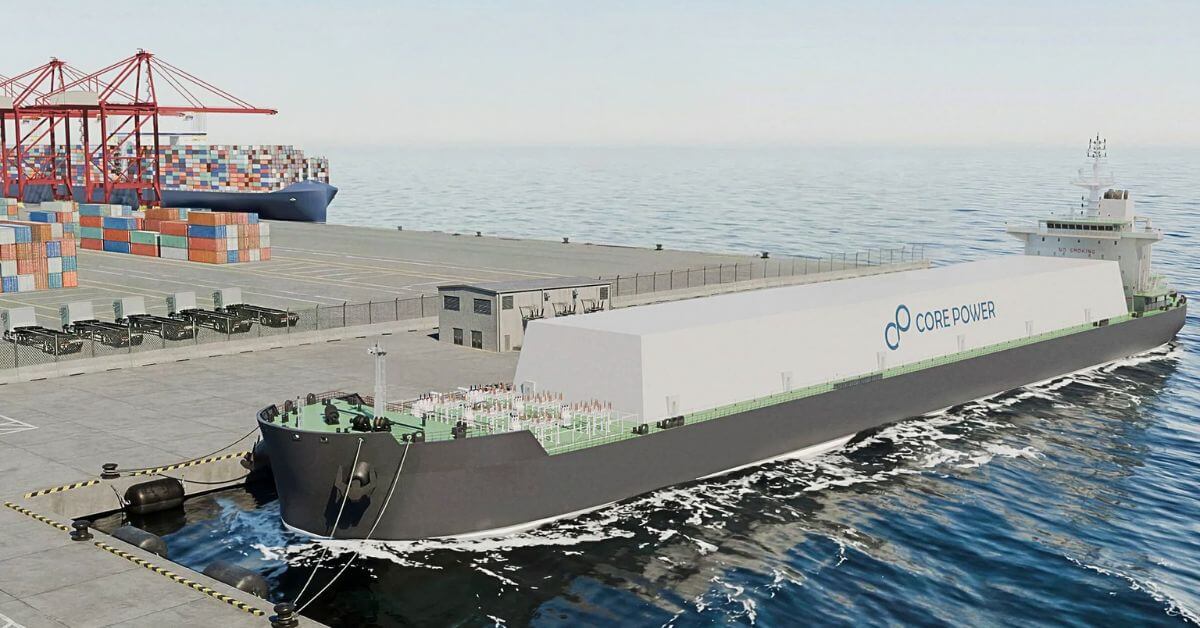
The US Department of Defense is in talks with British start-up Core Power to deploy a 300-megawatt floating nuclear power plant at a US military base by 2028.
The project aims to ease rising electricity demand driven by artificial intelligence and data centers. If approved, it would mark one of the fastest deployments of advanced nuclear technology in the maritime sector.
The proposal follows an executive order issued by US President Donald Trump directing the Pentagon to accelerate advanced nuclear deployment at military sites before the end of his second term.
Core Power, a London-based maritime nuclear developer, is leading an international consortium that includes US reactor developer TerraPower, French nuclear fuel group Orano, and major Japanese and Korean shipbuilders.
The company plans to build a floating power platform capable of generating approximately 300 megawatts, enough electricity to power around 300,000 homes.
The plant would be docked at a US naval facility and connected either directly to a data center or to the national grid.
Pentagon officials are considering using internal nuclear oversight mechanisms rather than the civilian licensing route handled by the US Nuclear Regulatory Commission.
The Department of Defense already operates nuclear reactors aboard submarines and aircraft carriers, allowing it to manage naval nuclear systems under separate protocols.
The White House has instructed the Pentagon to have the first advanced reactor operational by September 2028. Industry experts view this timeline as highly ambitious given typical nuclear construction schedules.
Under the proposal, the reactor hull would likely be constructed in Japan or South Korea before being transported to the United States for final nuclear integration.
The first demonstrator plant is expected to use a conventional pressurised water reactor rather than TerraPower’s advanced reactor design.
Output would be significantly lower than large naval reactors such as those installed on Nimitz-class aircraft carriers, which operate dual reactors rated at roughly 550MW each.
Unlike some US naval reactors that use weapons-grade uranium, developers are evaluating reactor options that rely on low-enriched uranium to ease security and regulatory constraints.
Electricity demand in the US is rising sharply as AI training systems and hyperscale data centers expand.
Technology companies have reported delays in connecting to the national grid due to shortages of turbines and long interconnection queues.
Some firms have temporarily deployed modified jet engines as gas-fired power units to maintain operations.
The floating nuclear plant concept would provide a rapid, movable baseload power solution that can operate for up to 60 years.
Once local grid capacity improves, the floating unit could theoretically be relocated to another port, or even internationally, including regions affected by natural disasters.
Floating nuclear power plants eliminate the need for conventional land-based planning approval. They can be factory-built, reducing construction timelines compared to traditional nuclear power stations that often take a decade or more to complete.
Reference: Shipping telegraph
Source: Maritime Shipping News