

U.S. Military Kills 3 In Caribbean Drug Boat Strike, Death Toll Reaches 151 In Anti-Narcoterror Campaign

EU Extends Operation ASPIDES Until 2027, Allocates €15 Million To Protect Red Sea Shipping
February 24, 2026
Fincantieri Launches First Next-Generation OPV ‘Ugolino Vivaldi’ For Italian Navy
February 24, 2026

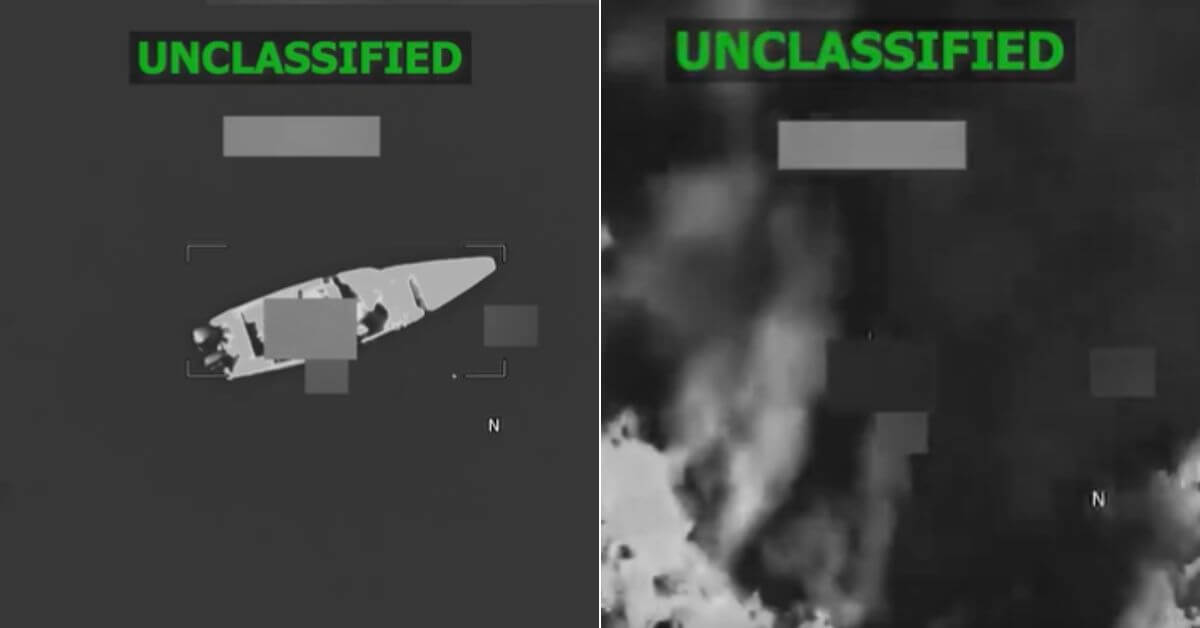
The U.S. military said it killed three people on Monday, February 23, after striking an alleged drug-smuggling vessel in the Caribbean Sea.
The operation is part of a months-long campaign targeting what the Trump administration describes as “narcoterrorists” operating along maritime trafficking routes.
The total number of people killed in more than 40 known strikes since early September has reached at least 151, according to official figures.
According to United States Southern Command, the vessel was operating along what it described as established narco-trafficking corridors in the Caribbean Sea.
The military stated that intelligence confirmed the small boat was engaged in drug-trafficking operations.
A video posted on X showed a fast-moving vessel fitted with outboard engines being destroyed at sea.
On Feb. 23, at the direction of #SOUTHCOM commander Gen. Francis L. Donovan, Joint Task Force Southern Spear conducted a lethal kinetic strike on a vessel operated by Designated Terrorist Organizations. Intelligence confirmed the vessel was transiting along known… pic.twitter.com/XUHImPAZik
— U.S. Southern Command (@Southcom) February 23, 2026
Officials did not release evidence indicating whether narcotics were found on board. Southern Command reported that three male suspects were killed during the strike.
The strike is part of a maritime security campaign launched in early September. Since then, U.S. forces have carried out more than 40 strikes targeting small vessels described as drug-smuggling boats.
President Donald Trump has described the campaign as an “armed conflict” with Latin American cartels.
The administration has framed the maritime strikes as a necessary escalation aimed at reducing the flow of illegal drugs into the United States.
However, officials have released limited public evidence supporting claims that those targeted were actively transporting narcotics at the time of the strikes.
Critics have questioned both the legality of conducting lethal strikes in international waters and the effectiveness of targeting small vessels at sea.
Analysts note that fentanyl, which is linked to many fatal overdoses in the United States, is typically trafficked over land routes from Mexico.
It is manufactured using precursor chemicals sourced from China and India, rather than transported in large quantities via Caribbean maritime corridors.
The campaign also faced controversy after reports emerged that survivors from the first boat strike were killed in a follow-up attack.
Supporters of the administration defended the action as lawful under the declared anti-cartel operations, while opponents argued it could violate international humanitarian law.
The Caribbean Sea is one of the world’s most active maritime transit regions. It connects the Gulf of Mexico, the Panama Canal, and major Atlantic shipping lanes.
References: AP News, Business Standard
Source: Maritime Shipping News