
World’s Largest US Aircraft Carrier USS Gerald R. Ford Battles Massive Toilet Failure Amid Iran Tensions

Panama Forces CK Hutchison Staff Out Of Key Panama Canal Terminals After Supreme Court Ruling
February 25, 2026
India’s SDHI To Complete 5 Offshore Support Vessels For San Maritime At Revived Pipavav Yard
February 25, 2026
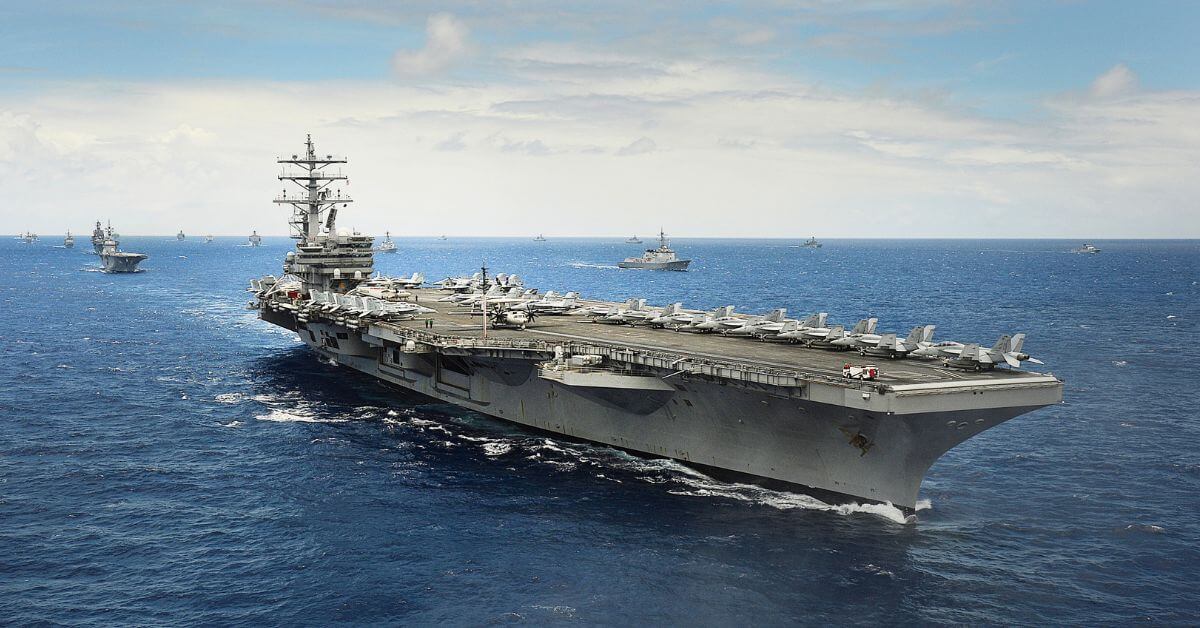
The US Navy’s largest and most expensive aircraft carrier, USS Gerald R. Ford, is facing persistent sewage system failures as it heads toward the Middle East amid rising US-Iran tensions.
The $13 billion nuclear-powered warship has been at sea since June 2025 and is now in its eighth month of deployment, longer than the typical six-month rotation.
While Washington builds one of its largest naval forces in the region in decades, more than 4,500 sailors onboard are dealing with a far more immediate problem: hundreds of non-functioning toilets.
The USS Gerald R. Ford was commissioned in 2017 at a reported cost of $13.3 billion, making it the most expensive warship ever built.
Designed to lead US overseas strike operations, the carrier supports more than 4,500 sailors and operates over 600 toilets divided into 10 independent zones.
The vessel has been deployed since June 2025. In January, it played a central role during US operations in Venezuela that led to the capture of President Nicolas Maduro. Following that mission, the deployment was extended again as tensions with Iran intensified.
A standard peacetime aircraft carrier deployment typically lasts six months. The current deployment has crossed eight months and could extend up to 11 months, according to reports cited by US media. That would mark one of the longest continuous deployments for a US Navy carrier.
The main problem is linked to the ship’s Vacuum Collection, Holding and Transfer (VCHT) system. The USS Gerald R. Ford uses a vacuum-based sewage system, similar to those on cruise ships, to save water.
Reports say the system uses narrow pipes that cannot handle the heavy use by more than 4,500 sailors. If one valve fails, toilets in an entire section can stop working.
In March last year, the carrier recorded 205 toilet breakdowns in just four days. During its 2025 deployment to Venezuela, it reportedly needed at least one sewage maintenance call every day.
Out of nearly 650 toilets onboard, most are currently not working. Sailors sometimes have to wait up to 45 minutes in line. Hull technicians fixing the plumbing are working shifts of up to 19 hours a day.
The clogs are mainly caused by calcium build-up in the pipes and by improper items like t-shirts and mop heads being flushed. Each major acid cleaning to fix the system reportedly costs about $400,000.
The Ford is now heading toward West Asia as US President Donald Trump warns of possible military action against Iran. It is rare for two US aircraft carriers to operate simultaneously in the Middle East.
Currently, Washington has more than a dozen warships deployed in the region, including the USS Abraham Lincoln, nine destroyers, and three littoral combat ships.
US officials have maintained that the plumbing failures are not affecting operational readiness. However, sailors have reportedly described unsanitary conditions and growing fatigue as the extended deployment continues.
Most sailors onboard are in their early 20s. The prolonged deployment has meant missing major life events, including birthdays, weddings, funerals, and even the birth of children. Communication restrictions during sensitive operations limit regular contact with families.
Some sailors have reportedly indicated plans to leave the Navy after the current mission.
In April–May 2025, the USS Harry S. Truman lost several fighter jets during operations against Houthi rebels in the Red Sea. Subsequent investigations linked the losses to operational strain and crew fatigue.
Captain David Skarosi of the Ford acknowledged concerns in a letter to sailors, stating that when the country calls, the crew responds.
Reference: India Today
Source: Maritime Shipping News