

China Could Give Iran ‘Ship-Killer’ Missiles To Fight U.S Warships In Case Of A Naval Showdown

China’s 2nd Domestically-Built Cruise Ship To Be Delivered By 2026 End
February 28, 2026
Watch: Irish Naval Vessel LÉ Samuel Beckett Hits Dublin Quay, Suffers Minor Damage During Departure
February 28, 2026
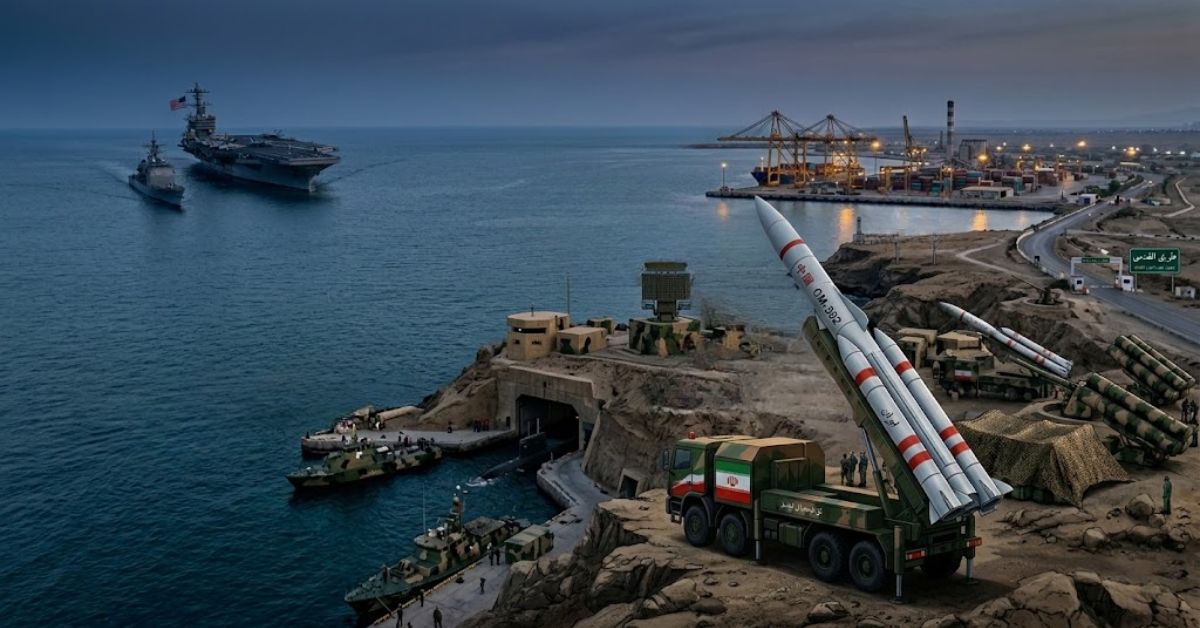
Iran might purchase Chinese CM-302 supersonic anti-ship cruise missiles to face U.S forces in case of a naval showdown, as tensions between the two countries escalate to new heights.
The U.S. has deployed aircraft carriers USS Abraham Lincoln and USS Gerald R.Ford in the Middle East, close to Tehran and warned of possible attacks, while setting a deadline for a nuclear deal.
The talks regarding the purchase went on for two years and accelerated after the Israel-Iran conflict broke out last year.
Though details like the size and delivery schedule have not been revealed yet, the said deal would deepen China-Iran relations and enable Tehran to defy the sanctions imposed on it by the U.S and its allies.
The CM-302 is the export version of the YJ-12 anti-ship missile, which can be launched from H-6K strategic bombers.
The missile has a 500 kg warhead, can reach Mach 3 and has a 400 to 460 km range, depending on the variant and launch platform.
It uses inertial and satellite guidance and can undertake evasive manoeuvres, making it perfect for anti-access/area-denial (A2/AD) roles against aircraft carriers.
If Iran gets such a weapon, it would boost its anti-ship missile arsenal.
Beijing also helped Tehran to build additional missiles and weapons by supplying 1000 tons of sodium perchlorate in 2025, a major ingredient for solid rocket fuel that could extend support to microprocessors and guidance systems.
However, what does China get in return for helping Iran?
Experts have argued that this relationship saved Chinese vessels in the Red Sea from Houthi attacks and Houhis might have provided China with data about the performance and working of U.S missiles and drones, which might be helpful in case of a US-China confrontation in the Indo-Pacific.
Another reason might be China’s willingness to secure energy supplies with Iran after the U.S. took over control of Venezuelan oil reserves after arresting President Maduro.
China was a major buyer of oil from Venezuela, which constituted about 4 to 4.5% of its total waterborne oil imports.
If China lost even Iran as an energy supplier, it would be a huge blow to its economy, and also in its rivalry with the U.S.
Though alternative energy suppliers exist, most of them are in the Middle East and Africa with politically unstable regimes, not to mention the war-stricken Russia.
On the other hand, the U.S. can import oil from Canada or Mexico, while China imports oil via ships through international trade lanes and chokepoints that can be disrupted.
Viewed in this light, the sale of the Chinese ship-killer missiles to Iran is not just a simple weapons agreement but a strategic barter between both countries.
Source: Maritime Shipping News