
Global Container Major Hapag-Lloyd Suspends Strait Of Hormuz Transits Amid Middle East Conflict

U.S Strikes Iranian Navy In Operation Epic Fury, Warships Hit At Bandar Abbas And Chah Bahar
March 2, 2026
Deadly Fire Kills One At US Navy’s Fifth Fleet HQ In Bahrain After Iranian Missile Strike
March 2, 2026
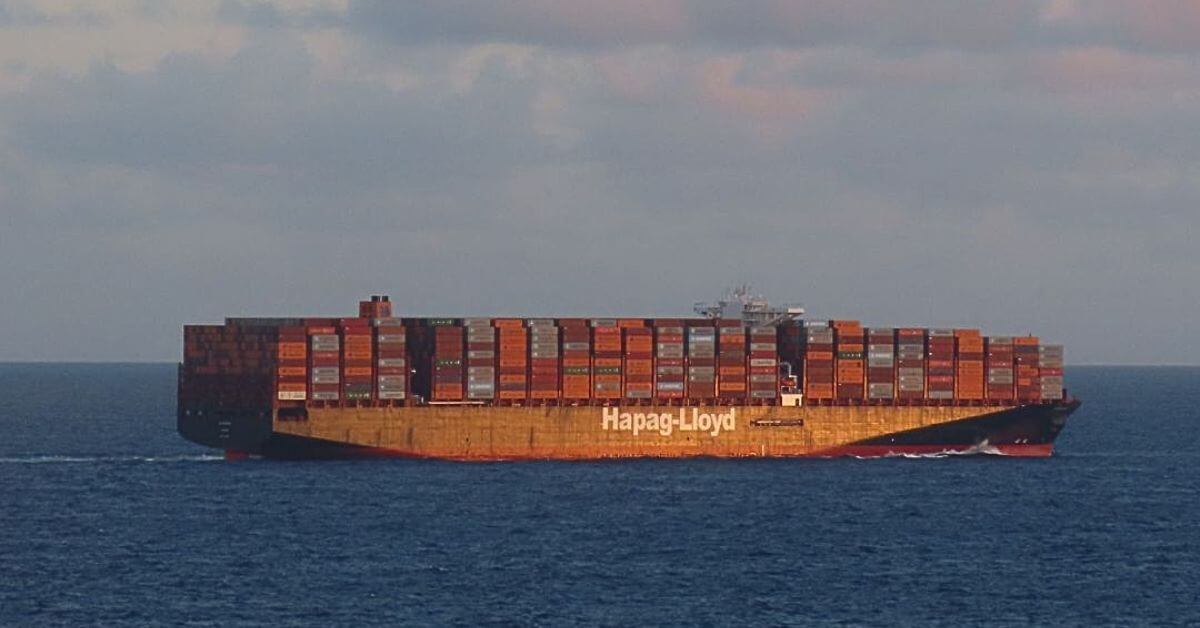
German container shipping major Hapag-Lloyd has suspended all vessel transits through the Strait of Hormuz following escalating military tensions in the Middle East.
The company confirmed the move on Saturday, citing what it described as the “official closure” of the waterway by relevant authorities amid a rapidly evolving security situation.
The decision affects one of the world’s most critical maritime chokepoints, through which nearly 20 million barrels of crude oil pass every day.
Hapag-Lloyd stated that the safety of its crews, vessels, and cargo remains its highest priority. The company said the suspension is not discretionary but a necessary response to current security conditions and regulatory restrictions.
The announcement followed statements by Iran’s Revolutionary Guards, who warned that the Strait of Hormuz was unsafe due to ongoing US and Israeli military strikes on Iranian targets.
According to Iranian media reports, ships were informed by radio that the waterway was “basically closed.”
However, the European Union’s naval mission operating in the Red Sea said vessels had received warning messages but confirmed that no formal closure order had been issued.
Hapag-Lloyd said it is closely monitoring developments and remains in contact with authorities and security partners.
The carrier warned that services calling ports in the Arabian Gulf may experience delays, rerouting, or schedule changes.
Customers with cargo already in transit or planning shipments to or from the region were advised to contact local representatives for shipment-specific guidance.
The company said it would communicate material changes to affected shipments as soon as possible.
The Strait of Hormuz connects the Persian Gulf with the Gulf of Oman and the Arabian Sea. It is one of the most strategically important maritime corridors in the world.
According to the US Energy Information Administration, approximately 20 million barrels of crude oil moved through the strait daily in 2024. This represents nearly 20 percent of global liquid oil consumption.
Any disruption to traffic through the narrow waterway has immediate implications for global oil markets, tanker rates, insurance premiums, and supply chains.
The strait has seen repeated security incidents in recent years. Tensions intensified after the United States withdrew in 2018 from the international agreement on Iran’s nuclear program.
In April 2024, Iran’s Revolutionary Guards seized the Portuguese-flagged container vessel MSC Aries, accusing its owner of links to Israel.
In early February, a US-flagged tanker was approached and challenged by Iranian gunboats before continuing its voyage, according to US Central Command.
The developments come after US and Israeli strikes targeted military facilities in Iran. Iran responded with attacks on US bases across the Middle East.
Hapag-Lloyd is the world’s fifth-largest container carrier. A suspension of transits by a major liner operator signals growing concern within the maritime sector.
If the security situation worsens, further rerouting around the Arabian Peninsula could increase voyage times, fuel consumption, and freight costs.
Reference: Hapag-Lloyd
Source: Maritime Shipping News