
Iran Warns Ships To Avoid Strait Of Hormuz, Tankers Halt As Oil Prices Rise

Panamanian Cargo Ship Dura Bulk Sinks Off Laayoune, All Crew Rescued In Major SAR Operation
March 2, 2026
Video: Belgium Seizes Sanctioned Russian ‘Shadow Fleet’ Tanker Ethera In North Sea Operation
March 2, 2026
Commercial vessels navigating the Strait of Hormuz have received radio warnings from Iran’s Revolutionary Guards stating that no ship is allowed to transit the waterway.
The warnings were reported on Saturday by an official from the European Union’s maritime security mission Aspides, raising concerns over disruptions to one of the world’s most critical energy shipping routes.
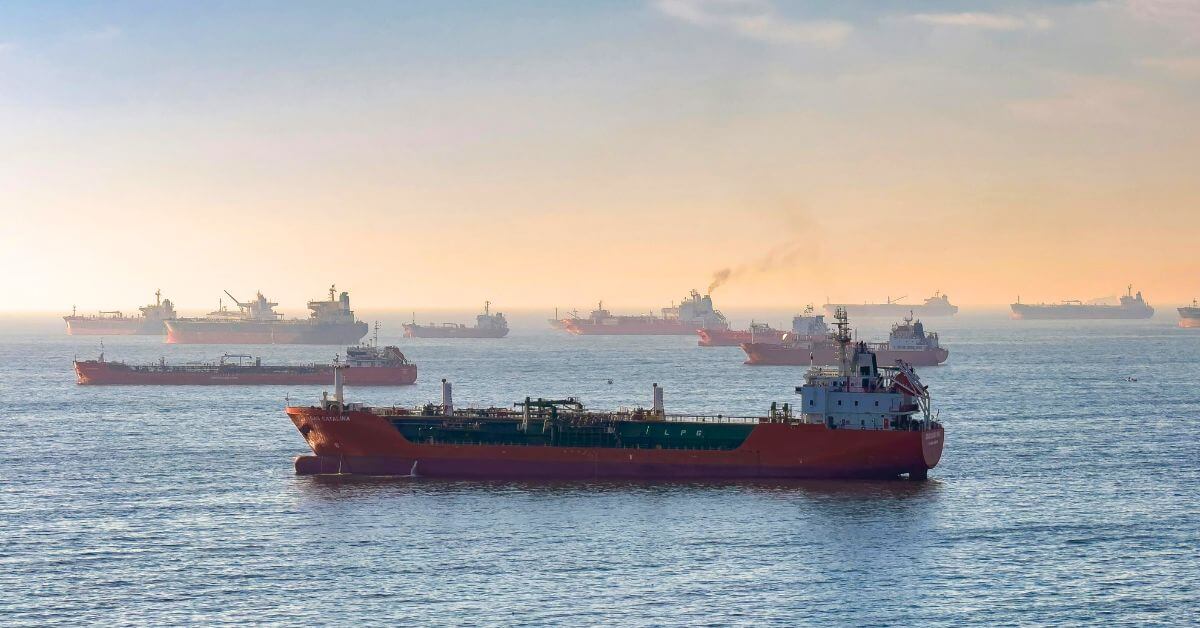
Multiple oil tankers and container ships have slowed, paused, or reversed course.
The disruption follows US and Israeli strikes on Iran, which raised regional tensions and pushed oil prices higher in early trading.
An official from the EU naval mission Aspides told Reuters that ships received VHF radio messages believed to be from Iran’s Revolutionary Guards. The messages said vessels were not allowed to pass through the Strait of Hormuz.
Iranian state-linked media said the strait was “practically closed,” but there has been no formal government announcement.
German container shipping company Hapag-Lloyd said it was suspending transits through the strait, citing what it called an “official closure.”
Japan’s Nippon Yusen KK instructed its fleet to avoid the area. Greece’s shipping ministry also advised its merchant fleet to reassess voyages through the region and prepare to rely on conventional navigation methods amid risks of electronic interference.
The United States issued a separate advisory urging vessels to stay 30 nautical miles away from US military assets operating in the region.
At least three oil tankers halted outbound voyages from the Persian Gulf. A flotilla of at least eight tankers has built up outside the Gulf of Oman over the past two weeks. Several ships already inside the strait either paused or reversed course.
The very large crude carrier KHK Empress, part-loaded with Omani crude and originally bound for Basra, made a U-turn and altered its destination to New Mangalore in India. The tanker Desh Abhimaan also appeared to reverse mid-transit.
The supertanker Shaden, carrying Saudi crude, stopped near the entrance to the strait. Meanwhile, another tanker, New Vision, appeared to continue transit, though its reported speed fluctuated sharply.
The disruption is not limited to crude oil. At least three LNG carriers sailing to or from Qatar have paused their voyages.
Qatar accounts for about 20% of global LNG supply, and all of its exports must pass through Hormuz to reach markets in Asia and Europe.
Container ships carrying consumer goods also reported halts or U-turns.
The Strait of Hormuz connects the Persian Gulf to the Gulf of Oman and the Arabian Sea. It is the primary maritime route for oil and gas exports from Saudi Arabia, Iran, Iraq, Kuwait, Qatar and the United Arab Emirates.
Around 20 million barrels of oil moved through the strait daily in 2024, according to the US Energy Information Administration. That volume represents roughly one-fifth of the world’s seaborne oil trade and nearly USD 500 billion in annual energy shipments.
More than 80% of oil and gas transiting Hormuz is destined for Asian markets. China purchases over 90% of Iran’s oil exports, making Asian economies particularly exposed to prolonged disruption.
Although Saudi Arabia and the UAE operate pipelines that bypass the strait, those routes can carry only a limited share of total daily exports.
The channel measures about 50 kilometres wide at its entrance and exit but narrows to roughly 33 kilometres at its tightest point.
Iran controls several strategic islands along the route, including Hormuz, Qeshm and Larak, as well as the disputed Greater Tunb, Lesser Tunb and Abu Musa islands. These positions provide oversight of vessel movements through the strait.
References: businessworld, bloomberg
Source: Maritime Shipping News