
Video: Belgium Seizes Sanctioned Russian ‘Shadow Fleet’ Tanker Ethera In North Sea Operation

Iran Warns Ships To Avoid Strait Of Hormuz, Tankers Halt As Oil Prices Rise
March 2, 2026
U.S Strikes Iranian Navy In Operation Epic Fury, Warships Hit At Bandar Abbas And Chah Bahar
March 2, 2026

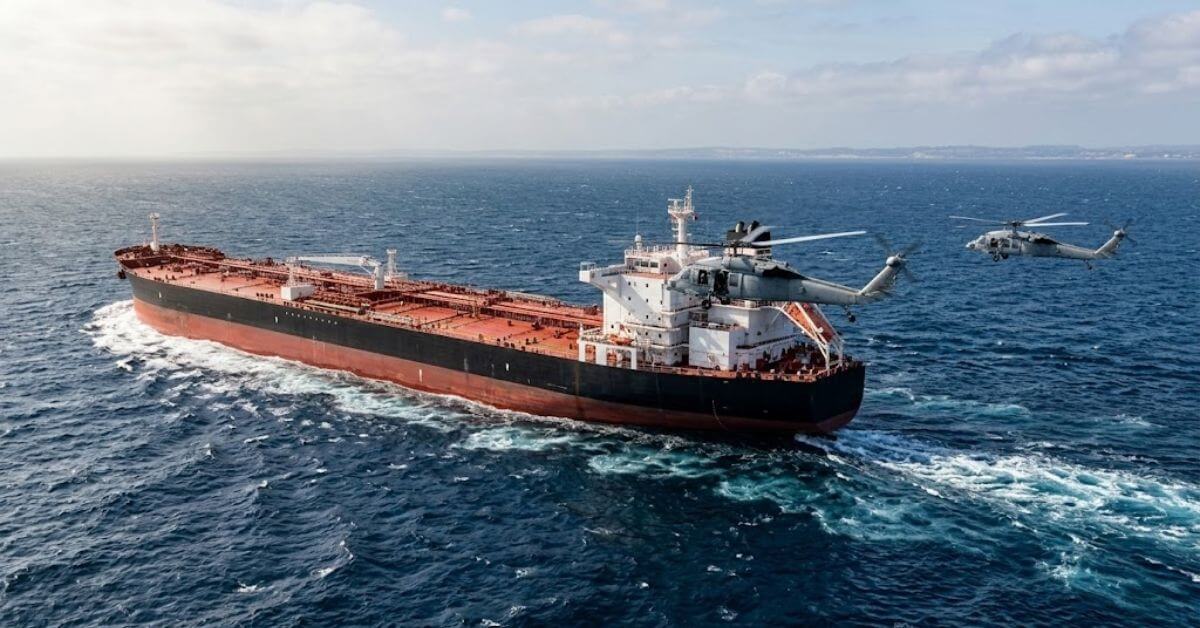
Belgium has seized an oil tanker believed to be part of Russia’s so-called “shadow fleet” during a joint military operation in the North Sea.
The vessel, identified as Ethera, was intercepted inside Belgium’s exclusive economic zone and escorted to the port of Zeebrugge.
Authorities said the tanker was sailing under a false flag and was already listed under European Union sanctions.
The seizure marks one of the strongest enforcement actions by a European state against Russia-linked oil shipments since sanctions were imposed over the war in Ukraine.
Belgian Defence Minister Theo Francken confirmed that Belgian armed forces, supported by French military helicopters, boarded the tanker overnight on Saturday.
France provided air support using two NH90 helicopters. Footage shared by French President Emmanuel Macron showed Belgian forces rappelling from helicopters onto the deck of the vessel.
A major blow to the shadow fleet: in the North Sea, our French Navy helicopters helped last night in the boarding by Belgian forces of an oil tanker under international sanctions.
Europeans are determined to cut off the sources of funding for Russia’s war of aggression… pic.twitter.com/CnoxyND7BB
— Emmanuel Macron (@EmmanuelMacron) March 1, 2026
After the boarding, the tanker was escorted to the port of Zeebrugge, where it is expected to be officially confiscated.
Belgian Prime Minister Bart De Wever congratulated the armed forces for what he described as professional and decisive conduct, and thanked France for its support.
According to Belgium’s federal prosecutor’s office, the tanker has been identified as Ethera. Prosecutors said the ship was flying the flag of Guinea, but an onboard inspection confirmed suspicions that it was operating under a false flag.
Investigators also found ship documents that are suspected to be falsified. Authorities have opened a criminal investigation. The ship’s captain, a Russian national, is currently being questioned.
Officials stated that sailing under a false flag violates several international maritime regulations. The vessel was reportedly on its way back to Russia at the time it was intercepted.
The Belgian defence ministry also confirmed that the tanker was listed under European Union sanctions.
Russia has relied on a network of ageing tankers with opaque ownership structures to continue exporting crude oil despite Western sanctions imposed after its 2022 invasion of Ukraine.
These vessels often operate under flags of convenience and are frequently uninsured or underinsured. Oil transported by such ships is commonly delivered to countries including China and India. Once refined, the crude is resold on global markets, making its Russian origin harder to trace.
French authorities have previously estimated that Russia’s shadow fleet consists of between 1,000 and 1,200 vessels. More than half are believed to be under sanctions, while others continue operating through shell companies and reflagging practices.
Belgium’s Foreign Minister Maxime Prevot stated that sanctions only have value if they are enforced, adding that the latest action demonstrated practical enforcement.
Ukrainian President Volodymyr Zelensky welcomed the operation, describing it as strong action against what he called Moscow’s “floating purse.” He said the vessel had long been under US, EU and UK sanctions but allegedly continued transporting Russian oil using a false flag and forged documents.
Macron described the operation as a major blow to Russia’s shadow fleet and said European countries are determined to enforce sanctions to restrict funding for Russia’s war effort.
The Russian embassy in Belgium stated it had not received official notification about the tanker’s detention and was seeking clarification on whether Russian citizens were onboard to ensure their legal rights.
The US ambassador to Belgium, Bill White, also praised the operation publicly.
Western naval forces have increased surveillance of suspected shadow fleet vessels in the Baltic Sea and North Sea since the start of the year.
The United States, United Kingdom, France and Germany have stepped up monitoring and demonstrated readiness to board vessels when necessary.
However, legal experts have warned that boarding and seizing sanctioned vessels presents legal complexities. Previous operations by France against suspected shadow fleet ships have sometimes resulted in vessels being released after fines were paid.
Analysts say European governments face challenges in turning interdictions into permanent asset seizures due to legal limitations under maritime law.
References: theguardian, france24
Source: Maritime Shipping News