

World’s Most Powerful Icebreaker Departs On Months-Long Mission To Antarctica

Brazil Sues Agencies Over 2015 Shipwreck That Released 700,000 Litres Of Oily Waste & Killed 5,000 Cattle
November 27, 2025
Cap de Barbaria To Become Europe’s First Ferry To Produce Hydrogen Onboard Using Methanol System
November 27, 2025
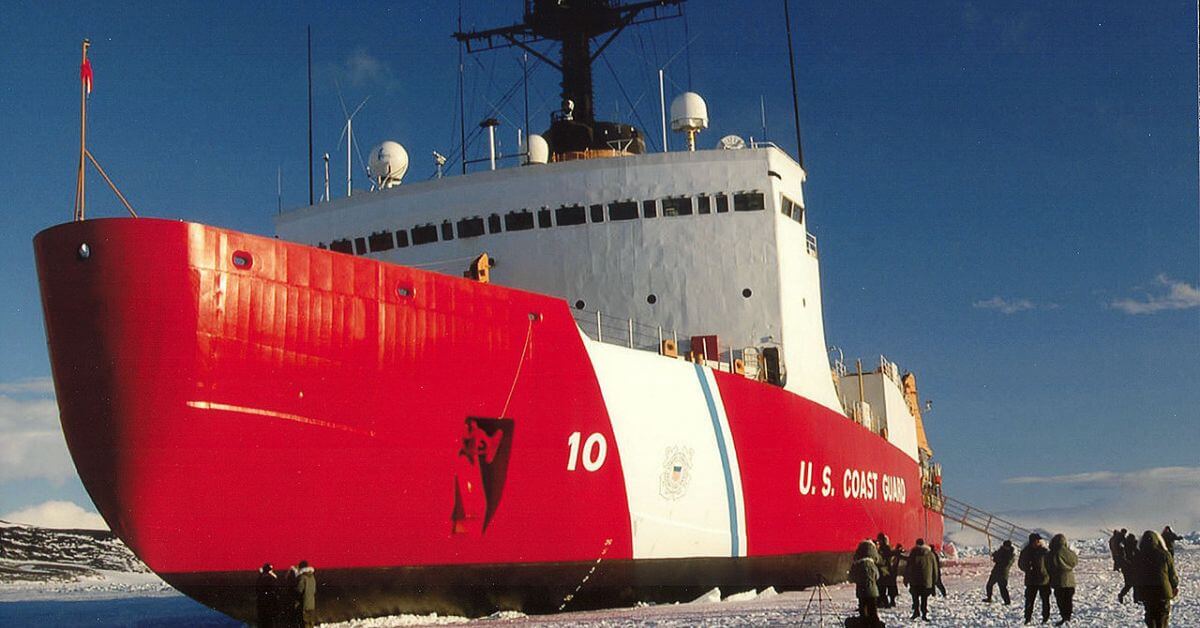
The United States Coast Guard’s heavy icebreaker USCGC Polar Star (WAGB 10) has departed Seattle for its months-long deployment to Antarctica, beginning its 29th mission in support of Operation Deep Freeze.
The annual joint military operation is responsible for resupplying America’s Antarctic stations, which are overseen by the National Science Foundation as part of the United States Antarctic Program.
This deployment comes as the U.S. government makes what was described as a historic investment of nearly $25 billion, including $9 billion specifically allocated to new icebreakers and high-latitude infrastructure, aimed at strengthening national access, security and leadership in polar regions.
Until the new Polar Security Cutters and Arctic Security Cutters are commissioned in the coming decade, Polar Star remains the only American vessel capable of breaking a channel through Antarctic ice to reach McMurdo Station, the largest U.S. base on the continent and the main logistics hub for the Antarctic programme.
Each year, the cutter opens a navigable route through the Ross Sea to allow fuel and supply vessels to reach the station, ensuring the continued operation of U.S. Antarctic research and logistical activities.

The mission is regarded as essential for safeguarding American security, economic and environmental interests in the high latitudes, as well as for supporting allied partnerships.
The cutter’s commanding officer, Capt. Jeff Rasnake, said that the crew has worked diligently to maintain and operate the ageing vessel.
He was also reported as saying that every year presents new challenges, and he expressed pride in how the crew prepared during maintenance and logistical planning ahead of this deployment cycle.
Polar Star, which entered service in 1976, is 399 feet long, has a displacement of 13,500 tonnes, and a draft of 34 feet.
Despite approaching its 50th year of service, it remains the most powerful non-nuclear icebreaker in the world, capable of generating up to 75,000 shaft horsepower.
The continuous effort by the crew to sustain the vessel’s capability is seen as vital to ensuring U.S. access to the continent until replacement ships enter service.
Reference: USCG
Source: Maritime Shipping News