

In A First, US Seizes Sanctioned Oil Tanker Off Venezuelan Coast After Recent Buildup

Bulgarian Navy Commissions First Newly Built Warship In Over 100 Years
December 10, 2025
CMA CGM Doubles Number Of Women Seafarers In One Year Under ‘She Sails’ Initiative
December 11, 2025
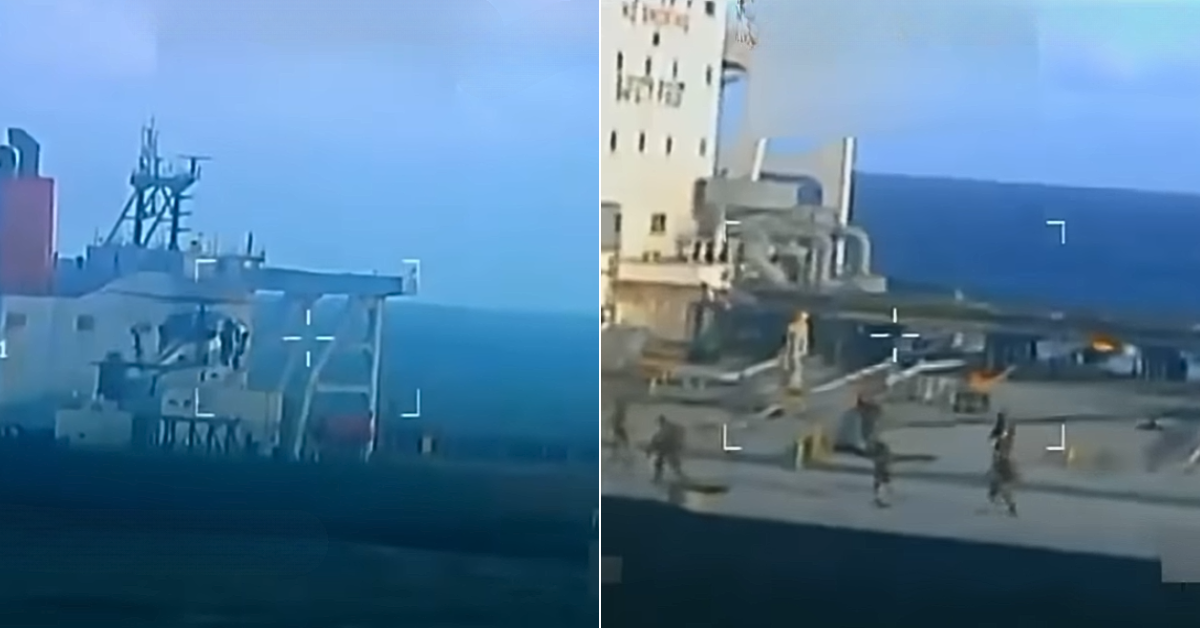
The United States has seized a sanctioned oil tanker off the coast of Venezuela, marking the first known US action of this kind amid its growing military presence in the region. The operation immediately increased global oil prices and escalated tensions with the Venezuelan government.
US President Donald Trump announced on Wednesday that American forces had taken control of a “very large” tanker near Venezuela. When asked about the oil on board, he reportedly said the US would keep it.
The Venezuelan government denounced the seizure in an official statement, accusing the United States of “blatant theft” and describing the action as “international piracy.”
Venezuela’s government criticised the operation, calling it “blatant theft” and “an act of international piracy.” Authorities said they would defend the country’s sovereignty and resources and planned to raise the issue with international bodies. President Nicolás Maduro attended a military march on the same day but did not comment on the seizure.
US officials did not disclose the name or flag of the vessel. However, British maritime risk management firm Vanguard reported that the tanker believed to have been seized is the Skipper.
The vessel has previously been sanctioned by Washington for alleged involvement in Iranian oil trading when it operated under the name Adisa.
Satellite data from TankerTrackers.com and records from Venezuela’s state oil company PDVSA show the Skipper left the port of Jose between 4 and 5 December with about 1.1 million barrels of Merey heavy crude.
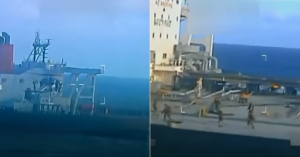
US Attorney General Pam Bondi said the FBI, Homeland Security, the Coast Guard, and the US military executed a seizure warrant on the tanker. A video posted online showed helicopters approaching the ship and armed personnel rappelling onto it.
Video Credits: Associated Press/YouTube
Three US officials said the Coast Guard led the operation but did not release the ship’s exact location.
Brent crude rose 27 cents to USD 62.21 per barrel, and West Texas Intermediate gained 21 cents to USD 58.46 per barrel. Analysts said the seizure added short-term supply concerns but did not fundamentally change the overall oil situation, as the cargo was already expected to remain at sea for a while.
Venezuela exported more than 900,000 barrels per day last month, its third-highest monthly average this year. Higher naphtha imports helped dilute its extra-heavy crude. However, the country has had to heavily discount shipments to China due to competition from sanctioned Russian and Iranian oil.
Chevron, which partners with PDVSA, said its operations in Venezuela remained normal. The company recently increased crude exports to the US from 128,000 barrels per day in October to 150,000 barrels per day in November.
Since September, the US has carried out more than 20 strikes on suspected drug vessels, killing over 80 people. Experts and lawmakers have raised concerns about the legality of some US strikes, saying there is limited public evidence that the boats carried drugs or that lethal force was necessary.
Per reports, a US commander ordered a second strike in one case, killing two survivors from an earlier attack.
A Reuters/Ipsos poll found that many Americans, including about one-fifth of Republicans, oppose the US campaign of lethal maritime strikes.
A recent US foreign policy document said the administration wants to increase its influence in the Western Hemisphere. The tanker seizure is seen as the first direct US intervention in Venezuela’s oil shipments at sea.
Reference: Reuters
Source: Maritime Shipping News