
Singapore Ports Achieve Record-Breaking Performance In 2025

US-Seized Russian-Flagged Oil Tanker Enters UK Waters For Resupply
January 15, 2026
Greece Urges Maximum Security For Ships After Drone Attacks On Tankers In Black Sea
January 16, 2026
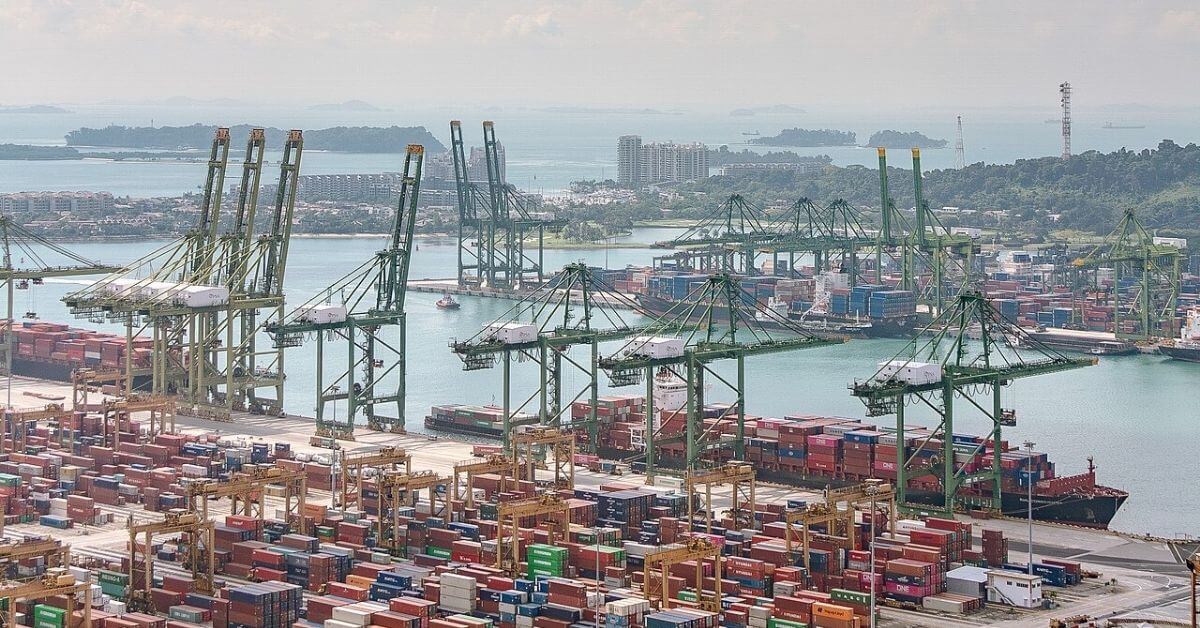
Singapore’s ports recorded their strongest performance to date in 2025. The update was shared at the Singapore Maritime Foundation’s New Year Conversations event, where Senior Minister of State for Law and Transport, Murali Pillai, attended as the Guest-of-Honour.
During the year, Singapore handled 3.22 billion gross tonnage (GT) of vessel arrivals, showing a 3.5% increase from 2024. Container throughput reached 44.66 million Twenty-Foot Equivalent Units (TEUs), up 8.6% year-on-year.
Marine fuel sales also reached a new record of 56.77 million tonnes, an increase of 3.4%, while the use of alternative marine fuels rose to 1.95 million tonnes from 1.35 million tonnes in 2024.
Singapore’s port performance was recognised internationally in 2025. The port was named the world’s leading container port in DNV-Menon’s inaugural Leading Container Ports of the World report.
It was also awarded Best Global Seaport for the fourth time and Best Seaport in Asia for the 37th time at the Asian Freight, Logistics and Supply Chain Awards.
The Maritime and Port Authority (MPA) will open applications for new LNG bunker supply licences on 14 January 2026 to support rising demand for cleaner fuels.
Additionally, Standards for Port Limit LNG Bunker Vessels will be introduced to set requirements for equipment, operational performance, efficiency, and safety for vessels operating in Singapore.
MPA and Enterprise Singapore, through the Singapore Standards Council, will upgrade the existing Technical Reference for LNG Bunkering (TR56) to a Singapore Standard in the second quarter of 2026.
Singapore will also issue its first Technical Reference for Ammonia Bunkering during the same period to support safe operations, trials, and early adoption.
In 2025, Singapore established new Green and Digital Shipping Corridors with India and South Korea, while the corridor with China was elevated to the national level. This brought the total number of corridors to nine.
These corridors aim to improve efficiency, sustainability, and resilience in global supply chains. Projects planned for 2026 include fuel trials, improved digital data exchange, and the development of common emissions-reporting protocols.
Further progress towards becoming a multi-fuel bunkering hub was made with the appointment of a Keppel-led consortium in October 2025 to conduct front-end engineering design studies for ammonia power generation and bunkering. Three methanol bunkering licences were also awarded in November 2025.
All bunker suppliers in Singapore completed the transition to digital bunkering by August 2025. The system enables electronic verification of bunker delivery notes and simplifies bunkering transactions. The initiative has improved transparency and productivity, saving up to 40,000 man-days each year.
Singapore continued to grow as an International Maritime Centre in 2025. During the year, 35 maritime companies opened or expanded operations in the country, bringing the total number of international shipping groups to more than 200.
These companies contributed an estimated S$5 billion annually to the economy. Singapore also retained its top position in the Xinhua-Baltic International Shipping Centre Development Index.
Several technology and innovation centres became operational in Singapore, including the ABS Singapore Maritime Safety Centre, the BV–Singapore Institute of Technology Centre for Maritime Electrification, and the RINA Technology Demonstration Centre.
The Singapore Registry of Ships ended 2025 with a record fleet of 137.46 million GT, representing an increase of about 27% from 2024 and making it the fourth largest ship registry in the world.
During the year, 34 Green Ship Certificates were issued under the Green Ship Programme. The registry has flagged five methanol-fuelled vessels since 2020 and is expected to flag its first ammonia dual-fuelled vessel within the next two years.
The country was re-elected to the Council of the International Maritime Organization (IMO) for the 17th time and was elected to the Council of the International Organization for Marine Aids to Navigation (IALA) for the 2025–2027 term.
Reference: MPA
Source: Maritime Shipping News