
U.S Navy’s New Tool ‘Ship OS’ Cuts Submarine Planning From 160 Hours To 10 Minutes

Iranian Freighter Sinks In Caspian Sea, All 14 Crew Members Rescued
January 15, 2026
Russia Urges UN To Focus On Attacks Against Shipping In Caribbean, Not Red Sea
January 15, 2026
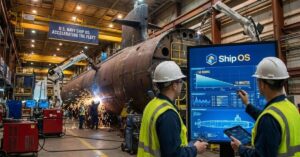
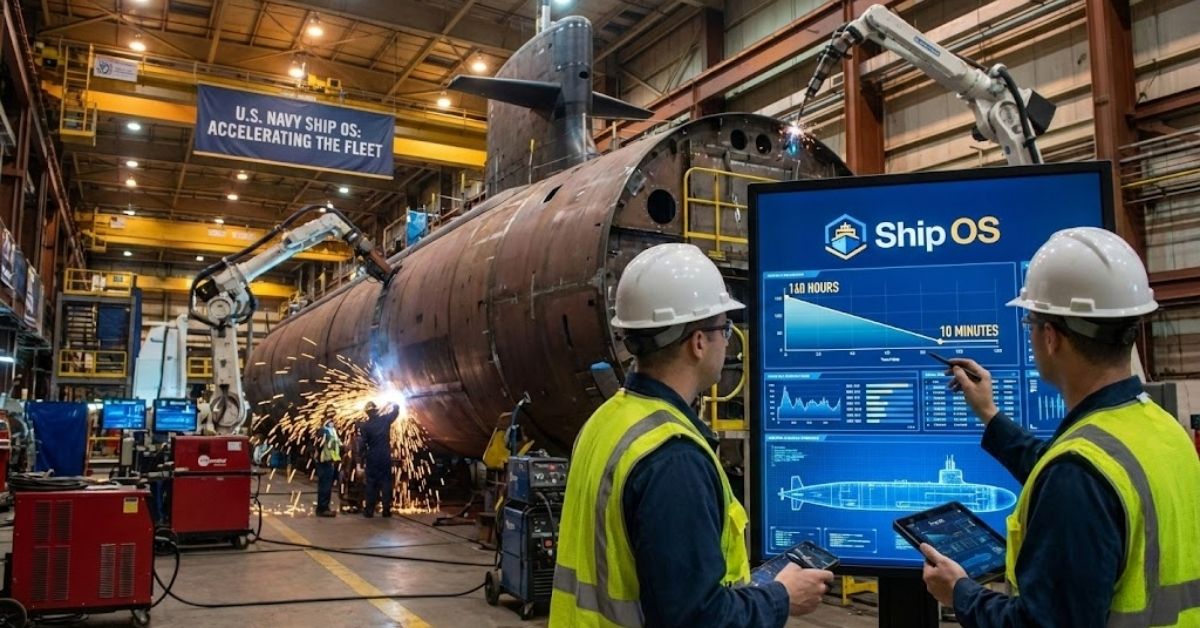
The U.S. Navy is investing $448 million into a modernised system for the country’s shipyards, accelerating the integration of AI and other automated tools into the American maritime industry.
The program is called the Shipbuilding Operating System (Ship OS).
It will be a unified, data-driven management system that integrates information from enterprise resource planning tools, legacy databases and real-time production systems.
Secretary of the Navy John Phelan announced the initiative at the Department of the Navy’s first Rapid Capabilities Office Industry Day.
Palantir Technologies CEO Alex Karp joined him as the company is developing the software for the digital system.
The development comes as shipyards across the U.S are facing high demand, a shortage of labour and ageing infrastructure.
Congress had pressed the Naval Leaders to improve their oversight and meet production deadlines, especially for submarines.
Naval officials stated that by offering a common digital framework, Ship OS will help shipyards to modernise their operations and improve coordination with suppliers.
It will also enable decision makers view production lines in real-time, ensuring efficiency and transparency.
This is a major step to revitalise the country’s maritime base while integrating technological innovation.
Phelan stated that the program is about making sure the U.S. can construct the fleet it requires, and Ship OS is a major part of that future.
He added that the investment will allow shipbuilders, yards and suppliers to enhance their operations and meet the country’s defence needs.
He said that by helping the shipbuilding sector improve capacity, schedules and reduce costs, we are focusing on doing business smarter and building the industrial capability our navy and nation need.
Navy officials said that the platform will enable them to identify bottlenecks, streamline workflows and offer early warnings on schedule and material shortages.
The program is being overseen by the Maritime Industrial Base Program along with the Naval Sea Systems Command.
Firstly, the focus will be on the submarine industrial base, which struggled with delays and material shortages as the Navy has pushed to expand production of the Columbia and Virginia-class submarines.
According to naval officials, pilot projects yielded considerable results.
At General Dynamics Electric Boat, Ship OS cut submarine schedule planning from 160 hours to less than 10 minutes.
At the Portsmouth Naval Shipyard, review times, which are usually measured in weeks, dropped to less than an hour.
These outcomes show how much more efficient, accurate and streamlined a task becomes when AI is integrated into shipbuilding operations, not to forget the increase in output.
The Navy wants the system to expand beyond submarine building after the first phase.
Service leaders said the wider rollout will be systematic and guided by lessons learned from the submarine industrial base. They will also be tailored to future surface combatant programs.
This includes the next-generation destroyers and amphibious ships, which will be the backbone of the fleet in the coming decades.
The service focused on the fact that Ship OS is more than just a software, it is a long-term format to reform the industry.
The Navy expects cost savings through reduced delays, improved schedules and better supply-chain visibility.
Per officials, these achievements are important as the U.S seeks to grow its fleet while competing with China’s rapidly expanding naval shipbuilding industry.
Source: Maritime Shipping News