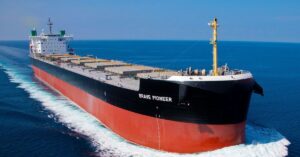
The vessel’s launch marks the start of four more methanol-enabled bulk carriers joining Cargill’s fleet in the coming years.

World’s First Methanol Dual-Fuel Kamsarmax Bulk Carrier Delivered

U.S. Sanctions 21 Individuals And One Vessel For Smuggling Oil & Weapons To Houthis
January 19, 2026
Libya Signs $2.7 Billion Partnership To Expand Misurata Free Zone Port
January 19, 2026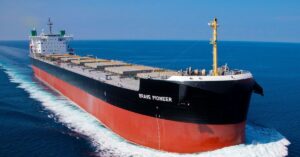
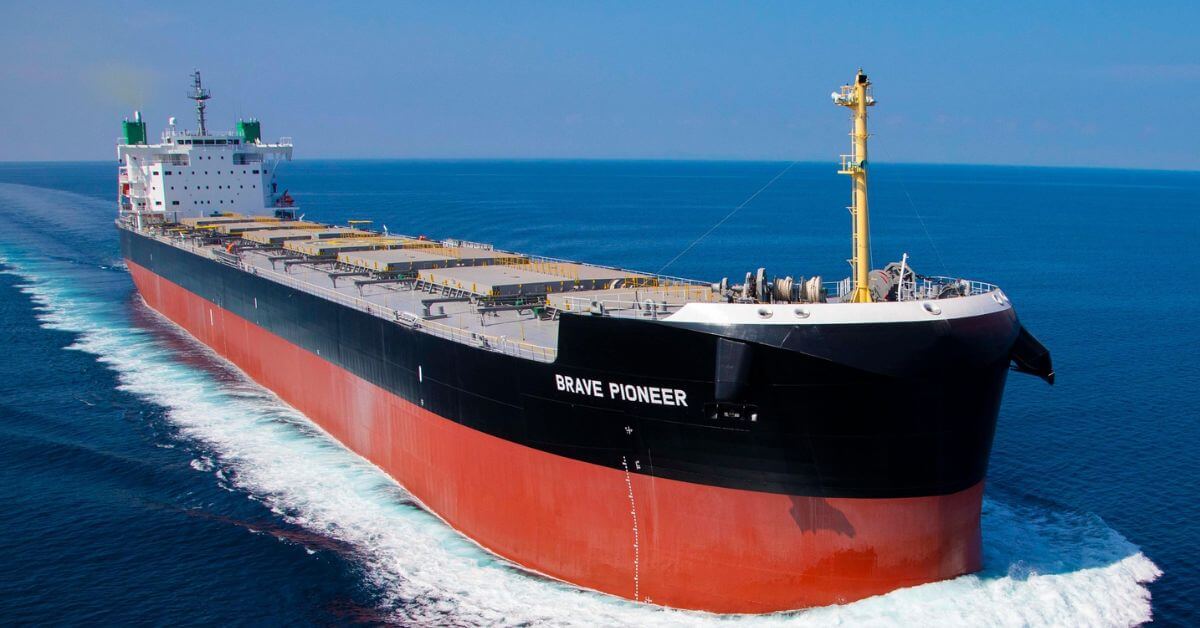
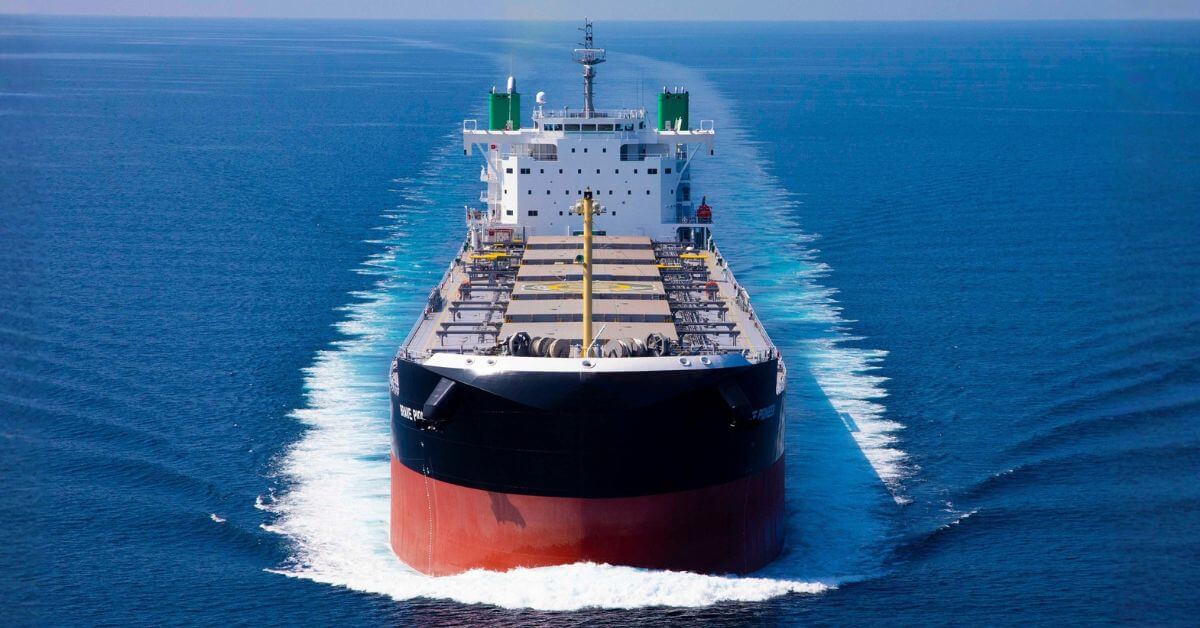
The world’s first methanol dual-fuelled Kamsarmax bulk carrier, Brave Pioneer, has been delivered.
The vessel was handed over on 15 January 2026 by TSUNEISHI HEAVY INDUSTRIES (CEBU), Inc., the Philippine shipbuilding branch of Japan’s Tsuneishi Shipbuilding Co., Ltd.
The naming ceremony was attended by Ferdinand R. Marcos Jr., the President of the Philippines. Brave Pioneer can operate on both conventional marine fuel and methanol.
Tsuneishi Shipbuilding reported that using methanol can cut carbon dioxide emissions by about 10 percent, nitrogen oxides by 80 percent, and sulphur oxides by 99 percent compared with conventional vessels.
Using green methanol could further improve its environmental performance.
The vessel follows the Kamsarmax design, known for its versatility. At 229 metres long, it can enter Kamsar Port in Guinea and has a shallow draft and low air draft, allowing it to access many ports worldwide.
The delivery also supports Cargill’s maritime decarbonisation efforts. Brave Pioneer is the first of five green methanol dual-fuel bulk carriers chartered by the company to test low-carbon solutions in dry bulk shipping.
Cargill said the vessel is designed to operate efficiently on conventional fuel today while switching to green methanol as it becomes available.
Using green methanol could reduce carbon dioxide emissions by up to 70 percent.
Brave Pioneer has departed the Philippines for its maiden voyage, with plans to bunker green methanol in Singapore, then sail to Western Australia and Europe.
Cargill will use the voyage to test bunkering readiness, trace environmental impact through carbon accounting systems, and understand market interest in low-carbon shipping.
Cargill added that decarbonising shipping requires testing new technologies, even if the supporting systems are not fully ready.
Reference: tsuneishi
Source: Maritime Shipping News