
EU Keeps Russian LNG Flowing In 2025, Spending €7.2 Billion Ahead Of 2027 Import Ban

Shipping Giant CMA CGM Reroutes Ships Around Suez Canal Amid Global Uncertainty
January 21, 2026
MHI-TC Delivers First Mobile Marine Boarding Bridge To Yokohama Port
January 22, 2026
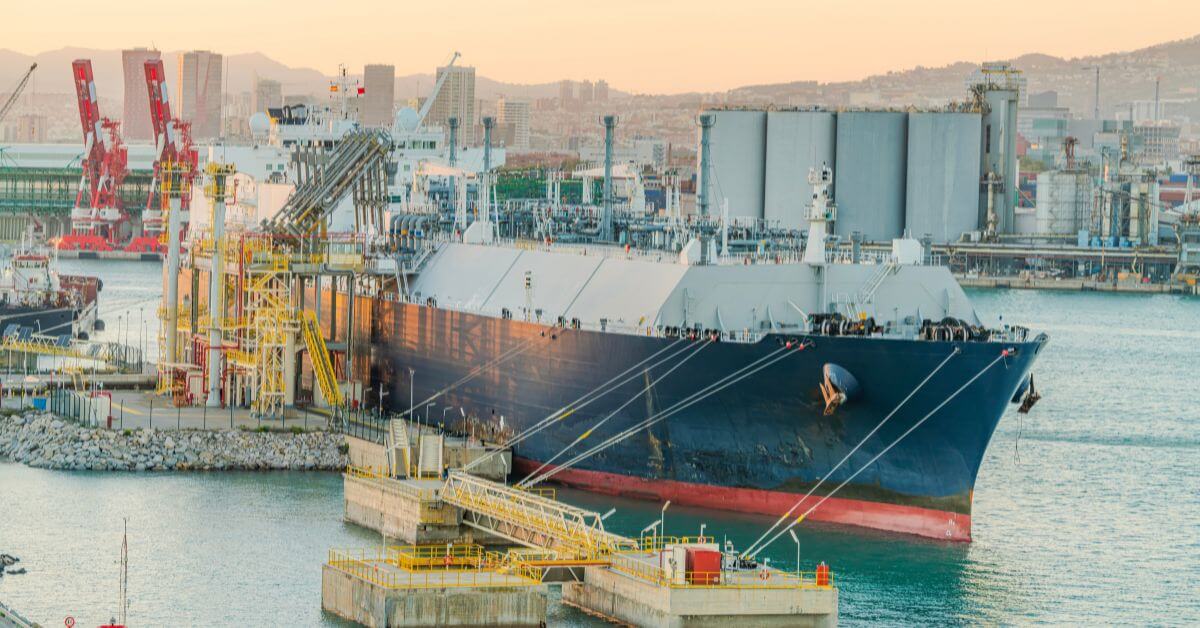
The European Union spent about €7.2 billion on Russian liquefied natural gas (LNG) in 2025, keeping imports from Russia’s Yamal LNG project high, even though a full EU ban on Russian LNG imports is set for January 1, 2027, according to Urgewald.
Data from Kpler analysed by Urgewald show EU imports remained close to 2024 levels. EU spending on Russian LNG also rose from around €6.3 billion in 2024.
Partial EU measures, such as a ban on re-exporting Russian LNG from EU ports introduced in March 2025, have had limited effect. Instead of lowering imports, they shifted trade patterns.
For example, Belgium’s Zeebrugge LNG terminal, which previously re-exported LNG, started keeping more cargo within the EU.
In 2024, Zeebrugge received 6.13 billion cubic metres (bcm) of Russian LNG, re-exported 3.4 bcm, and kept 2.7 bcm inside the EU.
In 2025, imports doubled, with Belgium’s intake rising from 2.7 bcm to 5.5 bcm, according to Ana Maria Jaller-Makarewicz, lead energy analyst at IEEFA.
France also increased imports. Its Montoir-de-Bretagne LNG terminal raised Yamal LNG volumes by 26%, from 2.9 bcm in 2024 to 3.6 bcm in 2025.
France became the EU’s largest buyer, taking 41.7% of EU Yamal LNG imports, mainly through Dunkirk and Montoir-de-Bretagne. Spain, Belgium, and the Netherlands also received significant volumes.
In total, the EU received 207 LNG cargoes from Yamal LNG in 2025, slightly down from 217 in 2024.
Yamal LNG shipped 273 cargoes worldwide, down from 289 in 2024, mainly due to maintenance work and the loss of the ice-class LNG carrier Christophe de Margerie because of sanctions.
Over three-quarters of Yamal’s output went to Europe, while China received 51 shipments, down from 55 in 2024.
Urgewald noted that Yamal LNG depends on 14 Arc7 ice-class LNG carriers, which carried nearly all cargoes to Europe.
These vessels are critical to operations, and maintaining all of them is essential.
Shipping data show Seapeak transported 101 cargoes, Dynagas carried 94, and MOL/COSCO handled 78 in 2025.
EU ports are also crucial beyond being a market, they support maintenance, crew changes, insurance, and offloading, making them hard to replace.
While all 14 Arc7 vessels remain operational, maintenance schedules are increasingly delayed due to suppliers’ concerns over sanctions.
Novatek also expanded ship-to-ship (STS) transfers near Russia, rising from 17 transfers in 2024 to 30 in 2025 at the Kildin anchorage, but these remain small compared to over 200 direct EU deliveries.
Unlike newer projects such as Arctic LNG 2, Yamal LNG lacks floating storage units, making STS transfers more complex and costly.
References: highnorthnews, fullavantenews
Source: Maritime Shipping News