
Nickel Ore Liquefaction Suspected In Devon Bay Sinking Near Scarborough Shoal That Killed 2

136-Year-Old Shipwreck Resurfaces On Island Beach State Park In New Jersey
January 27, 2026
Russian Navy Tug Rescues Filipino Sailor After 48 Hours Adrift In South China Sea
January 28, 2026
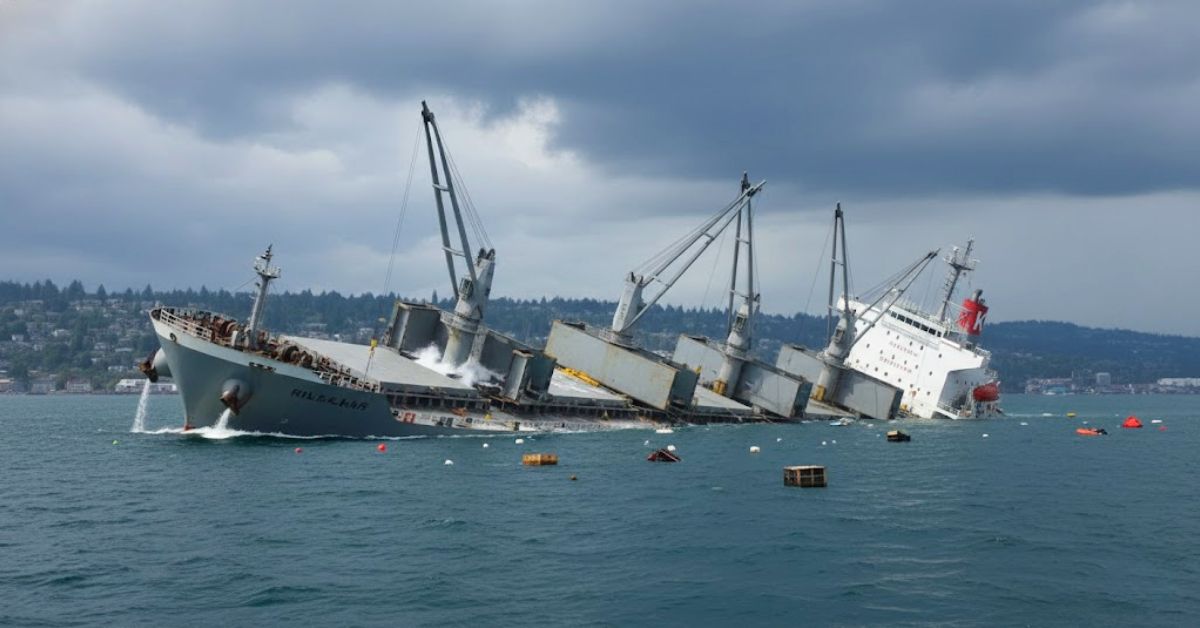
The Singapore-flagged bulk carrier Devon Bay sank near Scarborough Shoal on 23 January, leaving two crew members dead and four missing, with authorities suspecting that nickel ore liquefaction caused the vessel to capsize.
The Philippine Coast Guard (PCG) said initial accounts from crew members indicated that excessive moisture in the ship’s 55,000-ton cargo of nickel ore may have caused the cargo to shift suddenly to the port side.
This loss of balance occurred amid rough sea conditions and large waves, leading to the vessel’s capsizing.
PCG Commandant Admiral Ronnie Gil Gavan said these findings were based on preliminary crew statements and that the investigation was still ongoing with no final conclusions yet.
The Devon Bay, owned by K Line Pte Ltd, transmitted a distress signal late on 22 January while sailing from the Philippines to China.
The vessel had 21 Filipino officers and crew members on board. A joint rescue operation involving the Philippine Coast Guard and the China Coast Guard led to the rescue of 17 crew members, although two later died from their injuries.
The ship’s captain, Elimar Jucal, and three other crew members remain missing.
PCG received 15 survivors and two deceased crew members of M/V Devon Bay during a turnover operation conducted between the PCG and the China Coast Guard (CCG) at approximately 168 nautical miles west off Pangasinan, January 25, 2026.
https://t.co/WGEnXcnkKr
### pic.twitter.com/FhF9hDWBvM— Philippine Coast Guard (@coastguardph) January 25, 2026
The PCG confirmed that 15 survivors and the bodies of the two deceased crew members were transferred to Philippine authorities on 25 January, around 168 nautical miles west of Tambobong, Pangasinan.
The survivors were reported to be in generally stable condition and underwent medical assessment, while the remains of the deceased were handed over to the Bureau of Quarantine.
Nickel ore is classified as a Group A cargo under the International Maritime Solid Bulk Cargoes (IMSBC) Code, meaning it is prone to liquefaction if its moisture content exceeds safe limits.
When liquefaction occurs, solid cargo can behave like liquid, causing sudden weight shifts that severely affect a vessel’s stability.
The dry bulk shipping association INTERCARGO has long warned that nickel ore is among the most dangerous cargoes transported by sea.
Past incidents linked to nickel ore liquefaction have resulted in significant loss of life. Between 2010 and 2011, at least four vessels were lost and 66 seafarers died in similar accidents.
In 2013, the bulk carrier Trans Summer sank off Hong Kong while carrying 57,000 tons of nickel ore.
Although such incidents declined after Indonesia imposed an export ban on unprocessed nickel ore in 2014, industry groups warned in 2017 that risks could rise again if exports resumed due to moisture-saturated stockpiles.
The Devon Bay sank near Scarborough Shoal, a disputed maritime area controlled by China since 2012, despite a 2016 international arbitration ruling rejecting China’s territorial claims.
Despite the sensitive location, Chinese and Philippine authorities coordinated closely during the rescue operation.
The Maritime and Port Authority of Singapore, acting as the vessel’s flag state, has launched an investigation into the sinking.
Reference: The Philippine Star
Source: Maritime Shipping News