The warning came after US President Donald Trump said another American naval force was heading towards Iran.


Iran Warns Of Regional Instability As US Strike Group Takes Position Near Its Waters

Anemoi Completes Installation Of Four Folding Rotor Sails On Newcastlemax
January 28, 2026
EU-Sanctioned Russian Oil Tanker Escorted To Morocco After Engine Failure
January 28, 2026
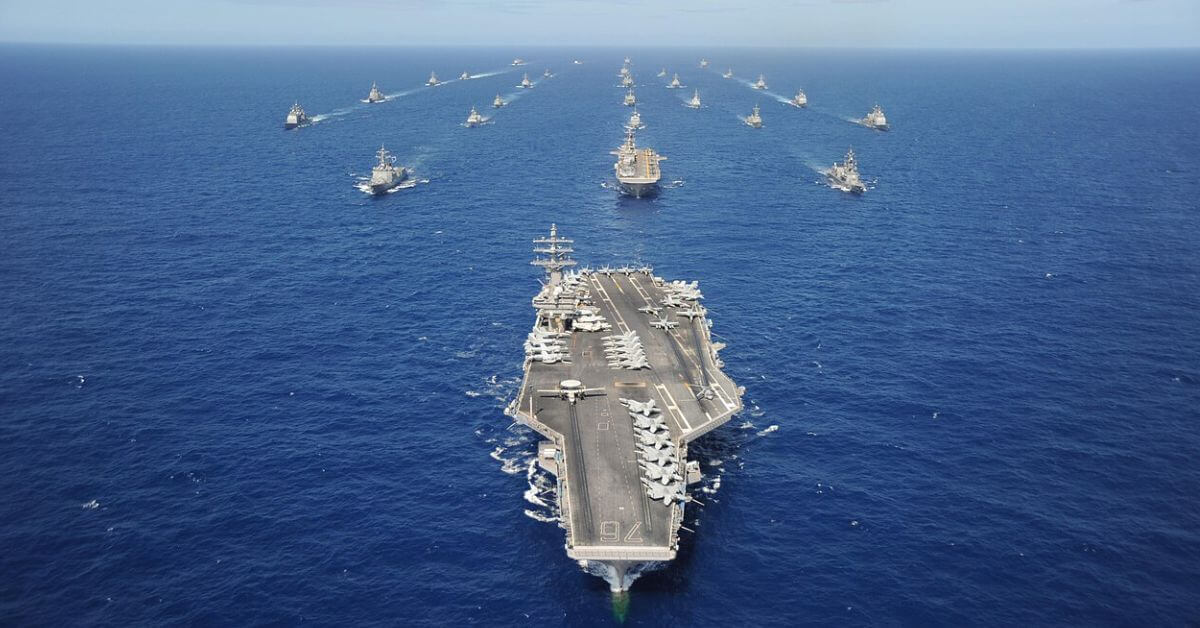
Tensions in the Middle East have risen further after Iran warned that US military pressure could destabilise the region, as an American naval strike group led by the aircraft carrier USS Abraham Lincoln arrived in waters near Iran.
Iran’s President Masoud Pezeshkian made the remarks during a phone call with Saudi Crown Prince Mohammed bin Salman, saying that US threats were aimed at disrupting regional security and would lead only to instability.
Saudi Arabia later said the crown prince had assured Iran that Riyadh would not allow its airspace or territory to be used for military action against Tehran.
Trump said the additional deployment was intended to pressure Tehran into making a deal with Washington. He also stated that the US already had a large naval presence near Iran and suggested that Iran had reached out several times to hold talks.
The USS Abraham Lincoln, along with its accompanying warships, entered the US Central Command’s area of responsibility in the Indian Ocean on Monday.
A senior commander of Iran’s Revolutionary Guards naval forces said neighbouring countries would be considered hostile if their land, airspace or waters were used in any attack against Iran.
Iranian media later withdrew and apologised for an earlier report that suggested the aircraft carrier would be targeted if it entered Iranian territorial waters.
Iranian conservative newspapers said the country was prepared for a major response in the event of conflict, including the possible closure of the Strait of Hormuz, a key maritime route for global energy shipments.
An anti-US billboard showing an American aircraft carrier being destroyed has also appeared in Tehran.
The rising military tension comes as Iran continues a widespread crackdown on anti-government protests. Human rights groups have described the response as the deadliest suppression of protests in the country’s history.
The Human Rights Activists News Agency (HRANA) said it had confirmed 6,126 deaths, including 5,777 protesters, 86 minors, 214 security personnel, and 49 bystanders, while it continues to investigate another 17,091 possible fatalities. At least 41,880 people have been arrested, the group said.
Efforts to assess the situation have been complicated by a near-total internet blackout. Internet monitoring group Netblocks reported intermittent connectivity but said access remained heavily restricted and filtered.
Iran International, a Persian-language broadcaster based outside the country, reported that Supreme Leader Ayatollah Ali Khamenei had moved to an underground bunker in Tehran following repeated threats from the United States.
The broadcaster also reported that his son had taken over day-to-day management of his office. It added that Iran’s currency had fallen to a record low, weakening beyond 1.48 million rials to the US dollar on the unofficial market.
Meanwhile, US media reported that President Trump had received intelligence assessments suggesting that Iran’s leadership was in a weakened position. A senior US senator was quoted as saying the goal of recent discussions was to end the current regime.
The United States recently joined Israel in carrying out strikes on Iranian nuclear-related sites. Israeli Prime Minister Benjamin Netanyahu said Israel would make its own decisions but warned that any Iranian attack would be met with a powerful response.
References: japantimes, hindustantimes
Source: Maritime Shipping News