
World’s First Marine Habitat Allows Scientists To Live Underwater For Days

China Reveals World’s First Autonomous Drone That Can Hunt & Destroy Submarines
January 28, 2026
US Removes Captain And First Officer Of Venezuela-Linked Tanker From UK Waters
January 28, 2026
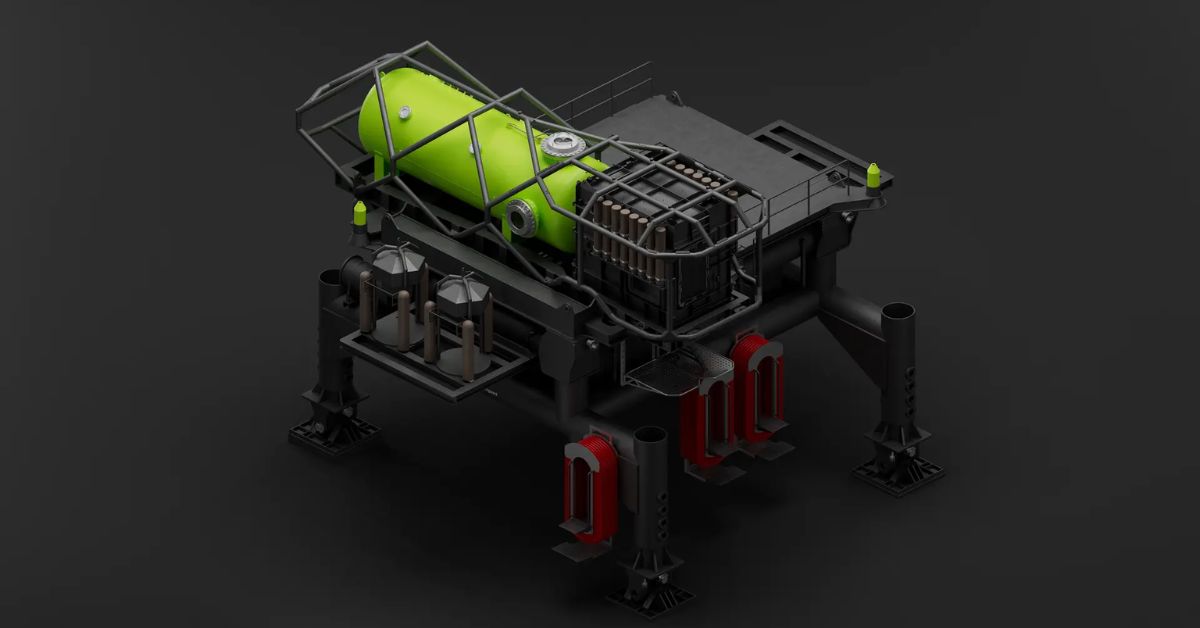
Researchers, Scientists and oceanographers can now conduct extensive studies while living underwater, not for a few hours but for several days.
This has been made possible due to a new underwater habitat prototype at a hangar in Miami, developed by a UK-based engineering firm called DEEP.
The Vanguard Pilot Human Habitat is a part of an effort by the company to make underwater living a reality for the human race.
The underwater structure can support 4 people for a week.
It is divided into 3 sections, including a living chamber, a diving center, and a base anchored to the seabed.
The first compartment is 12 m long and 12 m wide, where the crew can eat, sleep and research while remaining safe from the pressure outside.
The diving centre connects to an underwater base which is anchored to the seabed, ensuring the habitat maintains its stability while remaining protected from powerful waves and storms.
The platform will greatly help in furthering ocean exploration efforts and expand the understanding of the marine environment.
Another floating platform on the surface provides the necessary supplies like compressed air, electricity and communications. Together, they form a complete functional subsea habitat that can sustain human life under the vast oceans and seas.
Norman Smith, DEEP’s CEO and the lead engineer behind Vanguard, explained that many underwater zones are not explored at greater depths, and now with this habitat, they can be studied and become accessible.
Vanguard can function at a depth of 20 m, where even divers can go with scuba gear. However, now the company is designing a prototype that can function as deep as 200 metres.
This prototype could aid in coral reef restoration, help in real-time climate monitoring, train astronauts underwater for space missions and much more, the company stated.
The project is the first of its kind and is also the first underwater habitat to be classified by Det Norske Veritas (DNV), an international classification society on subsea standards headquartered in Høvik, Norway.
DEEP said in a statement that by allowing teams of researchers to remain comfortable underwater for days, the habitat will enable comprehensive studies and real-time observation of marine ecosystems.
The company now intends to build a network of such habitats or underwater research stations, which can be called for continuous ocean research.
“Each mission will build upon the last, refining technology and operations until living beneath the sea becomes routine,” the firm added.
Source: Maritime Shipping News