

Suspicious Russian Cargo Ship Chased From Bristol Channel By Royal Navy

Iranian Cargo Vessel Runs Aground In Caspian Sea After Mysterious Hull Breach
January 30, 2026
Denmark Charters Ice-Strengthened Hotel Ship To Accommodate Soldiers in Greenland
January 30, 2026
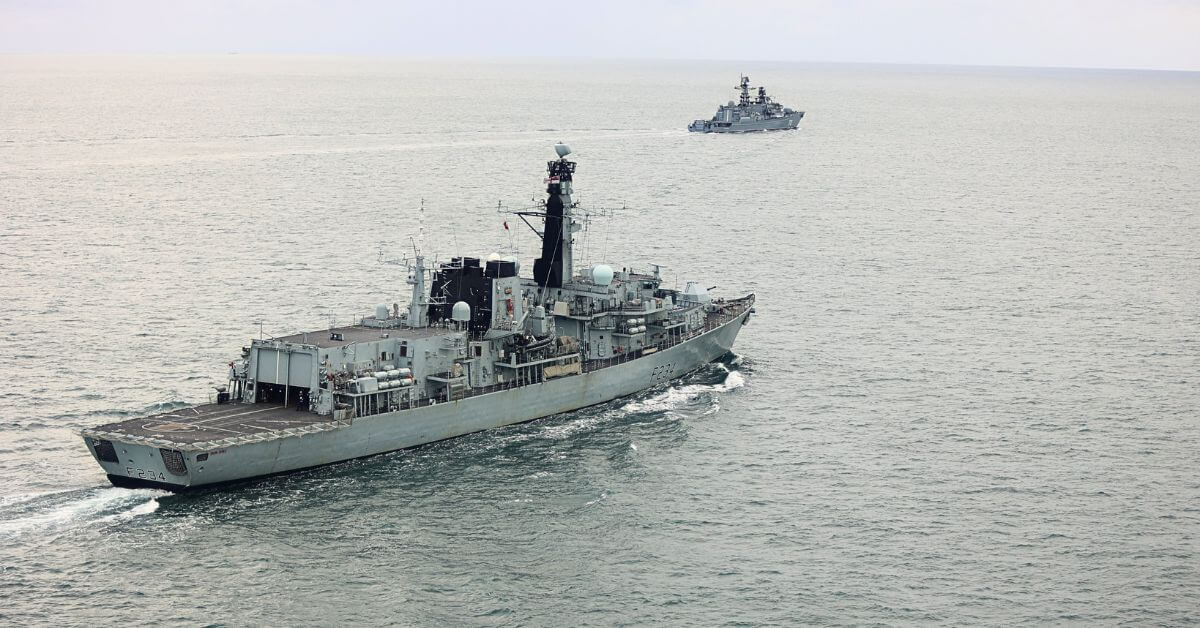
The Royal Navy forced a Russian cargo ship to leave waters just two miles off the coast of Minehead, Somerset, after it spent 14 hours anchored near critical undersea telecoms cables connecting the UK to the US, Canada, Spain, and Portugal.
The vessel, identified as Sinegorsk, sailed into the Bristol Channel on Tuesday night and appeared to anchor roughly two nautical miles from the town. It remained stationary until around 2 pm on Wednesday.
Data shows that five major undersea cables lie within three-quarters of a mile of the ship’s location, including the TGN Atlantic system linking the UK to New York, the EXA Express cable to Nova Scotia, and the VSNL Western Europe network connecting Spain and Portugal.
A Royal Navy Wildcat helicopter, callsign Talon 1, launched from Yeovilton, was deployed to monitor the ship and observed it sailing west just before 2 pm.
Aircraft-tracking records also showed a Coastguard plane circling Sinegorsk for about half an hour on Wednesday morning.
The Ministry of Defence suggested the ship may have sought shelter from strong winds and rough seas reported in the area.
Shadow security minister Alicia Kearns described the ship’s movements as “deeply suspicious” and highlighted the potential risks to transatlantic data cables.
Experts have warned that Russian vessels have previously been linked to attempts to interfere with undersea infrastructure, including a case in Finland in December where a tanker’s passage damaged cables between Helsinki and Tallinn.
Sinegorsk’s last recorded port call was three weeks ago at Arkhangelsk, a major Russian trading port and home to the Northern Fleet. While it claimed it was conducting “essential safety repairs,” authorities treated the incident with caution due to the proximity to sensitive infrastructure.
The incident follows earlier activity involving Russian ships in UK waters, including a sanctioned shadow tanker in the English Channel earlier this month and the well-known cable-tapping vessel Yantar, which had previously entered British waters and triggered surveillance operations.
References: The Telegraph, The Express
Source: Maritime Shipping News