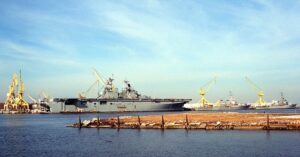
The talks are taking place as the US shipbuilding industry faces major challenges, including labour shortages, limited dry-dock capacity and long delays in key naval programmes.


US, Türkiye Discuss Naval Shipbuilding Cooperation Amid Growing Competition With China

China Remains World’s Largest Shipbuilder In 2025
February 5, 2026
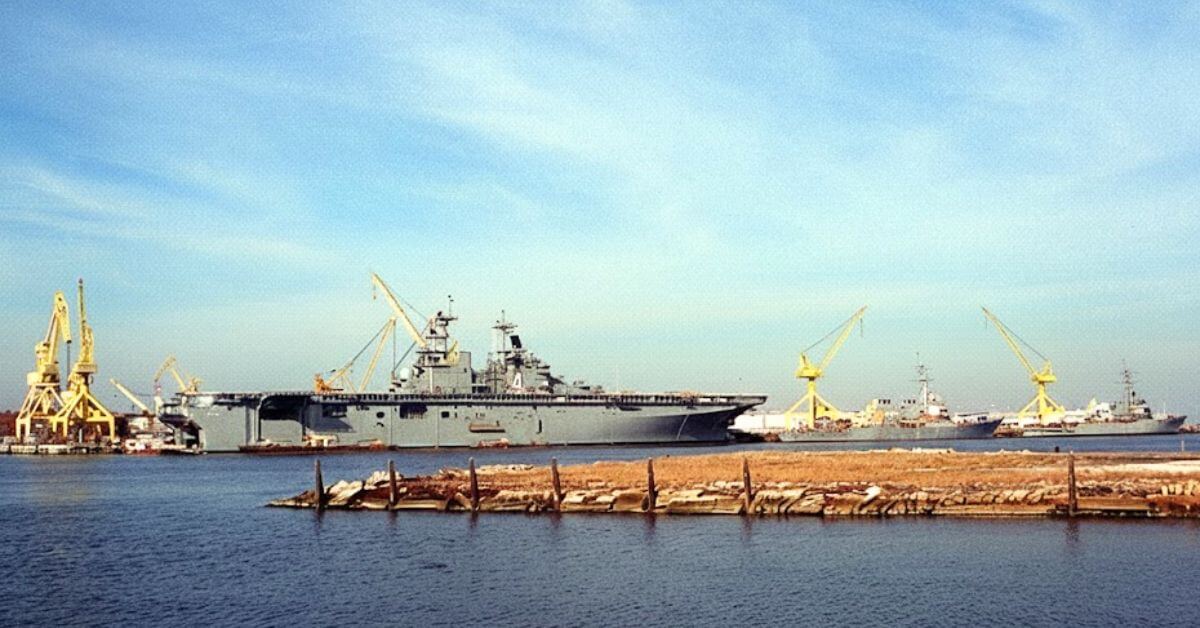
The United States has been holding talks with Türkiye on possible cooperation in naval shipbuilding as the US Navy looks to expand its fleet while facing growing competition from China.
The discussions, which have been ongoing since last year, have examined whether Turkish shipyards could supply ship components or help reduce production delays by contributing to the construction of additional naval vessels, including frigates.
The US Navy is under pressure to modernise an ageing fleet and increase ship numbers, but domestic shipyards have been unable to meet demand at the required pace.
US officials have acknowledged that the country’s shipbuilding sector is facing serious difficulties.
President Donald Trump has said his administration is looking at working with allied countries to deal with ship shortages, noting that the US no longer builds ships as quickly as it once did.
Although US law usually limits the construction of military ships and major parts to domestic shipyards, it allows the president to approve exceptions in cases linked to national security.
The US has already sought help from allies. In December 2024, South Korea’s Hanwha Group bought Philly Shipyard in Pennsylvania for $100 million and announced plans to expand ship production in the country.
Despite this, the US Navy continued to face challenges. In December 2025, the Pentagon cancelled the Constellation-class frigate programme due to rising costs and schedule delays.
The frigates were planned to be built at a shipyard in Wisconsin in partnership with Italian shipbuilder Fincantieri.
Türkiye has developed into a major naval shipbuilder in recent years through its national warship programme, MİLGEM.
Turkish shipyards are capable of building more than 30 naval vessels at the same time for domestic use and export customers, including Pakistan.
Most of Türkiye’s naval shipyards are located around Pendik and Tuzla near Istanbul, as well as the Yalova region. Industry experts have said this geographic concentration allows Turkish shipyards to adapt quickly to new naval projects.
As part of the ongoing discussions, a delegation from the US Naval Sea Systems Command visited the Istanbul Naval Shipyard Command in late January, according to Türkiye’s National Defense Ministry.
Any deeper defence cooperation between the US and Türkiye could face political scrutiny in Washington.
The US imposed sanctions on Türkiye under the Countering America’s Adversaries Through Sanctions Act following Ankara’s purchase of the Russian S-400 air defence system in 2019.
However, officials familiar with the matter have indicated that shipbuilding cooperation is being viewed by some in the US administration as a way to strengthen relations while working within existing restrictions.
Defence analysts have pointed out that Türkiye has advantages the US currently lacks, including sufficient skilled labour, modern shipyards and experience in shared production models.
Turkish shipbuilding projects often involve several shipyards working together, with different yards producing sections of a vessel that are later assembled and tested at a central facility.
Experts have also noted that Turkish shipyards increasingly use automated production techniques, while many US yards continue to rely heavily on manual labour.
According to analysts, Türkiye’s ability to manage production volume, timelines and workload distribution makes it a practical option as the US looks for ways to ease its shipbuilding bottlenecks.
A US spokesperson has described Türkiye as a longstanding and valued NATO ally, adding that the two navies have a strong partnership at sea and continue to explore ways to expand cooperation.
References: turkiyetoday, middleeasteye
Source: Maritime Shipping News