
US Warns Ships To Steer Away From Iranian Waters In The Strait Of Hormuz

Watch: U.S Forces Capture Venezuelan Oil Tanker In The Indian Ocean
February 10, 2026
Maersk Orders 8 Large Container Vessels From A Chinese Shipyard
February 10, 2026
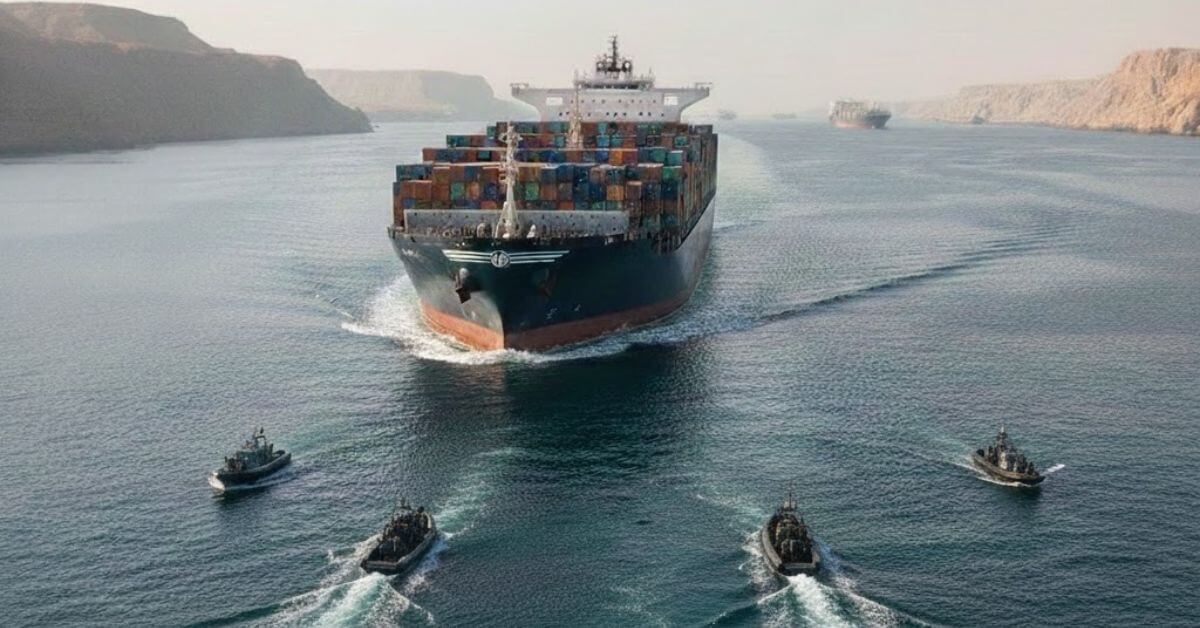
The United States has issued a new maritime advisory asking US-flagged commercial vessels to stay as far as possible from Iran’s territorial waters while sailing through the Strait of Hormuz.
The advisory was released on Monday by the US Maritime Administration (MARAD). It advised ship masters not to allow Iranian forces to board US-flagged vessels.
MARAD also stated that if a boarding takes place, crews should not forcibly resist, while making clear that not resisting does not mean agreeing to the boarding.
The agency said eastbound vessels in the Strait of Hormuz should, if it is safe, sail closer to Oman’s territorial waters. The guidance applies to ships transiting both the Strait of Hormuz and the Gulf of Oman.
MARAD noted that vessels operating in the area have faced boarding risks in the past. It said Iranian forces have attempted to board commercial ships using small boats and helicopters, with incidents reported as recently as 3 February.
The advisory comes shortly after the United States and Iran held indirect talks in Oman on Friday. These were the first talks between the two countries since US forces carried out strikes on three Iranian nuclear facilities during a brief conflict last June.
Officials from both sides described the discussions as positive, while indicating that further talks are planned.
Oil prices rose following the advisory, reflecting renewed concerns over supply risks in the region.
Brent crude prices increased by more than 1% to nearly $69 per barrel, while US West Texas Intermediate rose to over $64 per barrel.
Analysts said the warning added to existing geopolitical uncertainty linked to US-Iran tensions.
The Strait of Hormuz is one of the world’s most important shipping routes. About 13 million barrels of crude oil per day passed through the strait in 2025, accounting for nearly one-third of global seaborne crude oil flows.
Any disruption in the narrow waterway could have a significant impact on global energy markets. Iran has previously suggested that it could consider closing the Strait of Hormuz during periods of conflict.
During the Iran-Iraq war in the 1980s, both countries targeted merchant vessels in what became known as the Tanker War.
In January this year, Iran’s Islamic Revolutionary Guard Corps conducted naval exercises in the strait, which prompted warnings from the US military over unsafe behaviour at sea.
In 2019, the United Arab Emirates reported sabotage attacks on four vessels in the Gulf of Oman. More recently, shipping lanes in nearby waters have been affected by attacks related to conflicts involving Israel and regional armed groups.
Although there have been no recent public threats by Iran against commercial vessels in the Gulf, the United States has increased its military presence in the region.
References: aljazeera, Cnbc
Source: Maritime Shipping News