
Chile Sees Increase In Fin Whale Ship Collisions During Peak Feeding Season

US Navy’s Advanced Unmanned Shipbuilding Systems To Revolutionise Production Of Autonomous Naval Fleets
February 23, 2026
Trump Sends USNS Mercy Hospital Ship To Greenland, Danish Leaders Say “No Thanks”
February 23, 2026
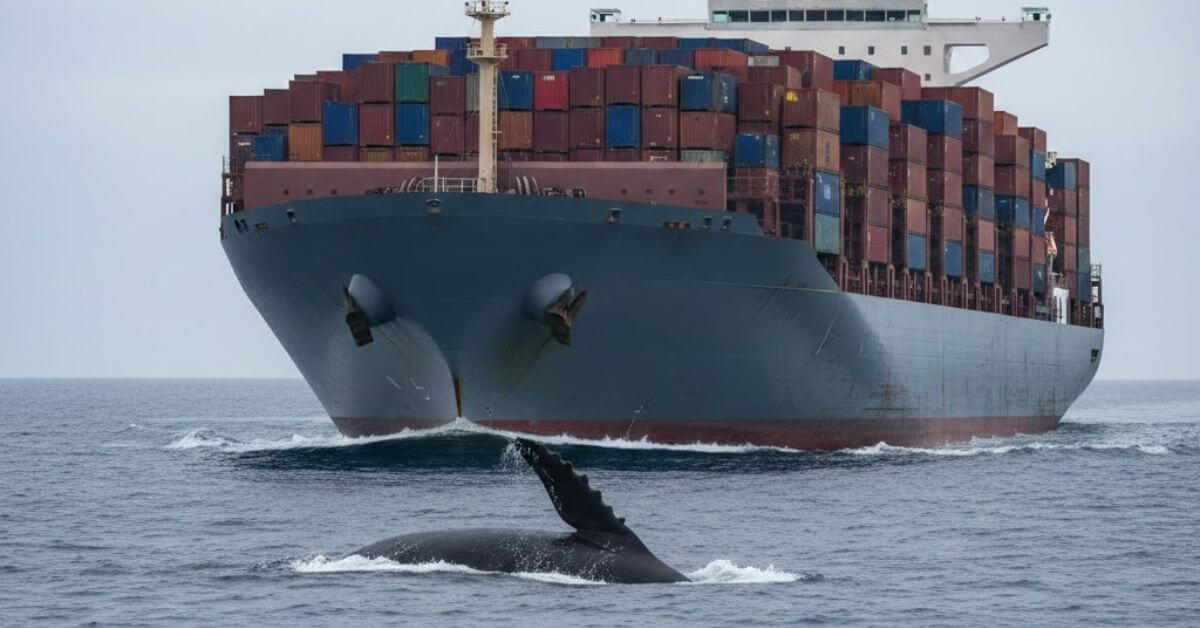
Increased migration of fin whales along northern Chile’s coast between October and January has sharply raised the risk of ship strikes and fishing net entanglements, marine researchers have warned.
The nutrient-rich waters of Mejillones Bay and Antofagasta Bay are attracting many fin whales, bringing them close to busy shipping routes.
Experts say Chile now records more whale collisions and strandings than any other country, raising urgent concerns for maritime safety, port operations, and marine conservation.
The Fin whale, which can grow up to 26 meters in length and weigh more than 70 tonnes, migrates seasonally to Chile’s northern coastline to feed.
Between October and January, high plankton concentration in Mejillones Bay and Antofagasta Bay attracts the species in significant numbers.
These same waters serve as critical corridors for bulk carriers, container vessels, and tanker traffic linked to Chile’s copper exports and energy imports.
The Port of Antofagasta is a strategic hub for mining cargo, handling millions of tonnes annually.
Marine ecologist Christian Guerra stated that Chile appears to be the primary location globally where whale collisions are recorded.
According to him, the country leads negatively in both strandings and vessel strikes compared to other maritime regions.
Monitoring groups report two major threats: vessel collisions and entanglement in industrial fishing gear.
The Antofagasta Cetacean Observation Network, a volunteer-based monitoring initiative, tracks whale movements to reduce risk exposure in high-traffic zones.
Network member Alex Sanchez explained that beyond direct ship impacts, drifting fishing nets from large-scale operations frequently trap whales. Entangled whales often suffer severe injuries, exhaustion, or drowning.
Drone footage captured earlier this month in Algarrobo, south of the main feeding bays, showed a whale carcass washed ashore.
Silvana Espinoza, an ecosystem specialist with Greenpeace, stated that whales play a key role in climate regulation and nutrient cycling. Through vertical nutrient transfer and carbon storage, large whales contribute to ocean health and carbon sequestration.
Fin whales help redistribute nutrients from deep waters to surface ecosystems through feeding and migration.
Scientists estimate that large whale populations enhance phytoplankton growth, which absorbs significant amounts of carbon dioxide from the atmosphere.
Ship strikes also carry financial risk. Vessel damage investigations, insurance claims, delays, and reputational impact can increase operational costs for shipowners.
Conservation advocates are urging Chilean authorities to establish clearer marine protected areas, enforce fishing gear management, and mandate vessel speed reductions during peak whale migration months.
Reference: Reuters
Source: Maritime Shipping News