
US Navy’s Advanced Unmanned Shipbuilding Systems To Revolutionise Production Of Autonomous Naval Fleets

IMO Identifies 529 False-Flagged Ships Ahead Of Key Legal Sub-Committee Meeting
February 21, 2026
Chile Sees Increase In Fin Whale Ship Collisions During Peak Feeding Season
February 23, 2026
HII & Path Robotics Sign MOU
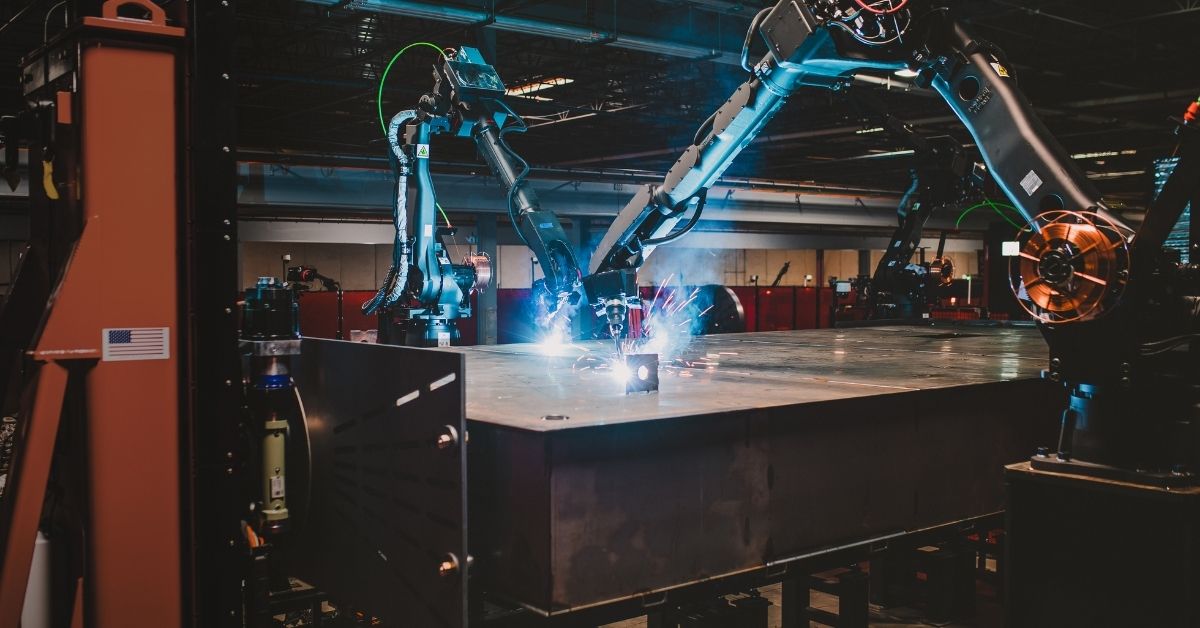
Virginia-based military shipbuilder HII signed an MOU with Path Robotics to explore the integration of AI in welding for shipbuilding operations.
Eric Chewning, HII’s executive vice president of maritime systems and corporate strategy, expressed excitement to work with Path Robotics to ramp up the manned and unmanned vessel production for the U.S. Navy.
Boosting Productivity & Strengthening U.S Maritime Industrial Base
This development could boost productivity, strengthen the maritime industrial base and assist the workforce.
HII’s throughput increased by 14% in 2025, and the company is now targeting a rise of an extra 15% in 2026.
Collaborating with partners such as Path Robotics can help it achieve its desired shipbuilding throughput, Chewning added.
The Autonomous AI-based Welding Solution
The autonomous AI-based welding solution will help the company meet naval standards, increase efficiency, and meet quality benchmarks while maintaining the production schedule.
HII and Path Robotics will work together in developing autonomous shipbuilding capabilities, training people in automation and laying down an intellectual property framework for physical AI-based autonomous welding systems.
Additionally, both companies will jointly work on how to integrate Path Robotics physical AI models with other emerging shipbuilding technologies used in building HII ships, including the ROMULUS line of unmanned service vehicles.
These high-endurance Unmanned Surface Vessels (USVs) are being built to provide long-range, autonomous capabilities for naval and defence operations.
They were revealed in 2025 and are designed for multi-domain operations and undertaking surveillance, intelligence and reconnaissance missions while functioning as motherships for other autonomous vessels.
These technologies are expected to expand the welding workforce by helping automate production processes and speed up delivery to meet national security objectives, per the news release.
Andy Lonsberry, Path Robotics CEO and co-founder, said that cooperating with America’s biggest military shipbuilding company at such as crtical juncture for defence and manufacturing highlights the significance of the work they’re doing at Path.
He also added that welding is one of the most difficult processes to automate in any sector, and shipbuilding is no exception.
Path’s AI models are purpose-built; they can see, understand and adapt to real-world conditions and challenges.
Lonsberry also expressed his happiness at working with HII for modernising defence manufacturing and being a part of an effort focused on strengthening the nation’s naval industrial base.
Per claims, Path’s physical AI model and its sensing and vision system for welding can change an industrial robot arm from a repetitive task machine into a real-time perception and decision-making system that can adapt to changes in a shipbuilding ecosystem.
Presently, HII divisions are using automated robot welders, which require human intervention.
They work like panel line units, following a pre-programmed pathway.
AI-powered autonomous welding technologies can expand shipbuilding capabilities and augment the workforce to speed up delivery and meet the increasing naval demands of the U.S forces.
Source: Maritime Shipping News